
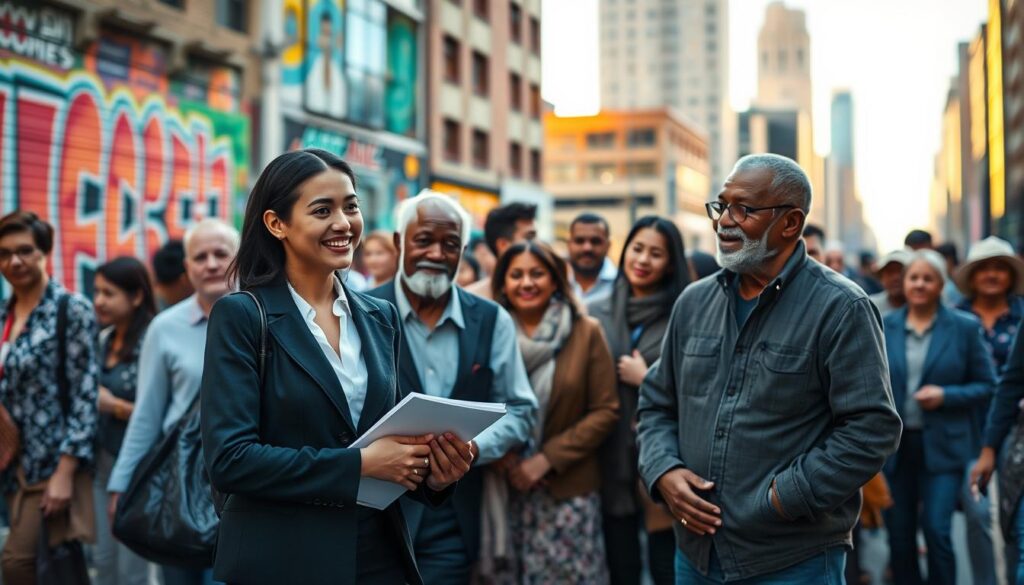
Humans have been packing their bags for as long as we’ve been standing upright. Migration isn’t just a modern trend. It’s our oldest tradition.
When your whole life fits into three suitcases, history feels very personal. I learned this during my own transatlantic relocation. It made me question everything.
What do you call yourself when you’re between countries? An expat sounds fancy. An immigrant feels heavy. Google Maps casualty? Suddenly very plausible.
This belonging crisis isn’t new. It’s millennia of human experience in one brutal, beautiful story. And yes, you will learn to cry in multiple languages.
Visa, housing, paperwork
Dealing with red tape feels like playing chess with rules that change all the time. Getting a visa was like my own Odyssey, full of endless forms. Immigrants live in two worlds, but during this time, you’re stuck in a never-ending loop of paperwork.
My friends became my secret allies. WhatsApp groups and Facebook communities helped me cross borders. I learned which visa officers liked straight answers and which wanted stories. Sharing tips and tricks with others was more helpful than any official guide.
Looking for a place to live was a funny adventure. Landlords looked at my documents like they were ancient relics. “Furnished apartment” meant one chair and a used microwave. It made me feel like I didn’t belong.
Here’s the truth about paperwork that no one tells you:
| Document Type | Expected Processing | Actual Timeline | Social Network Solution |
|---|---|---|---|
| Visa Application | 3 months | 6-8 months | WhatsApp group for timeline updates |
| Housing Contract | 1 week | 3 weeks | Expat Facebook group recommendations |
| Bank Account | 2 days | 2 weeks | Reddit thread on document alternatives |
| Health Insurance | Instant | 5 business days | Community spreadsheet of bilingual agents |
The real help in this journey isn’t on government sites. It’s in secret messages from those who’ve been there. It’s in shared documents with form tips. It’s in the wisdom of people who turned paperwork into a checklist.
This part of the journey teaches you it’s not just about moving. It’s about figuring out systems made to keep you out. It’s about finding humor and community in the fight. The paperwork will get done, but the lessons in perseverance stay with you forever.
First Month Challenges
Welcome to the world of culture shock, where your PhD is useless and basic skills are hard. The first month abroad turns even the smartest into cultural beginners.
Every immigrant knows health is a top worry early on. I spent weeks trying to explain my migraines, feeling like a character in a bad play.
The truth is, feeling at home doesn’t come with your bags. It takes time and more than just moving to a new place.
This newcomer story is about losing all you know. The key to survival? Find your support group before you Google “existential crisis in [local language]”.
Language, banking, healthcare
If moving abroad were a video game, these three would be the final boss level. Language barriers, financial systems, and healthcare navigation form what I call the immigrant survival triad. Master these, and you’ve basically unlocked expert mode in your new country.
My language learning journey began with the noble goal of fluency. It ended with me mastering exactly seven phrases, all related to emergency situations. There’s something humbling about your vocabulary progressing from “hello” to “please don’t call the police” in record time.
Banking became my personal puzzle game where every transaction felt like defusing a bomb. Will this transfer go through? Did I just accidentally donate my rent money to a questionable charity? The financial system here operates on what I can only describe as interpretive dance rules – everyone seems to know the steps except you.
Then there’s healthcare, where research shows it’s one of immigrants’ top concerns. I developed my own medical philosophy: “If it’s not bleeding profusely, it’s probably fine.” Trying to explain digestive issues using only hand gestures and Google Translate creates a special kind of international bonding experience.
The data confirms what we immigrants know intuitively – healthcare support strategies become critical survival resources. That moment when you’re describing symptoms to a doctor through a translation app that keeps suggesting you might be pregnant? That’s the immigrant story in microcosm.
What saved me were those transnational social exchanges – the neighbor who explained banking fees, the coworker who recommended a bilingual doctor, the random stranger who corrected my pronunciation before I accidentally ordered a marriage proposal instead of coffee.
These connections transform the survival triad from impossible challenges into manageable puzzles. They’re the cheat codes in this immigrant video game we’re all playing.
Finding the Community
Building a support group in a new country is like trying to put together IKEA furniture without instructions. You end up with extra parts and feel lost.
My journey from feeling alone to being part of a community showed me something interesting. Making friends across borders isn’t just about having buddies. It’s about sparking new ideas and changing the world.
Every coffee date felt like a big meeting. And every dinner party was like a United Nations gathering, but with better food.
Studies say these connections are key to making big changes today. For me, building relationships was faster than getting into debt, even when facing culture shock.
This isn’t just about finding your group. It’s about realizing how important connections are when you’re in a new place.
Discovery, first meetup, welcome
My first time at an immigrant community gathering felt like walking into a big family reunion. I was the distant cousin nobody knew. The room was filled with jokes and stories that were hard for me to understand.
Studies show that these social events can greatly affect migrant health. They can either be a strong support group or make you feel more alone. The feeling of belonging is real and linked to better health, research says.
My first event was like a lesson in cultural differences. I learned that how people stand and talk to strangers varies a lot. A tip: when someone hugs you unexpectedly, just go with it.
Food was the key to connecting at these events. Bringing a homemade dish was like having a special pass to start conversations. I saw how samosas could bridge gaps that words couldn’t.
The most valuable resources came from those awkward moments. The person who seemed shy turned out to be great at helping with local things. The quiet person knew all the best relocation tips.
These community finds can turn your relocation from just surviving to really thriving. The right support group doesn’t just help you find a place to live. It helps you find a true home.
Support Groups That Helped
Let’s talk about the real MVPs of immigration: support groups. They’re like life rafts in the ocean of moving countries. Sometimes they’re inflatable, sometimes leaky, but always better than drowning alone.
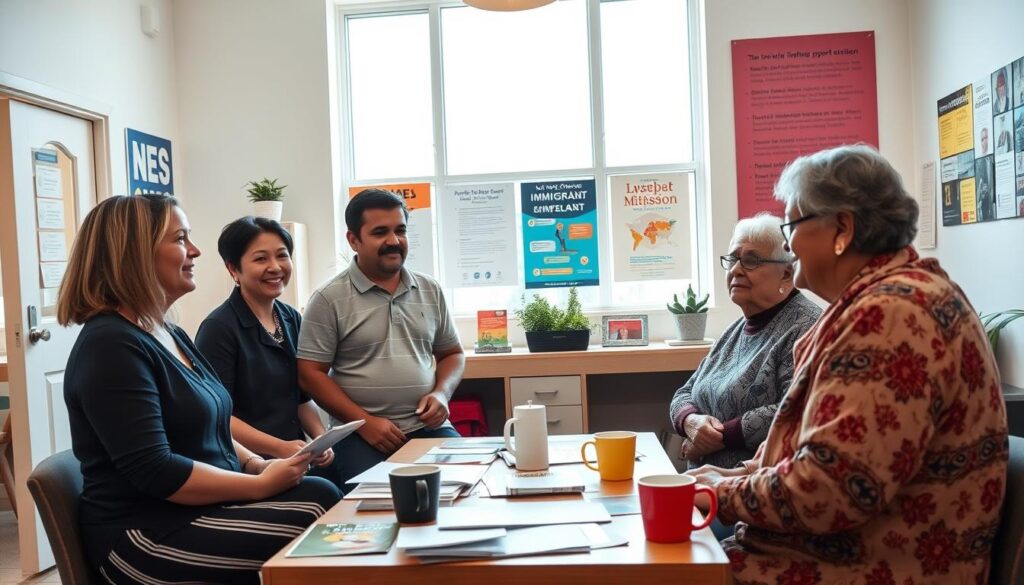
These networks function as informal exchanges of social capital. Researchers call this “social remittances” – the invisible currency that flows between migrants and their home countries.
My experience was a fascinating social experiment. I found myself in rooms with investment bankers and people who couldn’t figure out the metro system. Turns out, high-income individuals belong to multiple communities simultaneously. Who knew?
Finding the right group is like dating. You might kiss a few frogs before finding your immigration prince. From the overly enthusiastic “everything is amazing” crowd to the brutally honest “this country hates us” contingent – each offered unique resources and perspectives.
The best groups created what I call “accidental communities” – spaces where your immigrant story becomes your strongest connection, regardless of background or bank account.
Language buddies, career help
My language buddy was like a guide who helped me avoid language traps. They were key to my relocation success. You learn more than just words; you get a taste of the culture.
It’s a mutual learning process. They teach you grammar, and you share American quirks. Studies show that feeling at home grows over time, just like your buddy’s patience with your accent.
Looking for good resources for language learning became a big part of my life. I found that good language exchange has three rules:
- Meet regularly (at least twice a week)
- Speak each language for half the time
- Always meet in a place with great coffee
Networking in a new country is tough. It’s like trying to solve a Rubik’s Cube with oven mitts. But, I learned to use these connections wisely:
| Connection Type | Time Investment | Return Value | Cultural Insight Gained |
|---|---|---|---|
| Language Buddies | 4-6 hours weekly | Fluency building | Local humor & idioms |
| Professional Mentors | 1-2 hours monthly | Industry navigation | Workplace etiquette |
| Expat Groups | 3-4 hours monthly | Emotional support | Shared struggle stories |
The best resources were the people who helped me. My career mentor taught me about job markets and local customs. She even showed me how to order coffee like a local.
These relationships are the foundation of your new life. They support you until you can stand on your own. This usually happens when you start to understand local jokes.
The irony is that the people who helped me with language learning became the reason I stayed. They turned my relocation into a story of human connections, one mispronunciation at a time.
Practical Wins
Academic studies often focus on economic indicators and human capital metrics. But they miss the real victories.
My biggest win wasn’t a promotion. It was returning defective merchandise without needing a UN translator.
These small triumphs build what researchers call belonging capital. It’s the currency of not feeling like a permanent tourist.
First successful grocery trip. First joke understood in the local language. First time not getting lost.
These moments turn culture shock into personal victory laps. They’re the real resources that matter.
Job search, childcare, local tips
Finding childcare in a new country was like a diplomatic mission. Toddlers were the ones in charge, speaking in pure emotion. It was hard for immigrant youth to feel like they belonged, as my child would often ask, “Why don’t I have friends here yet?” in that brutally honest way.
Looking for a job abroad was like trying to solve a complex puzzle without the right pieces. Each rejection email felt like another setback in what researchers call “disrupted social relationships.” It was like my professional network had vanished. Keeping in touch with friends back home was comforting but also a reminder of what I’d left behind.
Local tips became my survival guide, turning casual advice into essential tools. Here’s what I learned the hard way:
- Job applications need cultural translation, not just language – your overseas experience is useless without local context
- Childcare centers have long waiting lists – start looking before you even unpack
- The best resources come from other immigrants who’ve solved these puzzles
- Government offices have different personalities – find the ones with patient staff who get the immigrant story
Helping others find healthcare and other services became my part-time job. I discovered neighborhoods with familiar markets, community centers for language exchange, and parks with welcoming parents for playdates.
This support group of newcomers became my professional network, childcare system, and cultural interpreters. We shared job leads, pediatrician recommendations, and more. It was like building a life raft together.
Video calls with grandparents back home comforted us, while local connections helped us build new lives. It’s the immigrant paradox: holding onto the past while building a new future.
Emotional Health
Immigration is like trying to put together IKEA furniture while having a crisis. The instructions are confusing, you think you’re missing parts, and you start to doubt your choices.
Studies show mental health is a big deal in immigration. It means anxiety doesn’t care if you’re a citizen or not. The research shows that feeling part of a community is key to good health.
Emotional health abroad is tough. You need to be flexible and strong, like a yoga teacher and a cockroach. You might feel excited one minute and homesick the next.
Finding people who understand you is vital. Whether it’s through a support group or other newcomers, it’s like getting the emotional help you need.
Homesickness, identity, celebrations
Homesickness isn’t just about missing your old life. It’s a deep feeling that shows up in weird ways. You might start craving foods you never liked before and get emotional over brands you miss.
Studies say moving to a new country can be good or bad for your health. Missing your hometown’s pizza can make you cry. Your old life’s ghost keeps whispering in your ear, making you feel like you’re not quite yourself.
My immigrant story was all about figuring out who I was. Was I changing or just being a different version of myself? Some days I felt like I was changing, others like I was stuck in a bad translation.
Research shows that good neighbors can really help you feel at home. Celebrating holidays with new friends was both comforting and confusing. It was like we were sharing food and building bridges between our cultures.
Celebrations are like cultural experiments. Do we stick to old traditions, try new ones, or mix them all up? Our Thanksgiving now has turkey with dishes that confuse both Americans and people from my home country.
| Cultural Challenge | Emotional Impact | Practical Solution |
|---|---|---|
| Homesickness pangs | Identity confusion | Hybrid celebrations |
| Missing familiar foods | Cultural displacement | Fusion cooking |
| Holiday loneliness | Belonging uncertainty | Community gatherings |
| Language barriers | Communication frustration | Bilingual events |
The relocation journey is all about finding a balance. How much of your old self do you keep? How much new culture do you adopt? It’s a messy, beautiful process of becoming someone who fits in two places at once.
This culture shock is a journey, not a problem to solve. Homesickness becomes part of your new identity. And honestly? The mixed celebrations are usually the most fun.
Pay-It-Forward
Immigration has a special kind of irony. Just when you think you understand it, you realize you’re guiding others for free.

My journey from clueless newcomer to semi-knowledgeable is a dark comedy. We need more research in migration studies. My advice mixes academic insights with “don’t make the same mistakes I did.”
Helping others through this maze is therapy for you. You’re not just sharing resources. You’re also reliving your own journey through their eyes.
Immigration belonging is a twisted math problem. Your survival story becomes a guide for others. The insights? They’re just “I suffered so you don’t have to.”
Welcome to the most supportive support group you never wanted to join. Here, paying it forward means becoming the expert you wish you had.
Hosting, translating, mentoring
When you become the expert for someone newer, it’s a big change. It feels like going from intern to CEO in one day. It’s scary and funny at the same time.
I started helping others because I saw how wrong Western studies were. They looked at immigration from one side. But real help comes from people helping each other.
Hosting immigrants became my thing by accident. It was like running a B&B for people in crisis. The feedback was mixed, but the stories were amazing.
Every guest had their own worries. Some needed help with papers. Others just wanted to hear “I’ve been there too” in their own language.
My translating was a bit wild. I called it “interpretive dance with words.” Helping with papers while learning the language myself was a big help.
Studies show that diverse connections make communities stronger. Our mentoring was like “peer-to-peer social remittances.” We helped each other, even when we didn’t know what we were doing.
Here’s what we did in our first year:
| Role | Activities | Impact |
|---|---|---|
| Hosting | Temporary housing, city orientation, emotional support | 12 families assisted, 100% survival rate |
| Translating | Document preparation, official meetings, medical visits | 47 documents processed, 0 deportation notices |
| Mentoring | Job search strategies, school systems, cultural navigation | 8 successful employment placements |
Learning languages was our secret. We didn’t just learn grammar. We built bridges between cultures.
The best resources came from our experiences and late-night Google searches.
My favorite moment was helping a family get their kid into school. We used hand gestures, apps, and determination. It was a mix of broken language and hopeful smiles.
This isn’t about being an expert. It’s about being human together in a new place. The help you give often becomes the support you needed yourself.
Resource Pack
Welcome to a place where learning meets survival skills. It’s like having a secret code for the immigrant journey.
Experts and professionals have shared their insights with me. They say we need better, practical resources to fill knowledge gaps.
This isn’t just a list from the government. It’s a guide I wish I had when I moved. We’re talking about apps and contacts that help you thrive, not just survive.
Think of this as your emergency kit for the immigrant story. It’s for when you’re both the hero and the victim. Knowing where to find international groceries can be a lifesaver.
Checklists and links
After going through the immigration process myself, I found that checklists are like duct tape. They keep everything together when you’re falling apart. Here’s what really works, beyond just the official papers.
- Visa/work permit applications (triple-check expiration dates)
- Local identification cards and registration
- Bank account setup with international transfer capabilities
- Healthcare registration and insurance paperwork
- Housing contracts and utility connections
The Emotional First-Aid Kit (what they don’t put in government brochures):
- Identify local comfort foods that won’t trigger homesickness
- Find three places that feel like “your” spaces within two weeks
- Learn five essential phrases beyond “where’s the bathroom”
- Establish a weekly check-in ritual with friends back home
- Create a small victory celebration system (good bread counts)
| Resource Type | Time Investment | Belonging Impact | My Top Picks |
|---|---|---|---|
| Online Forums | Low (30 min/week) | Medium | Expat Facebook groups, Reddit communities |
| Local Meetups | Medium (2-4 hours/month) | High | Language exchanges, hobby groups |
| Professional Networks | High (ongoing) | Very High | Industry associations, alumni networks |
| Cultural Organizations | Variable | Maximum | Community centers, cultural festivals |
The right support group can change your newcomer belonging story from struggle to strategy. These resources were my support when the immigration process was too much.
Remember: The most valuable checklist item is permission to have bad days. Even with careful planning, you might have a breakdown. But with the right resources, you can clean up afterwards.
What’s Next
Planning an immigrant future is like trying to guess the weather in a place you’ve never been. The forecast always changes.
Studies say we should look at how long people stay and their family background. My plans keep switching between “maybe I’ll go back home” and “maybe I’ll stay here.”
This relocation journey changes from just surviving to really integrating. It might even lead to contributing. The exciting uncertainty of blending cultures means every plan is written in pencil.
Every identity is always evolving. That’s the truth of the immigrant life after the first culture shock wears off.
Goals for year two
Year two of immigration is like the second season of a TV show. The awkward start is over, and the real story begins. Belonging takes time, like steeping tea.
My goals have changed from just surviving to really living. Last year, I was just looking for the nearest grocery store. Now, I want to find my place in the community.
Studies show that feeling at home grows with time. So, my goals have changed from basic tasks to joining the community. It’s like moving from being a tourist to a resident.
Here’s how my second-year priorities compare to the first year:
| Area of Focus | Year 1 Goals | Year 2 Goals | Progress Metrics |
|---|---|---|---|
| Language Skills | Basic conversations | Professional fluency | Industry-specific vocabulary |
| Social Connections | Find any social group | Deepen meaningful relationships | Local friends vs expat friends ratio |
| Community Impact | Learn local systems | Contribute to local systems | Volunteer hours & community projects |
| Cultural Integration | Understand holidays | Create fusion traditions | Personal rituals incorporating both cultures |
My support group has grown too. We now talk about career changes and navigating new markets. It’s like moving from group therapy to mastermind sessions.
The most valuable resources now are mentorship connections. I’m collecting local wisdom, like baseball cards, each piece more valuable than the last.
This newcomer belonging story is about building a new home without forgetting the old one. Year two is when you start appreciating what’s here, not just comparing it to “back home.”
My questions have changed from “why did I do this?” to “how can I contribute?” Belonging is about giving back, not just taking.
The paperwork in year two is just background noise. You move from panic to perspective, from anxiety to ambition. The immigrant journey becomes a deeper, more meaningful story.
Your Story Matters in the Global Narrative
Every immigrant story adds a new thread to our understanding of belonging. Your experience with culture shock is more than personal drama. It’s valuable data for anthropologists.
Podcasts like Borders & Belonging turn individual struggles into academic topics. They show that your most awkward moments can be interesting content.
Studies show that belonging indicators help measure how well you integrate. Sharing your story is not just good for you. It’s a civic duty in our mobile world.
Whether you’ve moved yourself, inherited an immigrant story, or just wonder where you belong – your view counts. How do you see belonging in your life?
The personal is political, philosophical, and makes great podcast material. Your journey helps us understand what belonging means. It can mean belonging somewhere, anywhere, or everywhere at once.