

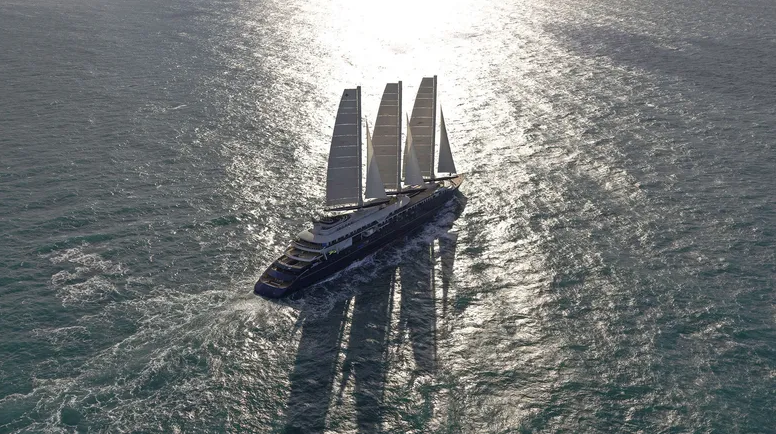
The maritime hospitality sector faces a significant shift with the launch of the Orient Express Corinthian. This massive vessel, constructed at the Chantiers de l’Atlantique shipyard in France, marks a major transition for a brand historically associated solely with luxury rail travel. Measuring 721 feet in length, the Corinthian claims the title of the world’s largest sailing yacht. This project merges highly advanced nautical engineering with the strict aesthetic standards of classic 1930s design. Examining the physical layout and operational structure provides a clear picture of how this new venture plans to compete in the crowded ultra-luxury cruise market.
Architectural Design And Historical Integration
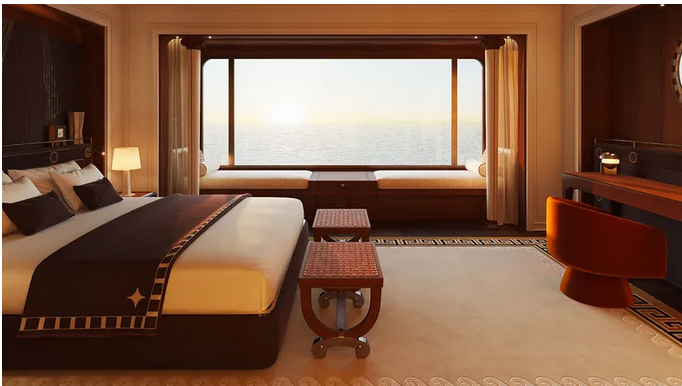
The physical design of the Corinthian relies heavily on visual callbacks to the golden age of travel. The interior styling completely avoids the neon lighting and massive open atriums common on modern mega-ships. Instead, the design team utilized deep burgundy tones, beige accents, and extensive art deco geometry. This aesthetic runs consistently through all public spaces and private accommodations.
The structural engineering incorporates Solid Sail technology. Three massive masts, each standing 226 feet tall, support sails constructed from fiberglass and carbon. This system allows the yacht to reach speeds of roughly 17 miles per hour using wind power alone. When immediate speed or maneuvering is required, the vessel switches to a liquefied natural gas (LNG) propulsion system. This dual-power approach highlights a growing industry trend toward reducing heavy fuel reliance while maintaining strict operational schedules.
Suite Layouts And Private Accommodations
The sheer size of the vessel relative to its passenger capacity creates an unusual spatial dynamic. The ship accommodates only 110 guests across 54 private suites, resulting in an exceptionally high ratio of space per passenger. The entry-level Panoramic Suites measure over 500 square feet. These specific rooms feature floor-to-ceiling windows instead of exterior balconies, maximizing interior climate-controlled space.
Moving up in category, the six Duplex Suites introduce a residential layout. These multi-level accommodations feature internal spiral staircases, massive daybeds, and subtle nautical design elements integrated into the hardware. The technological integration remains deliberately hidden. Televisions retract into cabinetry, and speaker systems sit embedded directly within the headboards to contain sound. The bathrooms rely on heavy materials, featuring freestanding tubs and dual sinks carved from solid blocks of white onyx.
The top deck houses five Penthouse Suites. These specific units offer large private terraces and separate dining areas. In a direct nod to the company’s railway heritage, some of these suites include secondary sleeping compartments styled exactly like the bunks on the original train. A dedicated butler services each suite, contributing to a total crew of 170. This translates to an operational ratio of 1.6 crew members for every single guest onboard.
Culinary Operations And Michelin-Starred Influence
The food and beverage program operates on a massive scale for such a small passenger count. The ship contains eight distinct restaurants, all functioning under the direction of chef Yannick Alleno, who currently holds 18 Michelin stars across his land-based venues. The culinary strategy focuses on high-end French technique applied to regional ingredients sourced during the voyage.
The flagship dining venue, La Table de l’Orient Express, operates with strict exclusivity. The room contains only six tables and features an artificially heightened ceiling meant to replicate the dining room of the SS Normandie, a famous 1930s ocean liner. While most dining experiences fall under the standard all-inclusive fare, reservations at this specific venue require separate booking. The eight bars and lounges onboard maintain the same strict art deco styling. Le Wagon Bar directly replicates the circular seating and turquoise velvet of the original train’s lounge car. For travelers analyzing the broader market of premium wellness destinations, the quality of the culinary program often dictates the final booking decision.
Wellness Facilities And Onboard Entertainment
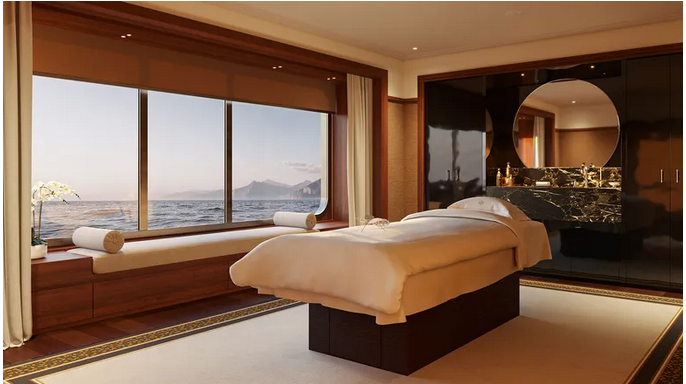
The physical layout dedicates significant square footage to wellness and specialized entertainment. The Guerlain Spa features multiple private treatment suites, a VIP double suite, and a dedicated relaxation lounge. Access to the sauna and thermal areas remains open to all passengers, regardless of whether they book a specific massage or facial. Readers frequently browsing our luxury travel guides often prioritize extensive spa access when selecting a cruise itinerary.
The deck plan includes highly unusual water features for a sailing vessel. Deck Six houses Le Couloir de Nage, a 54-foot lap pool positioned directly under the massive sails. A secondary pool complex sits at the bow, surrounded by heavy sun loungers. At the stern, a massive Marina deck lowers directly to the waterline, providing a stable platform for swimming and launching small watercraft.
The entertainment spaces avoid large casino floors. The ship features a 115-seat cabaret theater and a separate cinema outfitted with replica train seating. The inclusion of a professional onboard recording studio represents a highly unusual amenity, available for both guest use and professional charters.
Market Positioning And Future Deployments
The Orient Express Corinthian enters active service following promotional appearances in the Mediterranean. The initial deployment schedule keeps the vessel in the Mediterranean and Adriatic seas throughout the summer and early fall. As the weather turns cold, the ship executes a transatlantic crossing to spend the winter months operating in the Caribbean.
The parent company, Accor, clearly intends to expand this operational model. A sister ship, the Orient Express Olympian, is already under construction at the same French shipyard, with an expected launch date in 2027. This massive capital investment indicates strong corporate confidence in the ultra-luxury sailing market. By merging historical brand recognition with modern nautical engineering, the Corinthian attempts to carve out a highly specific niche within the global hospitality sector.
| Feature | Specification |
| Passenger Capacity | 110 Guests |
| Number of Suites | 54 |
| Crew-to-Guest Ratio | 1.6 to 1 |
| Primary Propulsion | Wind (Solid Sail) & LNG |
| Number of Restaurants | 8 |