
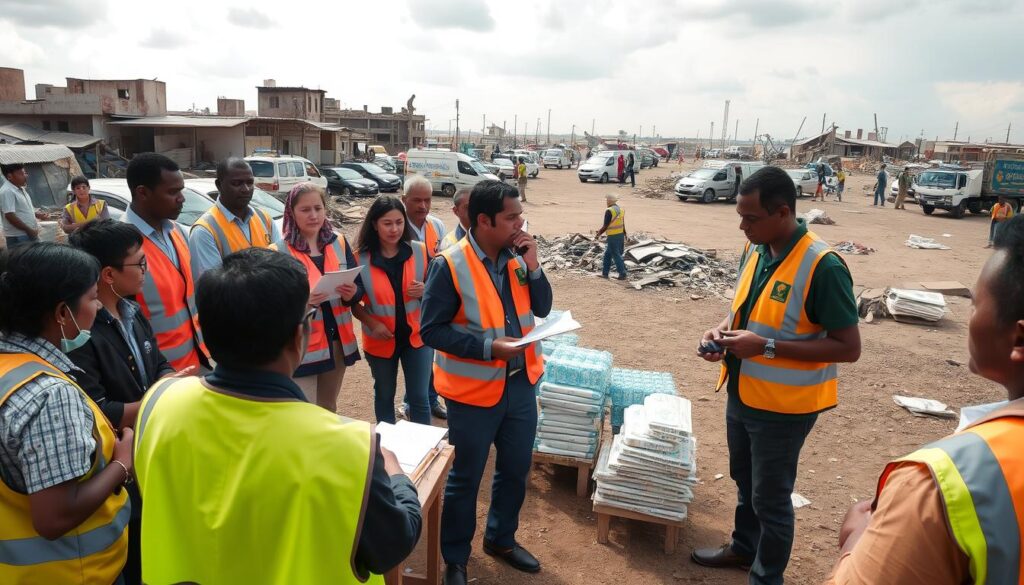
Forget the slow-motion hero shot. When the sirens blare and the ground shifts, the real story doesn’t start with a cape. It starts with a neighbor. The first 72 hours after a disaster are a raw, human, and profoundly chaotic drama.
This is the unscripted, messy, and deeply human first act of survival and resilience. Every minute is a lifetime.
It’s in this chaos that the real blockbuster begins—not with a superhero landing, but with the quiet, decisive actions of people who decide to help. It’s the unscripted heroism of the first 72 hours that sets the stage for everything that follows.
This isn’t a Hollywood script. It’s the gritty, vital, and often untold first act of community resilience. We’re talking about the Shelby County model, where a round-the-clock network of volunteers forms the nervous system of the initial response.
It’s not about waiting for a hero in a uniform; it’s about the neighbor with a chainsaw, the nurse with a first-aid kit, and the stranger who shows up with a case of water.
This is the moment when a community’s disaster relief volunteers become its first, most critical line of defense. It’s not just a response; it’s a community deciding to write its own first chapter.
Activation triggers: who calls what, incident levels, ICS basics
What turns a normal day into a crisis response moment? It’s not just one loud alarm. It’s a series of decisions and triggers. A single 911 call about a downed tree might seem simple. But a dozen calls about the same tree during a flash flood is a different story.
This is when the plan turns into action. It’s a chaotic mix of events. Understanding this is key to not just watching from the sidelines.
The Playbook for Chaos: ICS Basics for the Uninitiated
When chaos hits, you can’t waste time on introductions. That’s where the Incident Command System (ICS) comes in. It’s like a pre-written guide for chaos. Everyone knows their role, so you can act fast.
The ICS is a common language for crisis response. It makes sure everyone knows what to do. It’s flexible, fitting from small incidents to big ones. A small accident might need just one person. But a big flood calls for a whole team.
From a Fender-Bender to a Federal Disaster: The Trigger Matrix
Who decides when to go into full crisis response? It’s a decision tree based on size and responsibility. Let’s look at who does what, from small issues to big ones.
| Trigger Event | Who Activates? | Likely ICS Level | Example |
|---|---|---|---|
| Single-vehicle accident, minor injuries | Local Fire/EMS Dispatch | Single Resource (e.g., one ambulance, one engine) | A fender-bender on Main St. |
| Major multi-vehicle pileup, hazmat spill | On-scene First Responder upgrades to local Emergency Ops Center (EOC) | Type 5 or 4 Incident (Local Response) | A 10-car pileup on the interstate. |
| Major natural disaster (flood, hurricane, quake) | County/State EOC, FEMA Region | Type 1-3 Incident (National/State Resources) | Hurricane making landfall, major earthquake. |
This isn’t just theory. The Shelby County model shows how it works. A single medical call gets a response. But a big accident calls for more. The size of the problem decides the response.
The Spontaneous Surge: When the Crowd Becomes the Cavalry
Often, the first to respond are ordinary people. After Hurricane Katrina, the “Cajun Navy” helped before official teams. In the 1995 Kobe earthquake, neighbors helped first.
This volunteer effort is powerful. The key is to use it well. The ICS has roles for these helpers, making their efforts count.
Knowing these triggers and the ICS is key. It turns chaos into a coordinated effort. It’s the difference between being part of the problem or the solution.
Roles: logistics, shelter, donation sorting, wellness checks, hotline support
Forget the lone hero scaling a skyscraper to save the day. Modern disaster response is a symphony of specialists, not a solo act. When the sirens wail and the mutual aid networks activate, it’s the Logistics Quartermaster, Shelter Sage, and Donation Whisperer who turn chaos into order. This isn’t a superhero movie; it’s a meticulously orchestrated operation where every role, from managing a supply depot to mutual aid support, is a critical note.
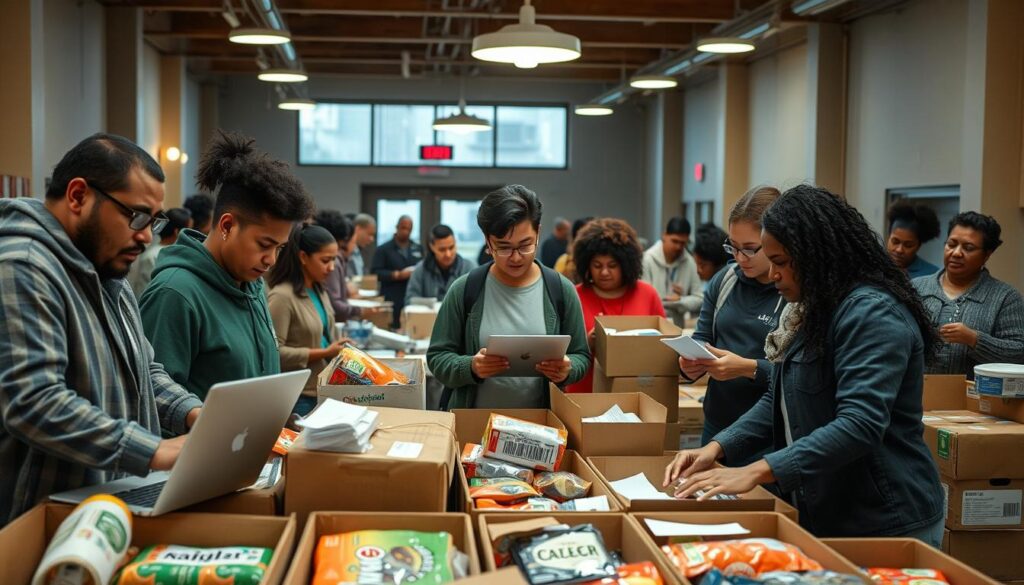
Gone are the days of the rugged individualist saving the day. Today’s effective disaster response is an ensemble cast, each member bringing a specific, vital skill to the stage. It’s less about a job title and more about plugging your unique skills—be it organizing, counseling, or just listening—into a living, breathing response matrix. This is the heart of the mutual aid ethos: neighbors with specific skills supporting neighbors in crisis.
The Logistics Quartermaster
While the Shelter Sage creates a haven, the Logistics Quartermaster ensures the haven has light, heat, and food. This role is the unsung hero of supply chain triage, transforming a church basement into a distribution hub or a parking lot into a field hospital. They are the master of the spreadsheet, the wizard of the clipboard, making sure that pallets of water, MREs, and medical supplies get to the right place at the right time.
| Duty | Key Skill | Impact |
|---|---|---|
| Inventory & Supply Chain | Resource Management | Prevents critical shortages, ensures efficient aid distribution. |
| Transport & Staging | Logistical Planning | Gets supplies from point A to B, overcoming disaster-zone obstacles. |
| Volunteer Coordination | Delegation & Communication | Prevents bottlenecks by deploying people where they’re needed most. |
The Shelter Sage
More than just a roof, a shelter is a sanctuary. The Shelter Sage is part social worker, part event planner, and part conflict mediator. They transform a cold gymnasium into a place of safety and dignity, managing everything from cot assignments and meal schedules to providing a calming presence for those who have lost everything.
| Duty | Key Skill | Impact |
|---|---|---|
| Intake & Triage | Empathetic Assessment | Quickly identifies and prioritizes needs, from medical to psychological. |
| Community Building | Social Facilitation | Turns a shelter into a temporary community, fostering peer support. |
| Information Hub | Communication | Acts as the nerve center for information and rumor control. |
The Donation Whisperer
Disasters often trigger a “second disaster” of well-intentioned but useless donations. The Donation Whisperer battles mountains of mismatched socks and expired canned goods. This role is less about sorting clothes and more about triage, ensuring that the “gift of the magi” problem—where donations don’t match needs—doesn’t cripple the supply chain.
| Duty | Key Skill | Impact |
|---|---|---|
| Donation Triage | Rapid Sorting & Logistics | Prevents logjams and ensures only needed items are accepted. |
| Quality Control | Discernment & Logistics | Ensures only safe, appropriate items are distributed. |
| Needs Assessment | Needs Analysis | Directs the right resources to the right people, maximizing mutual aid. |
The Wellness Scout & Hotline Advocate
While the Logistics Quartermaster moves boxes, the Wellness Scout moves through the emotional landscape. They conduct wellness checks, spotting the quiet person in the corner who hasn’t eaten, or the family showing signs of severe stress. The Hotline Advocate, often the first point of contact, is the calm voice in the storm, connecting callers to resources or just listening—a critical, often invisible, form of mutual aid.
| Duty | Key Skill | Impact |
|---|---|---|
| Proactive Wellness Checks | Emotional Intelligence | Identifies and supports at-risk individuals before crises escalate. |
| Hotline Support | Active Listening & Triage | Provides immediate emotional support and directs to professional help. |
| Resource Connection | Information & Referral | Bridges the gap between need and available mutual aid services. |
This isn’t a hierarchy but an ecosystem. The Quartermaster’s efficiency allows the Shelter Sage to focus on care. The Donation Whisperer’s work frees the Wellness Scout to focus on people, not piles of clothes. This is the true power of mutual aid: a network of specific, interlocking roles, each amplifying the other, turning a potentially tragic situation into a story of coordinated human response.
Safety first: PPE, de‑escalation, heat/cold exposure, mental health first aid
Going into a disaster zone without a plan is a bad idea. It’s like using a toaster in a bathtub. Good intentions aren’t enough for safety training. It’s about protecting your body, mind, and the people you help.
The Armor: Your PPE is More Than a Hard Hat
PPE is more than just gear. It shows you’re prepared, not panicked. It tells survivors that help is here, and we know what we’re doing.
The 60-hour training from Shelby County teaches you why the right gear matters. It’s not just about wearing a helmet. It’s about wearing the right helmet to avoid injuries.
Here’s what PPE means beyond the basics:
| Item | Non-Negotiable (The “You’re Not Entering Without This” List) | Context-Dependent (The “Know Your Zone” Gear) |
|---|---|---|
| Head-to-Toe | ANSI-rated hard hat, safety glasses, cut/abrasion-resistant gloves, steel-toe boots. | Knee pads, high-visibility vest, hearing protection (for generator/chain saw use). |
| Respiration & Skin | N95/P100 respirator (for dust, ash), heavy-duty work gloves. | Full-face respirator (chemical/biological), Tyvek suits, chemical-resistant gloves. |
| Extremes | Insulated, waterproof boots; moisture-wicking base layers. | Ice cleats, cooling vests, specialized heat-reflective gear. |
The Art of De-escalation: Your Voice as a Tool
Disaster zones are full of fear and frustration. Your most important tool is your voice. De-escalation is about verbal Aikido, redirecting anger, not blocking it.
Verbal Judo for the Good Samaritan
Forget about arguing. Your goal is to be calm and non-threatening. Use the L.E.A.P.S. model: Listen, Empathize, Acknowledge, Paraphrase, and Summarize. A simple phrase can disarm a situation faster than any tool.
Consider the 60-hour medical and field training from Shelby County. It teaches you why the right gear is essential. It’s not just about wearing a helmet; it’s about wearing the right one to avoid injuries.
Environmental Extremes: More Than Sunscreen and ChapStick
Mother Nature can be unpredictable. Your safety training must cover threats like heat stroke and hypothermia.
Heat: The Slow Burn
Heat illness is sneaky. Shelby County’s training emphasizes the “buddy system.” Heat exhaustion can turn to heat stroke quickly. Stay hydrated and use the buddy system to monitor for signs of trouble.
Cold: The Insidious Chill
Hypothermia isn’t just for mountaineers. It’s a risk in cold weather. Wear layers and stay dry to avoid frostbite.
The Invisible Armor: Mental Health First Aid
Mental Health First Aid is your soul’s armor. It’s not therapy; it’s immediate help until professionals arrive.
Your Mental Health First Aid Kit should include:
- The “Check Your Six” Buddy System: A partner to watch for signs of stress in you and them.
- Grounding Techniques: Simple exercises to calm a panic response.
- Permission to Not Be Okay: A team culture where taking a break is seen as strength, not weakness.
- Post-Shift Rituals: A routine to “de-role” after the day’s trauma.
Shelby County’s training includes crisis intervention. The most important tool in a disaster isn’t a chainsaw or first-aid kit; it’s a resilient volunteer. Protecting your mind is key.
Safety isn’t just a checklist. It’s a mindset. It’s knowing your limits and when to ask for help. It’s the wisdom to know when to step aside and live to help another day.
Communications: channels, rumor control, multilingual alerts
After a disaster, a second disaster often happens: the spread of misinformation. This can be as damaging as the initial event. A clear plan for communication is key to stopping this.
When volunteers rush in after a disaster, chaos can ensue. But with a professional plan, messages can be clear and effective. This turns confusion into action.
Channels: From HAM Radios to Hashtags
When disasters hit, cell towers and power can fail. A good plan uses many channels to keep communication going. It starts with simple, reliable tools like HAM radios and satellite phones.
Then, it moves to digital tools like apps and social media. The final layer is what everyone sees: official messages and alerts. The FEMA training on multi-channel communication shows how to keep messages flowing.
Rumor Control: The “Infodemic” Triage
In today’s world, a single post can cause more harm than the disaster itself. False information can waste resources and cause panic. Good crisis communication means listening and responding quickly and clearly.
A team dedicated to debunking rumors is vital. They provide accurate information, cutting through confusion. This helps prevent a small issue from becoming a big problem.
Multilingual Alerts: Speaking the Language of Safety
Warnings must be understood to be effective. A system that sends alerts in many languages is critical. It’s not just about translating messages; it’s about reaching everyone.
It involves working with community leaders and media. The goal is to make sure everyone knows what to do in an emergency. This could mean “shelter in place” or “evacuate now.”
Crisis communication is a two-way street. It involves listening and responding. It’s about turning a crowd into a coordinated effort. When disaster strikes, a clear, trusted voice is more important than supplies.
Supply chain: needs lists, staging, last‑mile delivery
In a disaster, the supply chain is key but often overlooked. It’s like a conductor in a chaotic orchestra. The journey to a recovery center is filled with good intentions and lots of used t-shirts. This is a lesson in disaster logistics, where every item counts.
We’ll follow a bottle of water from a donor to a survivor. This journey goes through many challenges, like staging areas and “last-mile” puzzles. It’s all about the “needs list” and what donations really help.
The Needs List is the starting point. It’s a detailed guide that helps avoid chaos. It’s not a wish list but a precise list of what’s needed, where, and when.
Imagine a surgeon needing a #10 scalpel but getting a rusty butter knife instead. A clear list ensures the right items reach the right places. This prevents a second disaster: too many unwanted donations.
After a hurricane, a photo of a flooded town can lead to a huge amount of bottled water. But what’s really needed are diapers, baby formula, and garbage bags. The “feel-good donation” can actually cause more harm.
The staging area is the heart of the operation. It’s not just a warehouse but a place where everything is sorted and tracked. The logistics team, a special group of disaster relief volunteers, manage everything.
They are like air traffic controllers for cargo. They sort donations and track each item. A pallet of water becomes “P-WAT-0427,” ready for delivery to the flood zone.
The last-mile delivery is the most challenging part. It involves getting items through damaged roads and debris. Local knowledge and creativity are key here.
It might involve using ATVs, boats, or even a human chain to deliver supplies. The success of the entire operation depends on this final step.
A well-managed supply chain is like a military operation. It’s efficient and life-saving. A bad one is chaotic and wasteful. For a disaster relief volunteer, understanding the supply chain is essential. It’s about turning chaos into targeted aid.
Debrief and care: rest cycles, counseling, gratitude, learning review
After the storm, the most important part of crisis response starts. The sirens stop, volunteers leave, and the last truck goes away. But for those who helped, like coordinators and hotline workers, the real work begins. This phase turns reaction into resilience, making sure today’s heroes don’t get worn out by helping others.
Think of crisis response as a four-act play: preparation, response, recovery, and caring for responders. The work doesn’t stop when the last water bottle is given out. It ends when the last responder has processed, reflected, and recovered.
The Debrief That Doesn’t Break People
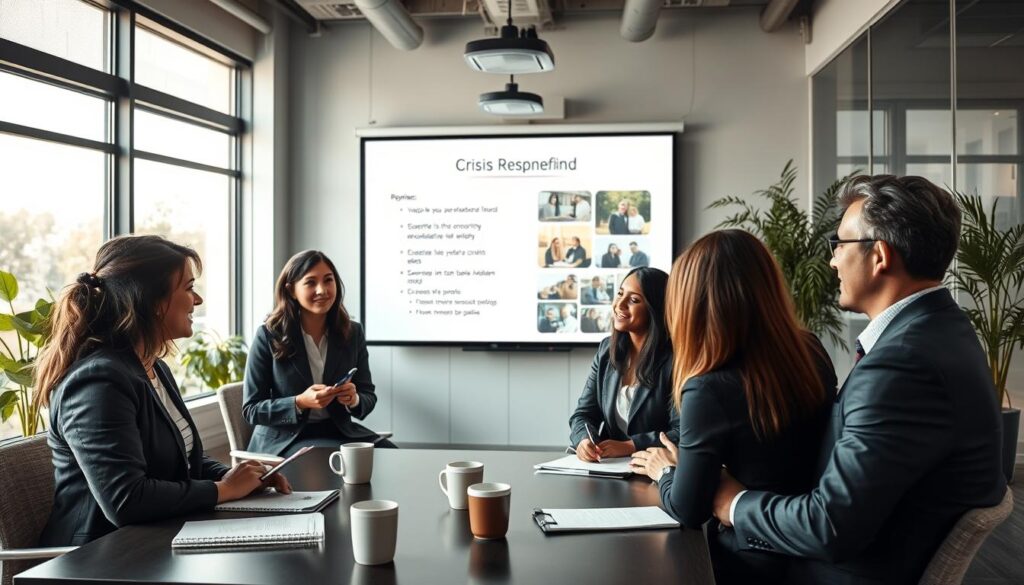
Traditional after-action reviews can feel like corporate post-mortems, adding to the trauma. The standard “hot wash” can be like a public autopsy, with no care for the responders’ feelings. Psychological safety is key here, making the difference between learning and burnout.
Effective debriefs follow three rules:
- No Blame, Just Gain: We look at systems, not people. We ask what went wrong, not who did it.
- Psychological Safety First: Debriefs happen in circles, not at podiums. Everyone gets a say, from the person who worked for 18 hours to the incident commander.
- Data Over Drama: We focus on response times, supply chain issues, and volunteer check-ins. This helps us build better systems, not assign blame.
Mandatory Rest: Not a Suggestion, a Protocol
In a culture that celebrates burnout, we’ve made rest a must. Not just a suggestion, but a rule. Our mandatory rest cycles are designed to help:
| Cycle | Duration | Key Components | Success Metric |
|---|---|---|---|
| Immediate (0-24h) | Critical incident stress debrief within 72 hours | Peer support, hydration, sleep | 100% participation rate |
| Short-term (Week 1) | 72-hour mandatory rest period | No check-ins, no emails, no “just checking in” texts | Reduced volunteer turnover |
| Ongoing (Month 1-3) | Monthly wellness checks | Access to counseling, flexible scheduling | Return volunteer rate |
The military has R&R. Surgeons have mandatory time off. Yet, in volunteer crisis response, we’ve forgotten that sleep is essential. It’s not for the weak.
Structured After-Action Review: Beyond the Checklist
The military’s After Action Review (AAR) has been adapted, but often misses the “After” part. Our AARs have three phases:
- Phase 1: The 48-Hour Hot Wash – Immediate impressions, fresh in memory
- Phase 2: The 72-Hour Deep Dive – Data analysis meets human experience
- Phase 3: The 30-Day Reflection – With the benefit of hindsight and rest
This isn’t just about checking boxes. We once found that 40% of volunteers left between days 3-5 of a crisis response. The solution wasn’t more food or thanks—it was scheduled breaks.
Gratitude as a System, Not a Platitude
Gratitude in crisis response is often shallow. We’ve made gratitude real through:
- Specific Recognition: We give specific thanks, like “Your calm during the supply chain bottleneck on Tuesday prevented a 3-hour delay”
- Skill Acknowledgment: “Your ability to de-escalate that situation likely saved lives”
- Documented Impact: “Because you organized the donation center, 200 more families got supplies”
This isn’t just about feeling good. It’s the psychological care that makes a crisis response team strong.
Building the Resilient Responder
The final piece is the “Resilience Ripple.” We don’t just send people home after a disaster. We provide:
- Peer Support Networks: Monthly check-ins for 6 months post-response
- Skill-Building: Turning crisis experience into expertise through formal training
- Alumni Networks: Former responders mentoring new volunteers
This isn’t just being nice. It’s strategic. A responder who feels safe, rested, and valued doesn’t just come back. They bring friends, ideas, and resilience.
The most effective crisis response knows that caring for the caregiver is key. It’s not just the end, but the start of the next response. Because losing the people who know how to respond is the real disaster.
Join the rapid‑response roster: training calendar and requirements
So, you’ve read the playbook. You know the roles, safety protocols, and how things work. Now, you wonder if you’re ready to join the rapid response team. The journey from thinking to doing involves paperwork and training.
The process is a filter, not a barrier. You start as a Registered Volunteer. This is your first step into disaster response. To join the Rapid Response Team, you need more. It’s like a superhero tryout, but with lots of paperwork and no capes.
You’ll need about 25 hours of online training. Then, you’ll face a tough, one-day test in Toronto. You must be 18, have a valid passport, and ready to go for three weeks. Places might have no electricity or running water.
They look for people who can do many things, like build water systems or help with emotional issues. Skills like carpentry or crisis counseling are key.
This isn’t a solo job. It’s about mutual aid, a network, not a hierarchy. It’s a modern aid society with the latest tech and rules. Start at the GlobalMedic volunteer portal. The application tests your commitment, not just your skills. Are you ready to be part of a survival chain, or just a good-intentioned bystander? The roster is waiting for you.