
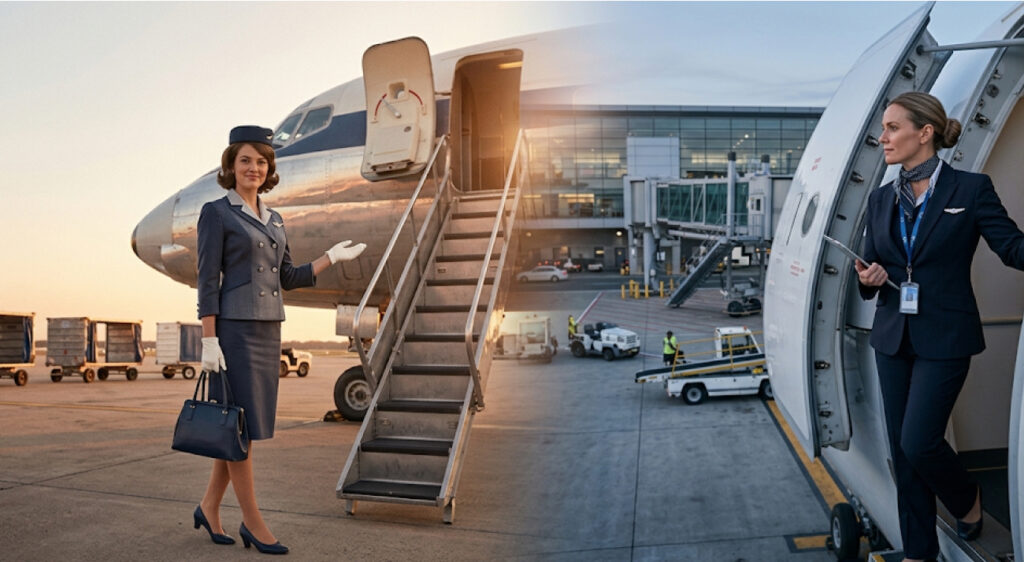
The golden age of commercial aviation left a lasting mark on American travel, from the polished uniforms and elaborate meal services of the 1950s, 1960s, and 1970s to the professional traditions that continue to shape cabin crews. Behind the glamorous images of the jet age, however, was a workforce navigating restrictive employment policies, changing passenger expectations, and a growing recognition that flight attendants were essential to aviation safety. The evolution of airline travel also reflects how passengers’ expectations have changed, including the growing use of digital platforms to follow sporting events while traveling or at home. For readers interested in the intersection of sports and online wagering, a BetOnline crypto sportsbook offers one example of how digital services have expanded alongside modern consumer habits.
That history remains relevant today. On September 18, 2026, the Museum of Flight in Seattle published a new feature revisiting the experiences of Mary Hoy, who worked as a United Airlines stewardess from 1967 to 1973. Her recollections offer a firsthand perspective on the dramatic changes in aircraft, service expectations, gender equality, and working conditions during the jet age.
For The Silver Liners, that history has a particular meaning. Founded in 1949 by three former Eastern Air Lines flight attendants, the organization grew from a determination to preserve professional friendships when airline employment rules often forced women to leave their jobs after marriage or reaching a certain age. Its story demonstrates that the strongest legacy of the golden age may be the connections formed among the people who worked in the skies.
How the Golden Age of Flying Changed Airline Travel
Commercial aviation expanded significantly during the decades following World War II. As airlines introduced larger aircraft and developed more extensive domestic and international networks, flying became an increasingly important part of American business and leisure travel.
The arrival of the jet age changed the experience for passengers and crew members alike. Aircraft such as the Boeing 707 and later the Boeing 747 offered greater capacity and made long-distance travel more practical. Airlines competed through cabin service, meals, distinctive uniforms, and carefully managed passenger experiences.
The Smithsonian National Air and Space Museum documents how airlines used fashion and cabin presentation to distinguish themselves during the 1960s and 1970s. Braniff Airways, for example, worked with designer Emilio Pucci to introduce colorful uniforms as part of its celebrated “End of the Plain Plane” campaign. United Airlines also introduced uniforms designed by Hollywood costume designer Jean Louis in 1968.
These designs became recognizable symbols of the era. Yet uniforms also reflected an industry that frequently judged women by their appearance as much as by their professional skills. The polished image presented in airline advertisements did not always reflect the realities of working inside an aircraft cabin.
Flight attendants were expected to maintain service standards, manage demanding schedules, and respond to passenger needs while operating within strict appearance and employment policies. The contrast between the glamour of the profession and the restrictions placed on its workers is central to understanding the golden age today.
Ellen Church Helped Establish the Modern Cabin Crew Profession
The history of flight attendants began before the jet age. On May 15, 1930, Ellen Church became the first stewardess to serve aboard a commercial airline flight operated by Boeing Air Transport, a predecessor of United Airlines.
Church was a registered nurse from Cresco, Iowa, who had earned her nursing degree from the University of Minnesota in 1926. She initially wanted to become a pilot, but women were excluded from airline pilot positions at the time. Instead, she proposed that trained nurses could help reassure passengers who were nervous about flying.
Her idea helped establish a new role in commercial aviation. Church also developed the job description and training program for the first group of eight stewardesses, all of whom were nurses. The initial service operated between Oakland, California, and Chicago, Illinois.
The early emphasis on nursing established a connection between passenger care and the responsibilities of cabin crew. Although airlines later placed greater emphasis on hospitality and image, safety remained central to the profession.
The Federal Aviation Administration’s historical account of Church’s contribution provides an important reminder that the role developed through practical problem-solving and professional expertise. Modern flight attendants continue to perform duties that include checking emergency equipment, explaining safety procedures, assisting passengers with special needs, and coordinating evacuations when necessary.
The Smithsonian National Air and Space Museum’s history of flight attendants offers further insight into the origins of the profession and its relationship with changing social expectations.
What Mary Hoy’s Experiences Reveal About the Jet Age
A recent historical feature from the Museum of Flight offers a useful link between aviation’s past and present. Published by Alison Jean Smith on September 18, 2026, the article revisits Mary Hoy’s experiences as a United Airlines stewardess between 1967 and 1973.
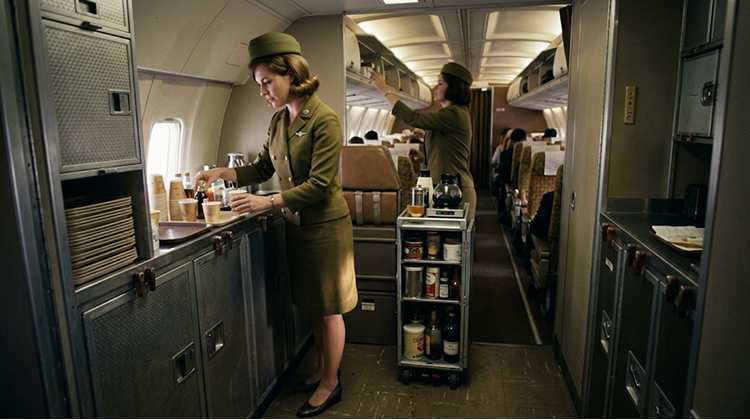
Hoy worked during a period of rapid technological change. Her recollections include service aboard aircraft such as the Douglas DC-6, Convair CV-340, and Boeing 747. The 747, with its double-deck configuration and capacity for more than 300 passengers, created a different working environment from earlier aircraft.
Hoy recalled the unusual arrangement of the 747’s lower-level galley, which crew members could reach by a single-person elevator. Even when passengers were sleeping and service demands temporarily eased, attendants were expected to remain alert.
Her memories also highlight how much in-flight service has changed. Hoy described an era when even shorter flights commonly included more extensive food and drink service than passengers generally receive today. Those expectations required attendants to manage service efficiently while maintaining order throughout the cabin.
But the most revealing parts of her account concern workplace culture. Hoy recalled enduring demeaning comments and attitudes that reflected the gender assumptions of the period. Her experience illustrates why photographs of elegant uniforms and attentive service cannot tell the entire story.
After her years as a flight attendant, Hoy pursued flying lessons, earned multiple ratings, and joined the Federal Aviation Administration. Her later career illustrates the professional capabilities that can extend far beyond the cabin.
The Museum of Flight’s September 18, 2026, account of Mary Hoy’s experiences provides a valuable firsthand perspective on this period.
Gender Equality Changed Who Could Work in the Cabin
For much of the early history of commercial aviation, airlines imposed restrictions that affected flight attendants’ age, appearance, weight, and marital status. Women could be required to leave their jobs after marrying or reaching an employer’s specified age limit. These rules made it difficult for many workers to build long-term careers.
Legal challenges and changing workplace expectations gradually transformed the profession.
One important milestone was the 1971 federal court decision in Diaz v. Pan American World Airways. The case challenged Pan American’s refusal to hire men as flight attendants. The decision held that the airline’s exclusion of male applicants violated Title VII of the Civil Rights Act of 1964.
The ruling helped establish that cabin crew positions could not simply be reserved for women because of assumptions about the image airlines wanted to project. The terminology used by the industry also changed over time, with “flight attendant” increasingly replacing the gender-specific term “stewardess.”
Other changes followed as employment discrimination laws and workplace standards evolved. Airlines moved away from some of the appearance-centered policies associated with the jet age, while uniforms increasingly reflected practical job requirements as well as corporate identity.
The history is also broader than the experiences of white female flight attendants. The National Museum of African American History and Culture documents the experiences of early Black flight attendants, including Patricia Grace Murphy, Delta Air Lines’ first African American stewardess, who graduated from training in August 1966.
Recognizing these histories gives a more complete picture of the profession. The golden age was a period of remarkable growth and memorable design, but it was also a time when many qualified workers had to challenge barriers to equal employment.
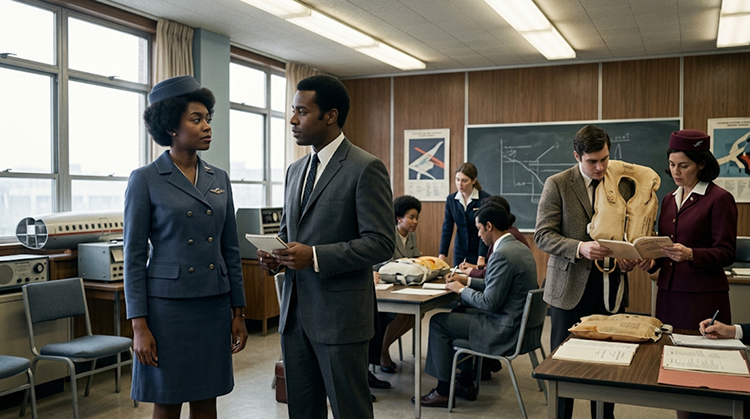
Why The Silver Liners’ 1949 Founding Still Matters
The Silver Liners began with a problem that extended beyond the airline industry. Professional relationships formed through demanding work schedules and shared experiences were at risk of disappearing when former flight attendants left their jobs.
In 1949, three former Eastern Air Lines flight attendants established a social group to maintain those friendships. The name honored Eastern Air Lines’ “Great Silver Fleet,” connecting the organization to the aircraft and airline culture that shaped its members’ careers.
The group expanded as more former stewardesses joined and independent chapters developed along the Eastern Seaboard. In 1968, representatives of four chapters—New York, New Jersey, Miami, and Atlanta—met in Atlanta to establish the National Silverliners. In 1974, the addition of a chapter in Mexico helped the organization become Silverliners International, and membership opened to current flight attendants.
Eastern Air Lines closed in 1991, but the organization continued. It eventually broadened its reach to welcome current and former flight attendants from commercial airlines beyond its original founding carrier.
This history reveals a different way to measure the legacy of aviation. Aircraft models, uniforms, and service rituals help document how the industry changed, but professional friendships can preserve the personal experiences behind those changes.
The Silverliners’ organizational history explains how a small group formed in response to restrictive employment rules developed into a wider community. Its evolution reflects the determination of aviation professionals to maintain relationships that outlasted individual careers and corporate changes.
The Golden Age Legacy in Today’s Flight Attendant Profession
Today’s flight attendants work in an environment shaped by stricter safety requirements, standardized training, advanced aircraft, and more inclusive employment practices. While passenger service remains important, the central responsibility of the role is to protect passengers and respond to emergencies.
The U.S. Bureau of Labor Statistics reported that flight attendants held approximately 133,700 jobs in 2025. Its current Occupational Outlook Handbook projects employment growth of 9% from 2025 to 2035, with an average of about 18,500 openings each year over the decade. The median annual wage was $63,580 in May 2025.
Those figures show that the profession remains a substantial part of the U.S. transportation workforce. They also provide context for the continuing need to preserve professional knowledge and the experiences of people who have spent years working in the cabin.
Flight attendants still face demanding schedules, time away from home, passenger conflicts, and the need to respond quickly when circumstances change. Experienced crew members pass on practical knowledge about teamwork, communication, and handling difficult situations. Their stories can also help younger colleagues understand how today’s workplace standards developed.
The past should not be romanticized. The restrictive policies and discriminatory attitudes experienced by many earlier flight attendants deserve honest recognition. At the same time, their achievements helped shape a profession with broader opportunities and clearer safety responsibilities.
For readers interested in the workforce today, the Bureau of Labor Statistics’ flight attendant outlook provides current employment figures and information about the job’s responsibilities, training, and working conditions.
Preserving Aviation Stories for the Next Generation
The golden age of flying is often remembered through photographs of polished aircraft, elegant uniforms, and formal cabin service. Those images capture part of the story, but oral histories and personal recollections reveal the people behind the presentation.
Mary Hoy’s experiences, Ellen Church’s early contribution, Patricia Grace Murphy’s place in aviation history, and the founding members of The Silver Liners each represent a different part of that story. Together, they show how the profession evolved through technological advances, legal challenges, changing expectations, and the determination of individual workers.
Preserving these accounts helps future generations understand the difference between the public image of aviation and the daily work required to keep passengers safe. It also gives former flight attendants an opportunity to share experiences that might otherwise be lost as careers and airlines change.
For The Silver Liners, the mission of maintaining professional friendships is closely connected to that preservation effort. The organization began in 1949 because three former Eastern Air Lines flight attendants wanted to keep their connections alive. More than seven decades later, that founding idea remains a meaningful part of aviation heritage.
The golden age of flying may belong to a different era of commercial travel, but its influence continues through the people who carry its lessons forward: respect for experience, recognition of progress, and lasting bonds among the professionals who built their lives in the skies.