
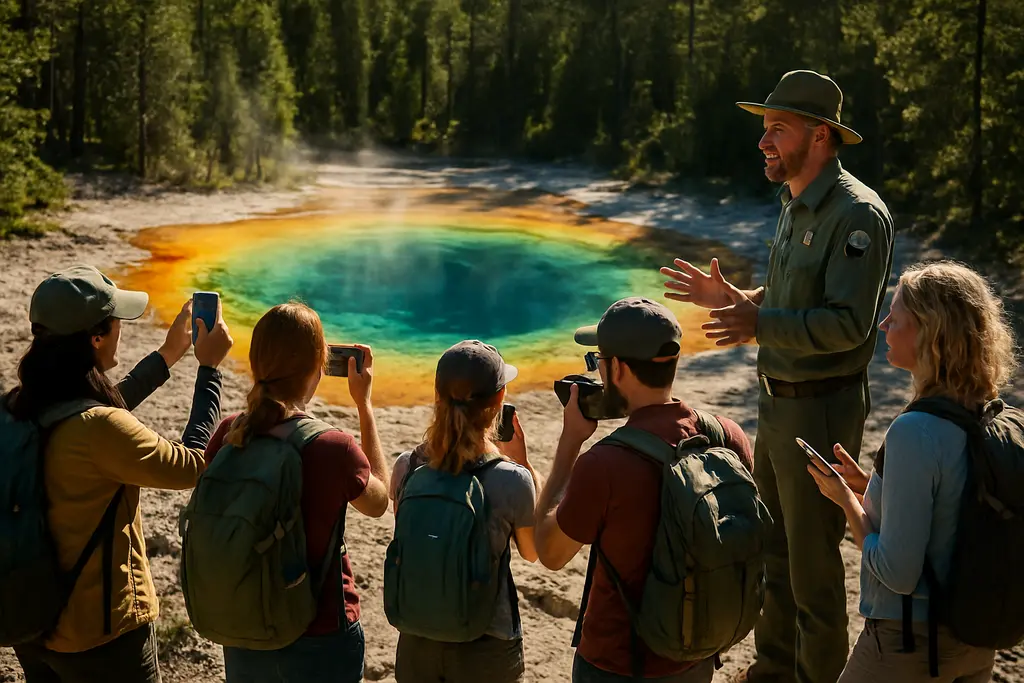
Yellowstone Access Updates matter more than usual for late-October 2026 trips because the park is shifting from regular wheeled-vehicle access toward winter operations while road work, fee rules, and site closures still affect visitors. As of October 21, 2026, travelers should plan from named entrances, confirmed road segments, and seasonal service dates rather than assuming that summer routes and facilities remain available.
What Has Changed For 2026 Visitors
The most direct cost change in 2026 applies to non-U.S. residents. Since January 1, 2026, non-U.S. residents aged 16 and over have owed a $100 nonresident fee in addition to the standard entrance fee, unless they hold a valid Annual Pass or America the Beautiful Pass, according to the National Park Service fee policy. This is separate from the standard Yellowstone entrance fee structure: $35 for a private vehicle and all passengers for seven days, $30 for a motorcycle, and $20 for a hiker or cyclist aged 16 or older.
Fee-free days also require careful reading. In 2026, listed fee-free dates for U.S. citizens and residents included February 16, May 25, June 14, July 3–5, August 25, September 17, October 27, and November 11. Those dates waived entrance fees only for U.S. citizens and residents. Nonresidents still owed both the entrance fee and the nonresident fee. For an October 27, 2026, visit, this distinction could change the cost of entry by a material amount for an international family.
Cost Planning For Mixed Groups
Groups with both U.S. residents and non-U.S. residents should not assume one fee rule applies to every passenger. The research notes specify the nonresident charge by visitor status and age, not by vehicle alone. Travelers using rental vehicles should budget from the individual status of passengers aged 16 and over, then add the standard vehicle fee unless a qualifying pass applies.
Yellowstone Access Updates By Entrance
The late-October access picture is defined by seasonal road timing. The only road open year-round to regular cars is the route between the North Entrance and the Northeast Entrance, running from Gardiner, Montana, through Tower Junction toward Cooke City, Montana. Other entrances and road segments follow seasonal schedules. The West Entrance to Madison, for example, is listed as open from April 17 through October 31, 2026, which leaves only a short late-fall window after October 21.
Travelers planning to cross the park by car after October 31, 2026, should treat most regular-vehicle assumptions as suspect unless the exact road segment has been verified close to departure. Winter oversnow travel is scheduled separately. Many groomed roads open for snowmobile and snowcoach use on December 15, 2026. Mammoth Hot Springs to Norris is listed for December 15, 2026, through March 7, 2027, while the West, South, and East entrances and other remaining groomed roads are listed for December 15, 2026, through March 15, 2027.
Yellowstone Access Updates For Drivers
These Yellowstone Access Updates point to a practical decision: late October is not simply a quieter version of July. It is a transition period. A route that works on October 25 may not work in early November, and a winter-access plan does not begin until the scheduled oversnow dates. If your trip depends on connecting entrances across the interior, build the drive plan around the named open segment first, then fit lodging and activities around that road reality.
Road Work, Fire Rules, And Visitor Pressure
Construction remains a trip-planning factor through the end of the regular road season. The Gardiner River High Bridge, about 0.5 miles southeast of Mammoth Hot Springs, has been under repair from April until late October 2026. Traffic is reduced to a single lane around the clock, and vehicles wider than 8 feet 6 inches, longer than 75 feet, or over 80,000 pounds are not permitted. Delays of up to 15 minutes are expected there.
Other work zones also affect timing. Paving operations at the Yellowstone River Bridge near Tower Junction are listed through November 2026, with possible delays of up to 30 minutes. Bridge work between Fishing Bridge and Bridge Bay Marina is listed through November 1, 2026, with possible delays of up to 15 minutes. These are not extreme delays in isolation, but they matter when daylight is shorter, services are seasonal, and lodging or gate timing leaves little margin.
The most specific fire note in the research is from mid-July 2026, when fire danger in Yellowstone was high and no uncontrolled wildfires were listed. Campfires were permitted only in designated rings and had to be fully extinguished. Because fire conditions can change quickly, campers should verify restrictions before lighting any fire, even if a campsite has a ring.
Visitor Numbers And Timing Pressure
Visitation data from 2026 shows that fall remained active. July 2026 recorded 958,706 recreation visits, about 2 percent below July 2025. Through July 2026, year-to-date recreation visits reached 2,635,384, about 1 percent below the same period in 2025. September 2026 recorded 868,450 recreation visits, about 3 percent above September 2025. Those figures do not predict gate waits on a specific date, but they support a cautious reading: late-season travel still draws substantial demand.
For readers comparing Yellowstone with other public-land trips in autumn, this site’s note on park access changes gives useful context on why seasonal dates should be checked before committing to lodging. For broader Western travel coverage, regional planning material is available on California Times, a related site in the same network, offering valuable insights.
Fees, Timing, And Practical Trip Checks
The following table condenses the main trip checks supported by the October 21, 2026, research notes. It is best used as a screening tool before booking, not as a substitute for a day-of road or service check.
| Planning Item | What The Research Shows | Traveler Action |
|---|---|---|
| Nonresident Fee | $100 for non-U.S. residents aged 16 and over, unless covered by a valid qualifying pass | Confirm passenger status and pass coverage before arrival |
| Year-Round Car Road | North Entrance to Northeast Entrance remains the regular year-round car route | Base late-fall routing on this segment first |
| West Entrance | West Entrance to Madison is listed through October 31, 2026 | Avoid assuming November access by regular vehicle |
| Biscuit Basin | Closed after June 2026 hydrothermal activity and boardwalk damage | Do not plan walks or photo stops inside the closed basin |
Backcountry plans need the same caution. Many northern Yellowstone trails remain affected by the 2022 floods, and some trailheads, including Rescue Creek along North Entrance Road, remain inaccessible in the research notes. Streams and river crossings may differ from maps because watercourses changed. Hikers should scout crossings rather than relying only on printed or saved routes.
- Check the exact entrance and road segment, not just the park name.
- Confirm whether lodging, dining, campgrounds, and visitor services are still operating on your travel dates.
- Budget separately for standard entrance fees and any nonresident fees that apply.
- Allow extra drive time near Mammoth, Tower Junction, Fishing Bridge, and Bridge Bay Marina.
- Keep boardwalk closures and hydrothermal warnings out of casual route decisions.
Yellowstone Access Updates For October 2026
Biscuit Basin is the clearest example of why visitors should respect closures even when nearby attractions remain open. A small hydrothermal explosion occurred there on June 13, 2026, and new venting features were detected afterward. The basin remains closed because boardwalks were damaged and ground activity is unpredictable, according to the U.S. Geological Survey update. That closure is not a routine trail inconvenience; it reflects an active thermal-area hazard.
Treat Yellowstone Access Updates as a sequence of checks: fee status, entrance status, construction delay, service availability, and site-specific closures. For an October 2026 visit, the strongest plan is usually the least dependent on marginal road dates and the most honest about seasonal services. Yellowstone remains accessible in defined ways, but the access pattern on October 21, 2026, is already moving away from the broad summer model and toward a restricted winter framework.