
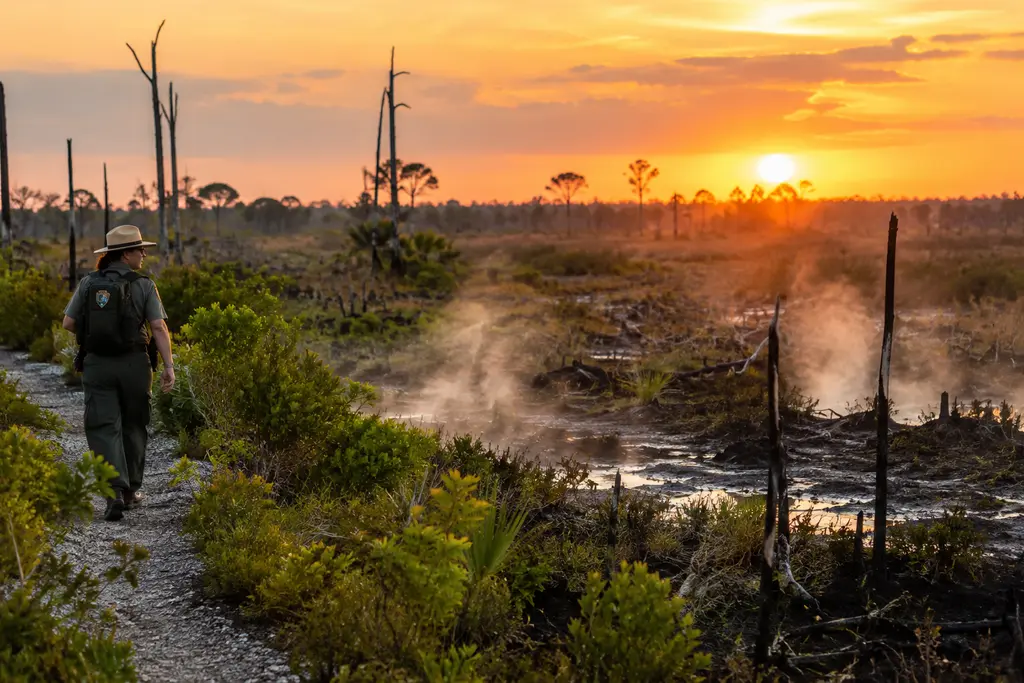
Everglades Access Updates on October 26, 2026, are no longer centered on a full Shark Valley shutdown, but wildfire recovery, construction closures, site maintenance, and roadwork still affect trip planning. The main change since the peak of the 2026 fire disruptions is that Shark Valley District reopened to full public and administrative access at 1:00 PM on August 24, 2026. That reopening matters for visitors building short South Florida park trips, because Shark Valley is one of the park’s main access points from the U.S. Highway 41 corridor.
The more practical reading is cautious rather than dramatic. Several 2026 fires were contained or no longer tied to broad public closures by the dates listed in park notices, yet not every site in Everglades National Park is open or easy to reach. Visitors should separate three categories before booking: areas reopened after wildfire closures, places still restricted for construction or maintenance, and routes where access exists but conditions slow the trip.
Everglades Access Updates After The 2026 Fires
Everglades Access Updates For Shark Valley
The Shark Valley District emergency closure was lifted at 1:00 PM on August 24, 2026, after the Chipmunk, Vulture, and Movie Dome fires prompted the shutdown. The National Park Service said full public and administrative access resumed at that time, and its reopening notice listed the Chipmunk Fire at about 17,000 acres and 60% contained, the Vulture Fire at 347 acres and 100% contained, and the Movie Dome Fire at 6,207 acres and 100% contained as of the reopening date NPS Shark Valley reopening notice.
For travelers, Everglades Access Updates now begin with the fact that Shark Valley access had resumed by late August. That does not remove the need for same-day checks, especially for visitors planning tight road transfers from Miami, Naples, Homestead, or Everglades City. A reopened district can still have altered visitor flow, temporary facility limits, smoke concerns, or weather-related changes that do not appear in older trip notes.
Highway 41 Fire And Earlier Spring Closures
The Highway 41 Fire was a separate 2026 event. It started on April 27, 2026, burned about 9,149 acres, reached 100% containment by May 4, 2026, and emergency closures tied to that fire were lifted as of May 2, 2026, according to the National Park Service Highway 41 Fire update. Because those dates have passed, travelers should treat the Highway 41 Fire as a completed access event rather than an active closure notice.
The Coptic Fire also affected the broader 2026 access picture. It began on June 17, 2026, after lightning in northeast Everglades near U.S. Highway 41 and west of the L-31N Canal. As of June 19, it was about 4,793 acres and 40% contained. Research notes for that fire reported no associated closures, but smoke affected visibility along Highway 41. That distinction is useful: a road or district may remain legally open while visibility or comfort still changes the quality of the visit.
What Reopened And What Remains Restricted
Closed Areas Visitors Should Not Build Around
As of October 26, 2026, the East Everglades Day Use Area remained closed for heavy-machinery construction. The closure covers the northeastern boundary area from SW 168 Street to SW 237 Avenue and all of SW 237 Avenue roadway. This is not a wildfire closure, but it affects access in a way visitors should treat just as seriously when selecting entry points.
Backcountry and coastal users also need to account for site-level closures. The interior of Pavilion Key was closed, while the small north campsite remained open. Wilderness sites listed as closed for maintenance included Johnson Key Chickee, Shark Point Chickee, and Little Rabbit Key Ground Site. These are targeted closures rather than park-wide restrictions, but they can disrupt permit planning for paddlers and overnight users more than a casual day visitor might expect.
- Do not assume a reopened district means every campsite, chickee, or ground site is available.
- Check whether a closure is tied to fire, construction, or maintenance, because the timeline for reopening may differ.
- For paddling routes, confirm both launch access and overnight site status before setting a route.
- For day visits, build extra time into drives using U.S. Highway 41 because roadwork and visibility can affect timing.
Why Site-Level Closures Matter More In The Everglades
In many parks, a closed picnic area may be a minor inconvenience. In the Everglades, a closed chickee, ground site, or paddling segment can change the practical reach of a route. Distances, water exposure, and limited exit options make access planning more dependent on individual site status. Travelers who want a broader ecological primer before choosing between Shark Valley, Flamingo, and the Gulf-side areas can review this Everglades river of grass background to understand why conditions vary across the park.
Everglades Access Updates should therefore be read as a route-planning tool, not only as a list of open and closed gates. A day visitor entering Shark Valley has a different risk profile than a paddler linking markers across Halfway Creek or a camper trying to reserve a specific wilderness site. The confirmed open status of one area does not transfer to the rest of the park.
Route Planning For Roads, Trails, And Water
U.S. Highway 41 And Drive-Time Assumptions
Research notes for October 26, 2026, list ongoing roadwork on U.S. Highway 41, also known as Tamiami Trail, along the northern park boundary as part of Everglades restoration efforts. Travelers should expect up to 15-minute delays, with heavy equipment and personnel present. This does not make the corridor unusable, but it does make tight airport, hotel, or boat-transfer schedules more fragile.
The access lesson is straightforward: do not plan a Shark Valley visit or Gulf-side transfer with no buffer. If your route uses U.S. Highway 41 after sunrise, during midday heat, or near a scheduled tour or permit pickup, a modest road delay can still affect the day. Visitors comparing park status notes across destinations in the same travel network can also review CA Views for trip-planning insights related to these areas.
Halfway Creek And Paddling Caution
Halfway Creek was not completely passable in the October 26 research notes. Entry from Sea Grape Drive in Big Cypress south toward the HC 1 marker was described as working, but the sections from L-3 to L-1 were impassable. Paddlers were directed to follow markers across “the lake” near L-14 and head toward L-5 or L-6 to reach Everglades City.
That description is specific enough to be useful, but it also signals uncertainty for anyone without local paddling experience. A route that is partly passable can still require careful marker reading and conservative timing. For visitors without prior experience on Everglades waterways, choosing a simpler confirmed route may be more practical than trying to force a longer passage through partial obstruction.
Campgrounds And Visitor Services To Verify
Flamingo And Long Pine Key Planning
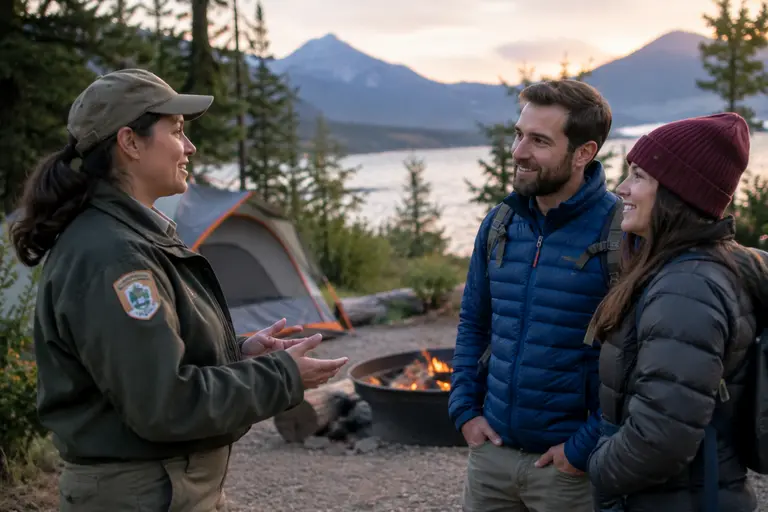
Research notes list Flamingo Campground as open year-round with 274 sites. Long Pine Key Campground was listed with 108 sites, with group site reservations open seasonally from November 15 through April 15 and individual sites first-come, first-served during the rest of the year. Those details help with broad planning, but visitors should still confirm availability and any operational changes close to the travel date.
For travelers arriving after a wildfire season, campground status is only one part of the decision. Road access, smoke history, maintenance closures, and weather can affect whether the chosen base is convenient. Flamingo may fit one trip style, while Long Pine Key may fit another; the research provided site counts and seasonal reservation structure, not a universal recommendation.
Visitor Centers And Information Timing
The Ernest F. Coe Visitor Center in the Homestead area was listed as open daily year-round. The Shark Valley Visitor Center was listed as open year-round from 9:00 AM to 5:00 PM. These access points are useful for orientation, but visitors should avoid relying on visitor center hours alone as proof that every trail, road, campsite, or paddling segment is available.
Everglades Access Updates work best when checked in layers: district status first, then road status, then the exact site or route. That order prevents a common planning error after major fires, where travelers see that a district has reopened and assume all secondary facilities have returned to normal use. The October 26 access picture is more mixed than that.
Everglades Access Updates For Late October Trips
For late October 2026 travel, the most useful reading of Everglades Access Updates is that major 2026 wildfire closures cited in the Shark Valley and Highway 41 notices had been lifted by their stated dates, while targeted closures and route restrictions remained. Shark Valley had reopened on August 24, Highway 41 Fire emergency closures had been lifted on May 2, and several maintenance or construction closures still affected specific parts of the park.
Before booking lodging, tours, or backcountry plans, match your intended activity to the exact access issue. Day visitors should focus on Shark Valley status, visitor center hours, U.S. Highway 41 delays, and smoke or visibility notes. Campers should verify campground operations and site-specific closures. Paddlers should treat Halfway Creek and wilderness-site restrictions as primary planning factors, not minor footnotes. The park was accessible in key areas on October 26, 2026, but the supported facts point to a park where careful route checks still matter.