
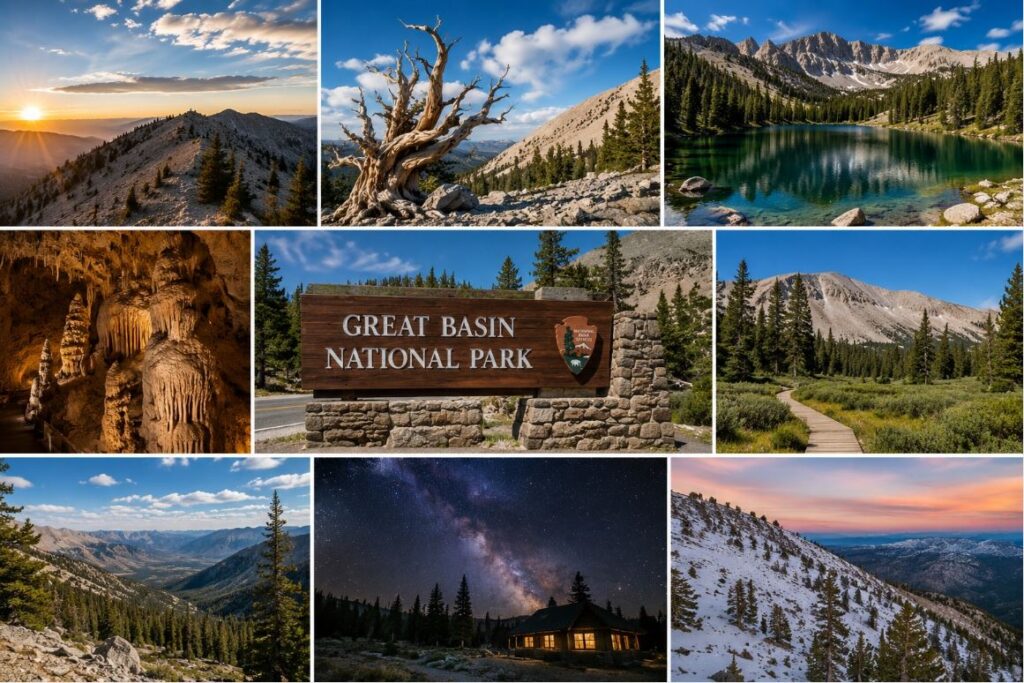
High Altitudes And Dark Skies: Great Basin National Park
Great Basin National Park sits quietly in eastern Nevada near the Utah border. It attracts a fraction of the crowds seen at Yosemite or Zion. The park encompasses extreme geographical shifts. The desert floor sits around 5,000 feet above sea level. The summit of Wheeler Peak reaches 13,063 feet. This dramatic vertical shift creates distinct climate zones within a very tight radius. Visitors experience sagebrush foothills and alpine glaciers in a single afternoon.
Accessing The Remote Nevada Wilderness
Reaching the park requires driving along Highway 50, often called the loneliest road in America. The isolation provides a distinct advantage for travelers seeking quiet natural spaces. The park charges no entrance fee. Passing through the gates requires no advance vehicle reservations.
Paving the itinerary requires attention to seasonal weather patterns. The Wheeler Peak Scenic Drive gains over 4,000 feet in elevation over 12 miles. Snow heavily impacts this route. Park crews typically open the upper sections of the road by late June. Early season snowstorms frequently force abrupt closures by October. Planning extensive national park road trips through the Southwest demands checking daily weather reports for eastern Nevada.

Ancient Bristlecone Pines And Alpine Environments
The high-altitude forests support groves of Great Basin bristlecone pines. These organisms rank among the oldest living trees on Earth. Some specimens have survived for over 4,000 years. The harsh wind and freezing temperatures twist their trunks into strange, polished shapes.
Reaching the primary viewing area involves hiking the Bristlecone Trail. The path begins near the end of the Wheeler Peak Scenic Drive. The trail sits above 10,000 feet. The thin air forces hikers to move slowly and acclimate properly. Packing extra water and layers prevents altitude sickness and hypothermia. The weather drops fast near the glacier basin.
| Park Location | Elevation | Typical Operating Season |
| Lehman Caves Visitor Center | 6,825 feet | Year-round |
| Upper Lehman Creek Campground | 7,752 feet | May – October |
| Wheeler Peak Trailhead | 9,886 feet | July – September |
| Wheeler Peak Summit | 13,063 feet | Late July – September |
Subterranean Systems At Lehman Caves
A massive limestone cavern system sits below the desert floor. Lehman Caves features over 300 rare shield formations alongside stalactites and stalagmites. Park rangers conduct all explorations of the cave system. Entry requires purchasing tickets for a guided tour.
Demand for cave access far exceeds capacity. Tickets open for booking 30 days in advance. They sell out within minutes during the summer months. Securing a spot requires booking exactly when the window opens on the National Park Service website. The cave maintains a constant temperature of 50 degrees Fahrenheit year-round. A light jacket is highly recommended for the 90-minute Grand Palace tour.
Planning A Stargazing Excursion
The International Dark-Sky Association designates Great Basin as an International Dark Sky Park. The remote location eliminates light pollution from nearby cities. The high elevation pushes observers above much of the atmospheric haze. The resulting night sky presents the Milky Way with extreme clarity.
Park astronomers host regular viewing programs at the Astronomy Amphitheater during the summer. They set up high-powered telescopes for public use. The Perseid meteor shower in August draws serious astronomy enthusiasts. Finding an open campsite during new moon phases requires arriving early in the morning. All campgrounds operate on a first-come, first-served basis outside of the reservable Grey Cliffs loop.