
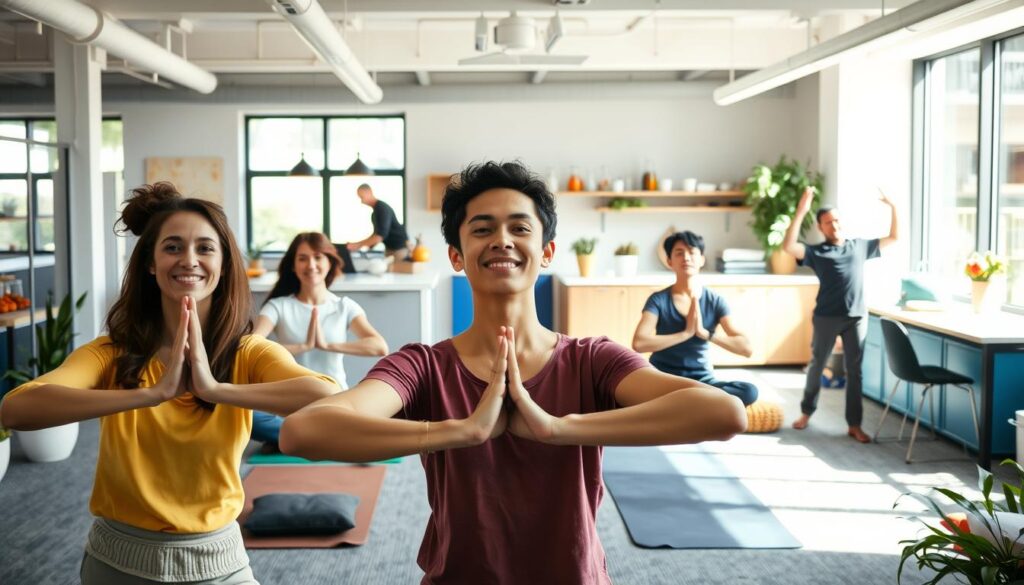
Remember when workplace wellness was just a sad fruit basket in the breakroom? We’ve come a long way. Today, corporate wellness is much more than that.
I’ve seen this change and it’s amazing. What began as simple health efforts has grown into full ecosystems. Now, employees don’t just show up; they thrive.
Smart companies are making wellness a part of their culture. They’re creating “tribal wellness” environments. Here, your workday is about growing, not just surviving.
It’s like moving from basic economy to first class for your health. These programs offer more than just discounts. They create spaces where you can be productive and happy.
The real magic happens when wellness becomes your workplace culture. That’s when companies truly thrive.
Overview of Wellness Initiatives
Remember when workplace wellness was just a dusty treadmill and a fruit basket? Those days are over. Today, wellness initiatives are complex, covering all parts of work life.
These programs are so detailed, they make Swiss Army knives seem simple. Wellness now includes physical, financial, mental, and social health.
Let’s look at what’s offered today. We have on-site fitness centers and health screenings. There are also flexible work schedules and smoking cessation programs.
Mental health is a big focus. Employee Assistance Programs (EAPs) help with financial stress and relationship issues. Wellness talks have become real conversations, not just HR checks.
The social side is also key. Team-building activities have changed from awkward trust falls to meaningful group activities. There are now commuting solutions and healthy food options.
When these efforts feel like real support, they work. It’s the difference between being told to meditate and being given tools to do it. Wellness is personal, like a choose-your-own-adventure book.
What makes these efforts succeed? They’re connected. Financial wellness reduces stress, improving mental health and encouraging fitness activities. It’s a cycle that makes sense.
The best programs create a web where each part supports the others. Smoking cessation and stress management work together. Group activities improve mental health by building connections. It shows that humans are complex, needing a variety of solutions.
This isn’t just corporate kindness; it’s smart business. When people feel supported, they bring their best selves to work. And that makes them better at their jobs. Who knew?
Benefits of Participation
Let’s get real about the real benefits of wellness programs. We’ve all been through the pointless team-building exercises. It’s time to focus on what actually adds value.
Good wellness programs create a cycle of personal and team success. It’s like finding out your daily vitamin boosts your job skills. What a nice surprise!
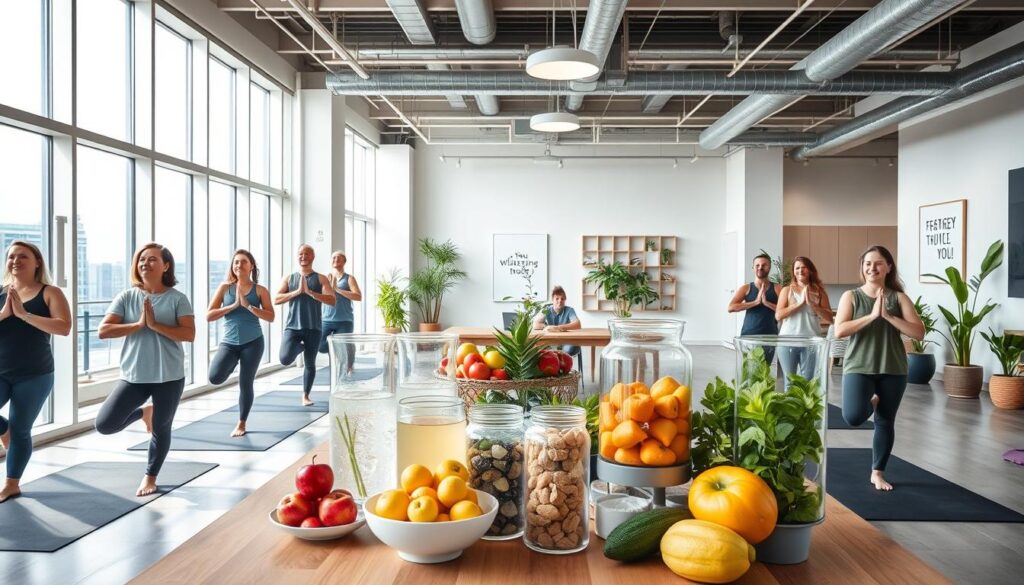
Positive Work Culture
Remember when work culture was just about donuts and nice emails? Those days are gone. Real wellness programs are changing how we work.
Job Satisfaction and Employee Engagement
When companies focus on wellness, they show they value their employees. This shift is powerful. It makes employees feel more than just a number.
When people feel their health is important, they engage more. It’s the difference between just showing up for a paycheck and actually caring about your work.
Risk Reduction
Now, let’s talk about the numbers. Good wellness programs cut down on risks in many ways:
| Risk Category | Reduction Impact | Financial Benefit |
|---|---|---|
| Healthcare Costs | Up to 25% decrease | Big savings |
| Absenteeism | 27% less | More productivity |
| Turnover | 31% lower | Less recruitment costs |
Mental Health Support
In today’s world, mental health support is essential. Quality programs tackle real mental health issues.
Creating a Healthy Work Environment
Creating a good work environment is more than just adding a meditation app. It’s about making a space where people can be themselves. This means safety, reasonable workloads, and open mental health talks.
Research shows that focusing on mental wellness boosts innovation and problem-solving. Check out this study for more.
Improved Levels of Employee Satisfaction
When mental health is a priority, satisfaction is real. It’s not just about surveys. People start to enjoy their work more.
Common Goal and Social Wellness
Wellness programs foster real connections at work. They give us goals that aren’t just about money.
Physical Wellness
Physical wellness is more than just steps and BMI. It includes better health from moving, eating right, and sleeping well.
Being healthy physically helps us do our best at work.
Work-Life Balance
Modern wellness programs understand that work and life are connected. They help us manage stress and perform well at work.
They offer tools to balance life and work, not separate them. This helps us thrive in today’s world.
How to Join or Start a Program
So you’ve decided to stop watching fitness influencers on TikTok and actually become one? Excellent life choice. Joining an existing wellness program is usually easier than getting your cat to do yoga at 5 AM.
Most companies make joining super simple. You can use single-sign-on portals, mobile apps, and get cool incentives. It’s all very straightforward.
But what if your workplace wellness program is as dull as a library during finals week? It’s time to be a wellness activist. Starting a program needs diplomacy and data skills.
The best wellness champions campaign like politicians. First, gather like-minded colleagues. Then, survey what people really want (hint: it’s not another kale smoothie challenge).
Make a strong business case that Warren Buffett would approve of. Focus on group activities that people will enjoy, not forced corporate sessions.
Remember, the goal is not to force CrossFit on everyone. It’s to create something people will use. For those ready, check out this guide to launching wellness initiatives.
Flexible scheduling is key. Not everyone can do sunrise meditation or 6 PM fitness classes. The best programs offer various times and activities.
Incentives are powerful. Recognition, small rewards, or public praise can boost participation rates.
The magic happens when you mix personal fitness goals with group energy. Group activities make wellness fun and accountable.
Whether joining or starting, remember: wellness programs are long-term efforts. They’re not sprints. And, unlike real marathons, you don’t have to wear spandex.
Success Stories
Let’s explore the real-life success stories in the corporate world. These tales are filled with spreadsheets, not magic wands. They show the true value of wellness programs through real people’s transformations.
Take Johnson & Johnson’s wellness program, for example. They didn’t just improve their employees’ health. They saved a whopping $250 million in healthcare costs over ten years. This is not just smart health economics; it’s a financial win that makes accountants smile.
Adding a bit of competition can make a big difference. Studies show employees are 60% more likely to participate when programs are fun. Suddenly, that step counter isn’t just tracking steps. It’s fueling office rivalries that are more exciting than Game of Thrones.
The best stories come from everyday moments. Like the team that turned morning meetings into walking sessions. They solved three major projects during mile two. Or the team that lost hundreds of pounds through friendly competition, without any HR issues.
And then there’s the executive who quit smoking after 20 years. This is not just a health victory. It’s a cultural shift that spreads through the company like positive gossip.
These stories show that workplace wellness is real. It’s about real people making real changes. This creates healthier employees and boosts the company’s bottom line. The data is clear: investing in wellness benefits everyone.
Measuring Progress
We’ve all pretended to shake our fitness trackers to reach 10,000 steps. But real progress is about changing our lives for the better. It’s about turning vague goals into real results.
Quantitative data and qualitative experiences are key. It’s the difference between knowing you walked 15,000 steps and feeling the joy of it. This joy makes everyday tasks, like Monday meetings, easier.
Good measurement combines numbers with how we feel. The best programs track both physical changes and lifestyle shifts. Losing weight is great, but feeling miserable while doing it isn’t.
Here’s what really matters in tracking wellness progress:
- Weekly movement metrics – steps, miles, active minutes
- Recovery indicators – sleep quality, resting heart rate
- Biometric changes – BMI, blood pressure, cholesterol
- Behavior shifts – meal choices, stress management
- Social engagement – participation in group activities
The best programs feel like having a personal coach, not a corporate spy. Good tracking should celebrate your wins, not criticize your failures.
Today’s wellness platforms have turned data collection into an art. From high-tech wearables to simple apps, the goal is to make progress visible and rewarding.
| Metric Category | What to Measure | Why It Matters | Ideal Frequency |
|---|---|---|---|
| Physical Fitness | Step count, active minutes, workout consistency | Shows cardiovascular improvement and habit formation | Weekly |
| Biometric Health | Weight, BMI, blood pressure, cholesterol | Indicates long-term health risk reduction | Quarterly |
| Lifestyle Habits | Sleep quality, nutrition choices, stress levels | Reveals daily behavior patterns affecting health | Daily tracking, monthly review |
| Social Engagement | Group activities participation, challenge completion | Measures program engagement and social support | Monthly |
The numbers should help you, not control you. If tracking becomes stressful, you’re missing the point of wellness.
The most powerful measurements often come from unexpected places. Like choosing stairs over the elevator without thinking. Or enjoying vegetables more than processed foods. These victories are often the most meaningful.
Group activities offer unique measurement opportunities. Seeing your team’s progress creates a collective strength. It’s where personal fitness meets community power.
Good measurement should answer one question: Is this making my life better? If yes, you’re on the right path. If not, it’s time to rethink what you’re measuring.
Staying Motivated
Motivation can be fleeting, like a TikTok video. The excitement of free yoga mats and fitness challenges wears off quickly. But what makes some wellness programs stick? It’s not about willpower. It’s about creating environments where motivation happens naturally.
Companies that succeed create “motivation ecosystems.” They lead by example, not just by sending emails. When the CEO joins the lunchtime walk, it sends a powerful message.

The key is to shift from rewards that feel forced to those that feel earned. When employees start to enjoy activities, wellness becomes a part of the culture. It’s the difference between doing something for a reward versus enjoying it for itself.
Recognition is important, but it must feel real. Celebrate small victories often, not just big ones. Weekly shout-outs for consistent effort are more effective than annual awards.
Keep wellness in mind without being annoying. Use reminders that feel like gentle nudges, not pushes. The timing and tone are more important than how often you remind people.
Having a wellness committee boosts motivation. When colleagues support each other, it’s more powerful than any boss’s message. These committees are the heart of a lasting wellness culture.
Keep things simple and flexible. We’re all human and sometimes lack motivation. The best programs fit into our lives, not the other way around. They offer many ways to participate, not just one.
Make wellness easy to do, not hard to skip. Remove barriers, don’t add them. When wellness is effortless, you’ve created something special.
| Motivation Strategy | Traditional Approach | Effective Approach | Impact Level |
|---|---|---|---|
| Recognition | Annual awards ceremony | Weekly peer acknowledgments | High |
| Leadership Involvement | Funding approval only | Regular participation | Critical |
| Communication | Monthly newsletter | Multi-channel nudges | Medium |
| Reward System | Extrinsic (gift cards) | Intrinsic (achievement pride) | Transformative |
| Program Flexibility | Rigid requirements | Multiple participation options | Essential |
The magic happens when all these elements work together. It’s not about finding one trick. It’s about creating an ecosystem where different approaches work for different people at different times.
Your wellness program should inspire motivation naturally. It should be designed with care and genuine support. That’s how you build something lasting, not just a fleeting excitement.
Conclusion: Thriving Together
We’ve reached what seems like the end, but in the world of workplace wellness, it’s just the start. Companies are changing from places where time is counted to places where well-being is key. It’s not just a company plan, but a real change in culture.
When people join in on fitness through group activities, amazing things happen. It’s not just about looking good or saving money on health care. It’s about making the workplace better for everyone.
This isn’t a game where one person wins and another loses. When one person gets better at fitness, everyone wins. We see better teamwork, shared goals, and real connections. These are the things that make Mondays look forward to, not dread.
The stories are inspiring, and the benefits are clear. The only question is, are you ready to move from just working together to truly thriving together?