
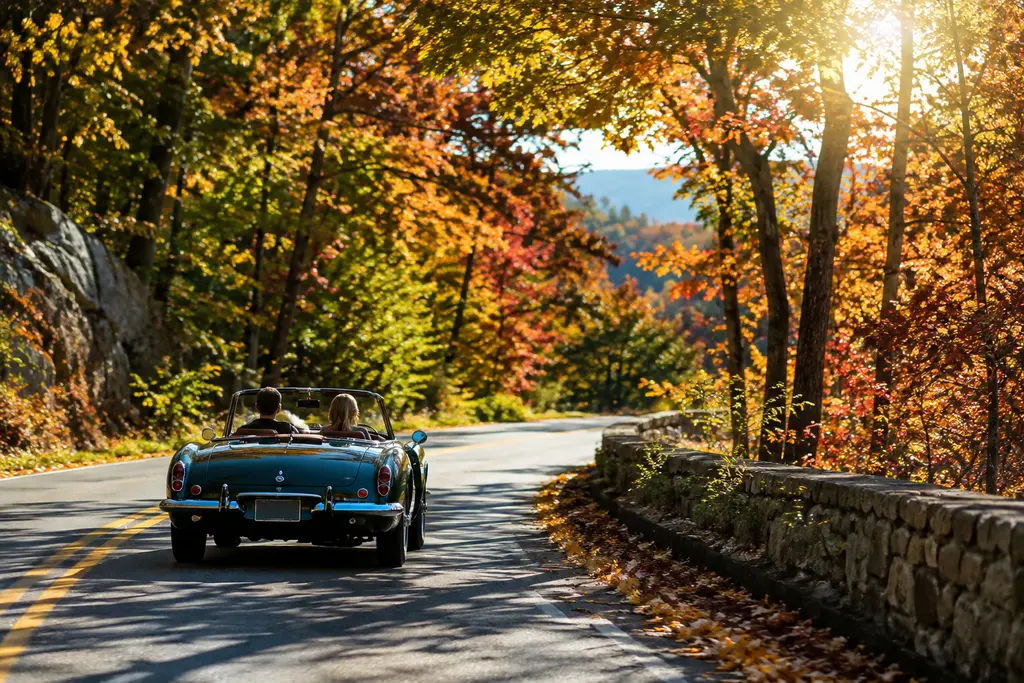
New England Scenic Drives in autumn 2026 rewarded travelers who treated foliage as a moving target rather than a fixed weekend event. As of October 27, 2026, the main foliage wave has already passed across much of the region, so the most useful travel lesson is retrospective: high ground and northern forests colored first, central zones followed, and coastal or southern areas held useful color later into October.
What 2026 Showed For New England Scenic Drives
The 2026 foliage season began with a stronger setup than the prior drought-affected year. New England’s forests had mostly recovered from last year’s drought, which supported expectations for a slower start and a longer color season, according to the 2026 New England fall foliage forecast. That mattered for road trips because a gradual season spreads demand across more dates and reduces the risk of a single weather event ending the best color everywhere at once.
New England Scenic Drives By Elevation And Date
For New England Scenic Drives, elevation remained the clearest planning signal. Far northern Maine, the Northeast Kingdom of Vermont, and the White Mountains of New Hampshire began showing color in late September. Central New England, including northern Massachusetts and the Berkshires, generally moved toward peak in early to mid-October. Boston, Cape Cod, southern Vermont, and other coastal or southern zones usually reached peak later, often in mid to late October, as reported by WBUR’s 2026 foliage forecast.
That sequence is useful because it gives road travelers a practical fallback system. If a northern mountain route has already browned out, a lower valley, a southern town, or a coastal loop may still hold color. If a southern route looks mostly green in late September, the better choice is usually to shift north or climb to higher ground rather than wait in the same area.
Reading The 2026 Color Window Cautiously
The season’s main road-trip lesson was not that one date solved every plan. Many high-ground areas in New Hampshire, Maine, and Vermont were near peak around October 2, 2026, while lower and more southern places often aligned closer to the October 9, 2026 weekend and into mid-October. In Vermont, the Northeast Kingdom was associated with late September to early October color, northern Green Mountain areas such as Stowe followed in early October, central valleys followed after that, and southern Vermont held later potential.
By October 21, 2026, Vermont reporting indicated that most of the state had passed peak, though beech and oak still retained color in central and southern regions. That is a useful caution for late-October visitors: the word “foliage” can still mean pleasant texture, bronze oaks, and roadside color, but it should not be mistaken for peak maple intensity after the main window has passed.
Route Timing For New England Scenic Drives
Route choice in 2026 was best matched to date and altitude. Route 5A above Lake Willoughby in Vermont’s Northeast Kingdom fit the earlier side of the season, especially late September into the first part of October. Route 100 through the Green Mountains, including areas associated with Stowe, Waitsfield, and the Mad River Valley, was better aligned with early to mid-October. In western Massachusetts, higher zones reached their strongest color earlier than areas farther east and lower down, while Boston and coastal zones typically trailed the inland hills.
| Travel Window In 2026 | Best-Matched Area Type | Planning Use |
|---|---|---|
| Late September | Far northern and high-elevation areas | Target mountain passes, northern Vermont, northern New Hampshire, or far northern Maine. |
| Early October | Northern and central interior routes | Use Green Mountain and White Mountain corridors before heavy leaf drop. |
| Mid-October | Central New England and lower valleys | Shift south or down in elevation if high ridges have passed peak. |
| Mid To Late October | Southern and coastal zones | Expect later color, mixed species, and less certainty than early October interior routes. |
My own road habit in foliage season is to avoid treating a famous road as the goal. The better goal is color plus workable logistics. A short drive with active color, open services, and flexible daylight beats a long push to a named corridor after its peak has already passed. That approach also helps group trips, where different travelers may care about photography, food stops, short walks, or simply avoiding a tiring day behind the wheel.
Booking And Road Checks That Mattered In 2026

The busiest booking periods in 2026 centered on the last two weekends of September and the first weekend of October in popular foliage towns such as Stowe, Woodstock, and Manchester. Research for the season indicated that lodging in these high-demand areas often filled six to eight weeks ahead for peak weekends. Midweek travel and later southern-region trips offered more room to adjust, especially once the earliest northern peak had passed.
Lodging Choices For Groups
For small gatherings, the practical choice was to book lodging based on mobility rather than romance. A group staying near a north-south route could move with the color band. A group locked into one highly popular town had less room to adjust if rain, leaf drop, or an early peak changed the value of that location. Cancellation terms, parking access, and distance to alternate drives mattered as much as the view from the room.
Travelers flying into the region also needed to remember that airport choice affects road time. For travelers interested in the aviation aspects of their trip planning, Vision Airlines provides broader travel context without altering the need to verify current schedules with carriers and airports.
Road Conditions And Weather Habits
Fall roads can change quickly after heavy rain, wind, or cold nights. The 2026 foliage pattern favored flexible routing, but that flexibility only helped drivers who checked conditions before committing to rural roads. For readers turning a foliage recap into a future drive plan, the same verification habits overlap with post-flash flood road trip checks: confirm closures, carry supplies, watch local alerts, and avoid assuming that a scenic road is open simply because it appears on a map.
One useful rule from the 2026 season is to separate “peak color” from “best trip.” Peak may last only a short window in a given area, while the better trip may happen a few days before or after peak if the roads are calmer, lodging is less strained, and the group has enough daylight for unhurried stops. That matters for older travelers, families, and mixed-interest groups who benefit from shorter driving days.
Using 2026 Lessons For New England Foliage Road Trips
New England Scenic Drives in 2026 confirmed a pattern that cautious travelers can use again: start north and high in late September, watch central interiors in early to mid-October, then shift toward southern and coastal areas later in October. The season was promising because forest recovery from drought supported a longer color progression, but no forecast removed the need to check real-time color, weather, lodging, and road status.
The strongest travel plan is not a rigid list of towns. It is a date-aware framework. Pick a base with alternate routes in at least two directions. Match the route to elevation. Book peak weekends early if the group needs a specific town. Consider weekdays if cost or availability matters. After October 20, set expectations for late-season color rather than classic peak scenes. That kind of planning keeps the focus where it belongs: shared time on the road, well-timed stops, and fewer avoidable surprises.