
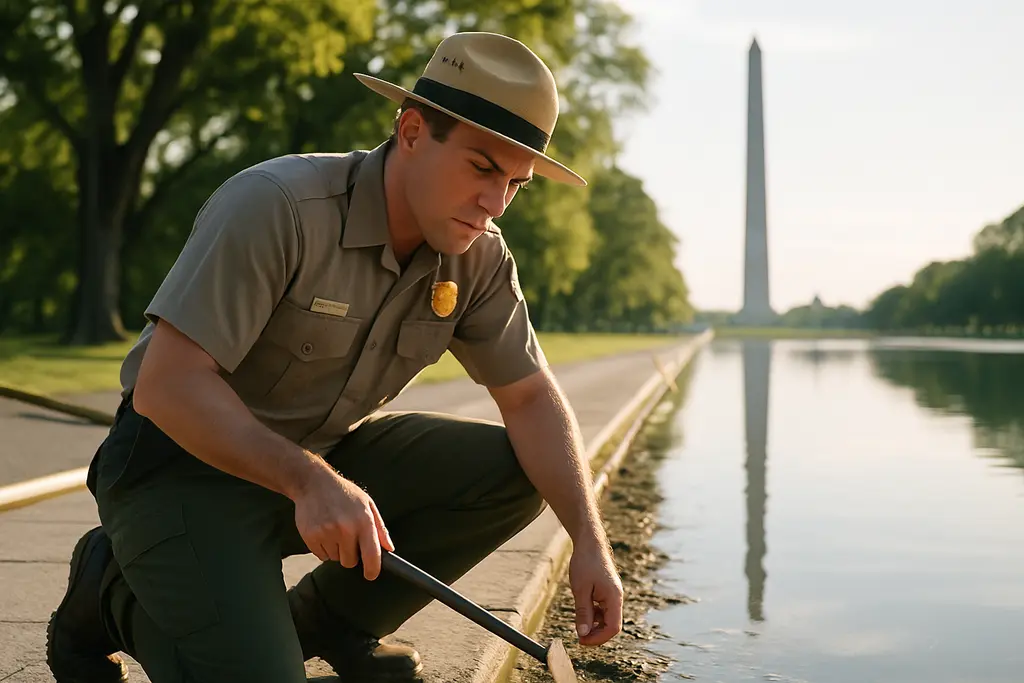
Reflecting Pool closures have changed one of the most familiar walking corridors on the National Mall. As of September 18, 2026, the Lincoln Memorial Reflecting Pool and its immediately surrounding access areas remain closed after repair and lining work began on June 25, 2026, according to a National Park Service notice on temporary closures. For travelers, the practical issue is not whether the Lincoln Memorial can be visited; it can. The issue is how much of the direct approach between the Lincoln Memorial and Washington Monument is blocked, and how that affects walking time, photos, mobility planning, and expectations on arrival.
What The Reflecting Pool Closures Cover
Reflecting Pool Closures And The Core Detour
The closed area includes the Reflecting Pool itself, walkways adjacent to the pool, and grass medians north and south of the pool up to the Elm Walks. Research current to September 18, 2026 also indicates that restrictions cover exterior walkways north and south of the pool, including the North Elm Walk and South Elm Walk areas where work zones or access controls are present. This means visitors should not plan on walking directly beside the water, crossing through the pool edge area, or using the normal straight-line route immediately along the basin.
The Reflecting Pool closures affect the classic sightline experience more than the broader ability to visit the western National Mall. The Lincoln Memorial itself remains the anchor point for this part of the Mall, and access to nearby memorials and restrooms remains open where possible. Some paths are blocked, so visitors should treat the area as a shifting work zone rather than a normal open plaza. A short route that looks simple on a map may require a wider turn around fencing, grass closures, or temporary barriers.
What Remains Open Nearby
The closure does not mean the entire memorial district is off-limits. The Lincoln Memorial and many surrounding memorials are generally accessible 24 hours a day, seven days a week, based on the research provided. That matters for visitors who have only one evening in Washington, DC, or who planned a sunrise or after-dark stop. The experience, though, is changed: the usual reflection view may be unavailable, and movement between memorials may feel less direct.
For travelers with mobility needs, strollers, limited time, or tight museum reservations elsewhere in the city, the safest planning assumption is that the immediate pool corridor is unavailable through Tuesday, October 20, 2026, at 11:59 p.m. local time. The previous reopening target of Thursday, September 10, 2026 passed before the National Park Service extended the timeline on September 11, 2026. Because that change happened after the original schedule, checking NPS notices before arrival remains the most practical step.
How The Closure Changes A National Mall Visit
Walking Routes Between Major Memorials
The most affected movement is the symbolic, direct walk between the Lincoln Memorial and Washington Monument. Visitors often use the pool edge as both a route and a viewing platform. With the pool and nearby walkways closed, expect to use alternative paths outside the fenced work area. The Elm Walks and surrounding pedestrian routes may still be part of a workable approach, but exact access points can vary where barriers are in place.
Do not plan a tight connection based only on distance. The National Mall can appear compact on a phone map, yet small closures can add backtracking. If you are pairing the Lincoln Memorial with the Vietnam Veterans Memorial, Korean War Veterans Memorial, World War II Memorial, or Washington Monument grounds, build in a walking buffer. This is especially relevant in warm weather, with children, or when visiting with someone who cannot easily retrace steps.
Viewpoints And Photo Expectations
Many visitors come for the long view from the Lincoln Memorial steps toward the Washington Monument. That elevated view may still be possible, but the foreground is not the normal open-water scene while repair work is active. Visitors seeking a clean reflection image should not count on it before the stated closure end time. A better expectation is a memorial visit with construction impacts in the central vista.
Photography is still possible around the Lincoln Memorial, the steps, and nearby memorial areas where public access remains open. For less crowded framing, consider moving away from the direct pool axis and using side approaches. This does not recreate the classic water reflection, but it may reduce fencing in the frame and make the visit feel less constrained.
Why Repair Work Is Taking Place
Documented Basin And System Repairs
The repair scope is technical rather than cosmetic alone. The National Park Service has described work that includes cleaning the pool basin, repairing joints, installing new lining material, replacing deteriorated valves, flushing clogged pipes, and sealing leaks in its notice on the Reflecting Pool closure. Those details help explain why the closure covers both the pool and nearby pedestrian space. Repair work on a large public water feature can require staging areas, equipment access, and controlled surfaces around the basin.
The research also notes reported liner problems, including cracking, peeling blue paint, and damage to foam sealant. Public reporting has included competing explanations, with vandalism cited in some accounts and defective design or execution acknowledged by the contractor in others. For trip planning, the cause is less actionable than the access status. Visitors should focus on the confirmed closure boundary and stated end time, while recognizing that repair schedules can change when new defects are found.
Why Visitors Should Track Official Notices
The extension from the earlier September 10 reopening target to October 20 shows why relying on old travel articles, social media clips, or saved maps is risky. The closure is not a minor sign on a single sidewalk; it affects a central visitor corridor. Before booking a time-sensitive tour, arranging formal photos, or setting a walking route for a group, check the latest National Park Service updates for National Mall and Memorial Parks.
Travelers comparing Washington, DC access updates with broader trip-planning coverage from related media sources can consult the network’s Californian Times, but official park notices should guide decisions about closures, detours, and public access on federal parkland.
Practical Timing For Washington DC Travelers

Best Use Of Limited Time
If your visit falls before 11:59 p.m. local time on October 20, 2026, plan as though the pool corridor is closed for the full visit. That means choosing priorities. If the Lincoln Memorial is the main goal, approach it as a stand-alone stop rather than as part of a direct poolside stroll. If your priority is a broad National Mall walk, expect the western segment to require detours and more patience.
Early morning and late evening can still be useful because temperatures may be more comfortable and crowds may be thinner, but those times do not remove the closure. The work zone should not be treated as negotiable after dark. Barriers and posted restrictions apply even when fewer people are present, and entering closed areas can interfere with repairs or create hazards.
Access, Comfort, And Group Planning
For families, school groups, and travelers with mobility constraints, the main planning issue is friction. A blocked path can turn a short walk into a longer loop. Carry water, wear shoes suited to pavement and longer-than-expected walking, and avoid scheduling another timed attraction immediately after a Lincoln Memorial stop. If a group includes wheelchair users or visitors who tire easily, identify accessible routes from the arrival point before leaving a hotel or transit stop.
Ride-hailing and taxi drop-offs can reduce walking for some travelers, but they do not solve the final access issue near the closed basin. Drivers may not be able to place passengers exactly where a map suggests if road controls, crowds, or park operations limit stopping locations. Build a plan around the memorial entrance and open pedestrian routes, not the edge of the pool.
Reflecting Pool Closures Visitor Checklist
Treat the Reflecting Pool closures as a major access change, not a minor inconvenience. Before visiting, confirm the latest National Park Service notice, assume the pool and adjacent walkways are unavailable through October 20, 2026, and give yourself extra time between the Lincoln Memorial and other Mall landmarks. If your trip depends on a specific photo angle, formal shoot, or direct ceremonial route, consider postponing that portion until after the stated closure period and only after access has been confirmed.
- Do not expect access to the pool, adjacent walkways, or grass medians inside the closure area.
- Use wider pedestrian routes and expect detours near the North Elm Walk and South Elm Walk areas.
- Keep plans flexible if visiting with children, older travelers, or anyone with mobility needs.
- Check official National Park Service updates shortly before arrival, especially if visiting near October 20, 2026.
The Lincoln Memorial remains worth visiting, but the central water feature that defines the approach is under repair. A successful visit now depends on clear expectations: see the memorial, allow for changed movement, and avoid building the day around an inaccessible poolside route.