

American Airlines executed a massive strategic reversal regarding passenger entertainment. The Fort Worth-based carrier confirmed plans to install seatback screens across its entire narrowbody fleet. The installation program begins in 2028 and targets all 876 single-aisle mainline aircraft. This decision ends a nearly decade-long policy of stripping built-in displays from domestic cabins. The carrier previously argued that passengers preferred streaming movies on personal devices.
Aviation executives spent years removing heavy, outdated monitors from domestic planes to save fuel and maintenance costs. Delta Air Lines and JetBlue Airways chose a different path, investing heavily in lighter, modern screen technology. United Airlines launched a similar initiative called United Next, adding displays to its own narrowbody jets. American Airlines remained the lone holdout among the major legacy carriers. The competitive disadvantage became too apparent to ignore. Passengers actively booked away from American on long transcontinental routes to secure better inflight entertainment hardware on rival airlines.
Technical Specifications And Connectivity
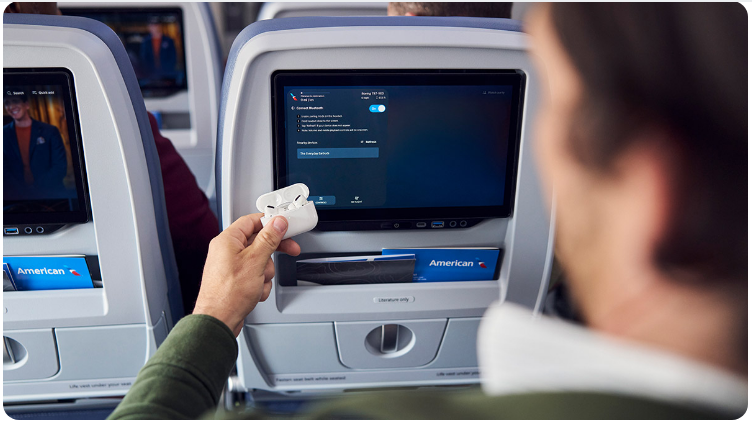
The incoming hardware represents a massive leap over early aviation technology. American Airlines selected 4K resolution displays for the new rollout. These units rank among the largest screens offered on domestic flights in North America. Passengers expect seamless integration with their personal technology. The new screens include Bluetooth audio connectivity. Travelers can pair their own wireless headphones or earbuds directly to the seatback system, eliminating the need for wired airline headsets.
Power delivery acts as a major component of this cabin overhaul. Every seat will feature USB-C fast-charging ports. Mobile devices draw significant battery power during flights. Providing high-wattage charging directly at the monitor guarantees passengers land with fully charged electronics. The graphical interface includes personalized entertainment recommendations and advanced flight tracking maps.
American Airlines paired this hardware announcement with a massive internet upgrade. The carrier will install Starlink satellite Wi-Fi across the narrowbody fleet starting in 2027. Starlink utilizes a low-earth orbit satellite constellation to deliver high-speed, low-latency internet access. This bandwidth allows passengers to stream live television, conduct video calls, and work seamlessly in the air. The combination of Starlink and 4K seatback screens provides a dual-screen experience matching the standard living room environment. Passengers can watch a movie on the seatback display and scroll through social media on their phones simultaneously.
The Growth Of Premium Seating
Cabin densification defined the airline industry for the past twenty years. Carriers squeezed economy seats closer together to maximize revenue per flight. Consumer demand recently shifted. Post-pandemic travelers demonstrate a high willingness to pay for premium experiences, extra legroom, and first-class service. American Airlines structured this cabin overhaul to capture that exact revenue stream.
The airline will nearly double the amount of premium seating across its single-aisle jets. Premium seats currently account for 25 percent of the narrowbody capacity. The new configurations will push that figure to 40 percent. This strategic shift requires a massive physical reconfiguration of existing aircraft.
American Airlines will retrofit its Airbus A319 and A320 fleets to include an additional row of First Class. The upcoming Boeing 737 MAX 10 deliveries will arrive with 24 First Class seats straight from the factory. The Airbus A321neo fleet will undergo similar modifications to increase the forward cabin footprint. The airline plans to enlarge the section of Main Cabin Extra seats. These economy seats offer extra legroom, early boarding privileges, and dedicated overhead bin space. Enlarging this section allows the airline to upsell standard economy passengers looking for slight comfort upgrades without paying full First Class fares.
The History Of The BYOD Strategy
American Airlines introduced the Bring Your Own Device (BYOD) strategy in the late 2010s. Management executives analyzed passenger behavior and concluded that most travelers carried smartphones and tablets. Providing streaming entertainment directly to personal screens seemed like a logical progression. The airline installed small plastic clips on the seatbacks to hold phones at eye level. This strategy eliminated the massive capital expenditures required to purchase and maintain thousands of seatback monitors.
The BYOD strategy presented immediate problems. Streaming high-definition video drains mobile batteries quickly. The older narrowbody jets lacked reliable power outlets in the economy cabin. Passengers frequently arrived at their destinations with dead phones. Travelers use their smartphones for digital boarding passes, ride-sharing apps, and hotel reservations. Draining the battery mid-flight creates massive travel friction upon landing. The built-in seatback screen solves this issue entirely by providing a dedicated, hardwired entertainment source.
Specific Aircraft Models Receiving Upgrades
The 876-plane narrowbody fleet consists of multiple aircraft types from two different manufacturers. The Airbus models serve short-to-medium domestic routes alongside high-density coastal flights. The Boeing 737 series represents the core workhorse for the airline.
| Aircraft Model | Status | Planned Upgrades |
| Airbus A319 / A320 | Existing Fleet | Retrofitted 4K screens, additional row of First Class |
| Airbus A321neo | Existing & New Deliveries | Retrofitted 4K screens, increased First Class seating |
| Boeing 737 MAX 8 | Existing Fleet | Retrofitted 4K screens, expanded Main Cabin Extra |
| Boeing 737 MAX 10 | Upcoming Deliveries | Factory-installed 4K screens, 24 First Class seats |
The massive scope of this project means passengers will experience a mix of old and new cabins for several years. Airlines cycle planes into maintenance bases for heavy checks every few years. The interior teardowns happen during these scheduled intervals to minimize lost revenue. A brand-new 737 MAX 10 delivered in 2028 will feature the 4K screens on day one. A ten-year-old A319 might undergo the exact same hardware upgrade by 2031. Passengers booking flights during the transition period must check the specific seat maps to verify the cabin configuration prior to departure.

The Rollout Timeline
Updating commercial aircraft requires immense logistical coordination. Taking planes out of service for cabin retrofits reduces the total number of flights the airline can operate. The engineering teams must schedule these modifications perfectly to avoid disrupting the summer and holiday travel rushes.
The first narrowbody planes equipped with the new screens will enter service in 2028. These initial units will be factory-fresh deliveries from Airbus and Boeing. The retrofitting process for existing jets will run simultaneously. American Airlines expects to complete the entire fleet installation by the early 2030s. Chief Customer Officer Heather Garboden called the project one of the most significant investments in the onboard experience in the history of the airline.
The carrier already offers seatback screens on its 140 twin-aisle widebody aircraft used for long-haul international routes. The incoming Airbus A321XLR fleet features full entertainment systems to support transatlantic flights. The new narrowbody project standardizes the passenger experience across the entire global network. A customer flying from a small regional airport connecting through Dallas-Fort Worth to London will encounter consistent technology on every leg of the trip.
Industry Impact And Competitive Strategy
Aviation remains a highly commoditized industry. Fares and schedules dictate the majority of booking decisions. Premium corporate contracts and frequent flyer loyalty depend heavily on product consistency. American Airlines suffered a perception problem in the premium market. Corporate road warriors noted the stark contrast between a brand-new Delta Airbus A321neo with massive screens and an American Airlines jet featuring empty plastic phone holders on the seatbacks.
The cost of jet fuel historically justified the removal of built-in screens. Early inflight entertainment systems relied on heavy server boxes placed under passenger seats. The wiring added hundreds of pounds to the airframe. The airlines burned thousands of extra gallons of fuel every year just to carry the hardware. Modern tablet technology completely erased that weight penalty. The new 4K displays weigh mere fractions of the older systems. The screens integrate directly into the seat architecture without bulky under-seat equipment boxes. The fuel penalty no longer outweighs the competitive disadvantage of a bare cabin.
Travelers looking for deeper analysis of global airline strategies can read more aviation news to track these industry shifts. The official details regarding the cabin specifications remain available through the American Airlines newsroom.
The legacy carriers now operate under total alignment regarding the domestic passenger experience. All three major airlines agree that built-in screens provide a necessary competitive advantage. The focus shifts entirely to execution. American Airlines must manage supply chain constraints and aircraft delivery delays from Boeing to hit the 2028 launch target.
The narrowbody fleet overhaul positions the airline to capture high-yield leisure travelers willing to pay for First Class and Main Cabin Extra. The addition of Starlink Wi-Fi guarantees reliable internet access over remote areas and oceanic routes. The combination of premium physical seating and high-end digital entertainment establishes a modern baseline for domestic air travel over the next decade.