
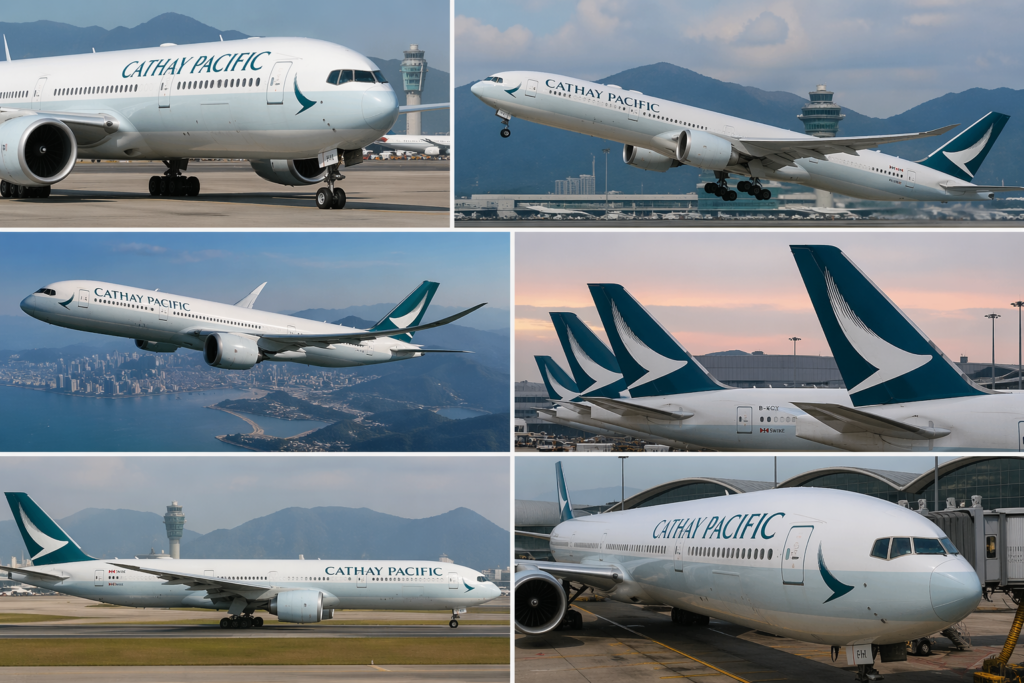
In the hyper-competitive environment of commercial aviation, agility is as critical as aerodynamics. As global energy markets experience renewed volatility, the Hong Kong flag carrier Cathay Pacific, along with its low-cost subsidiary HK Express, has been forced into a defensive posture. The aviation group recently announced a targeted reduction in scheduled passenger flights between May 16 and June 30. This calculated capacity adjustment, directly spurred by surging jet fuel prices, offers a stark look into the complex economic balancing act required to maintain profitability in the modern airline industry.
The Economic Imperative Behind Capacity Adjustments
Jet fuel represents the lifeblood of global transit, but it also stands as the single most volatile line item on an airline’s balance sheet. Historically accounting for anywhere between twenty to thirty percent of total operating expenses, sudden spikes in per-barrel costs can instantly erode profit margins. When geopolitical tensions and supply chain constraints drive energy prices upward, airlines are left with limited immediate countermeasures.
For Cathay Pacific and HK Express, absorbing these costs is not a sustainable long-term model. Instead, management has opted for surgical capacity discipline. By trimming frequency rather than abandoning destinations entirely, the carriers can consolidate passengers onto fewer flights. This aggressive yield management strategy maximizes load factors, ensuring that every aircraft operating in the sky is generating enough revenue to justify its exorbitant fuel burn. To understand the broader macro-level data driving these decisions, industry professionals frequently turn to comprehensive global aviation market analysis to track the correlation between crude oil benchmarks and international seat capacity.
Strategic Route Trimming: Regional and Long-Haul Impacts
The mechanics of Cathay’s recent schedule reduction are highly strategic. Rather than a blanket cut across the board, the airline has targeted specific corridors. The bulk of the frequency reductions will impact shorter regional routes within Asia, where the high cycle of takeoffs and landings burns disproportionate amounts of fuel relative to the distance traveled.
However, the cuts also extend to select medium and long-haul services, specifically targeting destinations in Australia, South Asia, and South Africa. These specific long-haul corridors often operate on tighter margins depending on seasonal demand and belly-hold cargo volumes. By temporarily scaling back on these specific routes during the late Q2 shoulder season, Cathay Pacific is protecting its core, high-yield network while mitigating exposure to volatile fuel pricing.
Airline Response Dynamics to Fuel Volatility
| Operational Lever | Primary Objective | Immediate Passenger Impact |
| Capacity Reduction | Maximize load factors and eliminate marginally profitable flights. | Fewer scheduling choices and potential re-routings. |
| Fare & Surcharge Increases | Pass elevated operational costs directly to the consumer. | Higher baseline ticket prices and inflated fuel surcharges. |
| Fleet Reassignment | Deploy the most fuel-efficient aircraft on the longest routes. | Equipment swaps resulting in altered cabin configurations. |
The Trickle-Down Effect on Passenger Economics
The fundamental laws of supply and demand dictate that the consumer will ultimately bear the brunt of these operational adjustments. As Cathay Pacific and HK Express pull capacity from the market, the remaining available seats instantly become more valuable. Passengers traveling during the affected May to June window are highly likely to encounter elevated ticket prices, compounded by recently increased fuel surcharges.
Furthermore, travelers booked on the affected regional and long-haul routes face the logistical friction of schedule consolidations. While airlines typically offer rebooking options or alternative itineraries, this often translates to longer layovers and decreased flexibility. This scenario highlights why continuous innovation in airline operational strategies is crucial; carriers must constantly refine their crisis management protocols to maintain customer loyalty when external economic factors force their hand.
Long-Term Hedging and the Sustainable Aviation Fuel Imperative
While reducing flight frequencies serves as an effective short-term tourniquet, it is not a viable strategy for long-term growth. Cathay Pacific remains fundamentally dedicated to reinforcing Hong Kong International Airport’s status as a premier global transit hub. To break the cycle of dependency on fluctuating petroleum markets, the aviation sector is accelerating its structural evolution.
The immediate future relies heavily on accelerating fleet modernization programs, retiring older airframes in favor of next-generation, highly fuel-efficient aircraft. Concurrently, the industry is pushing aggressively toward the adoption of Sustainable Aviation Fuel (SAF). Although currently more expensive to produce than traditional jet fuel, large-scale investment and integration of SAF represent the ultimate hedge against future oil crises. Until these technological and infrastructural shifts reach critical mass, passengers must prepare for an era where ticket prices and flight schedules remain tethered to the unpredictable fluctuations of the global energy market.