

The first reported live eVTOL Emergency Response deployment in the United States took place in Hyde County, North Carolina, on August 11, 2026. A paramedic piloted Pivotal Aero’s single-passenger BlackFly aircraft to a 911 call scene and landed in the patient’s yard about 20 minutes before ground ambulances arrived, according to Axios. For travelers, the practical point is not that electric aircraft are now a standard medical backup. They are not. The useful takeaway is narrower: remote destinations may start to test faster first-response models where road access creates delays.
Why eVTOL Emergency Response Matters In Hyde County
eVTOL Emergency Response In A Rural 911 Setting
Hyde County is the setting that makes this deployment relevant beyond aviation technology circles. The research describes the incident as a rural emergency medical response, not an urban air taxi demonstration. That distinction matters for travelers booking remote waterfront rentals, rural inns, fishing lodges, hunting properties, or other stays where the nearest hospital or ambulance base may not be close by road. The reported use involved a paramedic reaching the patient before ground ambulances, but the available information does not state the patient’s condition, the distance flown, the launch site, weather conditions, or the medical outcome.
That lack of detail should temper any broad reading of the event. One successful 911 deployment does not prove that electric vertical takeoff and landing aircraft can cover every rural emergency, every season, or every property type. It does show that a live emergency call, rather than a staged demonstration, has now been part of the public record. For travel planning, that is a meaningful but still limited data point.
The Aircraft And Rule Category
The aircraft used was the BlackFly, a single-passenger electric vertical takeoff and landing aircraft developed by Pivotal Aero. The research notes that BlackFly, along with its successor Helix, is categorized as an ultralight aircraft under existing FAA regulations. That classification is central to why this example differs from the high-profile air taxi services often discussed for dense urban routes. Fully certified passenger air taxi networks face a different approval and infrastructure path.
Pivotal said it is working with Hyde County Emergency Services and Code Blue Resources on an emergency response operations model involving the aircraft, according to the company’s partnership announcement. The public information supports a cautious reading: this is an operational test in a real emergency setting, supported by named partners, rather than proof of a widely available service for travelers.
What The Deployment Does And Does Not Prove
Measured Benefit In This Reported Call
The most concrete operational detail is the reported time advantage. The paramedic arrived around 20 minutes before ground ambulances. In remote areas, a 20-minute lead can be operationally meaningful for assessment, stabilization, communication with dispatch, or preparing for ground transport. The reports do not specify what care was provided at the scene, so it would be inappropriate to claim a specific medical result.
For aviation observers, the case also shifts attention away from luxury or commuter use. Many eVTOL headlines focus on airport transfers, premium mobility, or short-hop air taxi concepts. This incident points to a more practical first use: sending one trained responder to a site quickly, rather than moving a passenger commercially. That is a narrower mission, but it may fit remote emergency operations better than a passenger service requiring vertiports, booking platforms, and public adoption.
Limits Travelers Should Recognize
The incident should not change how travelers assess medical access for upcoming trips. There is no verified information in the research showing that visitors to Hyde County can request this aircraft directly, that the model is available in other counties, or that it will operate across all emergency categories. Travelers should continue to treat local emergency services, road access, and medical evacuation planning as primary considerations.
Remote properties often promote privacy, quiet surroundings, and distance from crowds. Those features can be attractive, especially for high-end stays. They can also lengthen response times if the property is far from paved roads or easy landing areas. The Hyde County case is a reminder to ask practical questions before booking rather than assuming that new aviation tools are part of local emergency coverage.
Trip Planning Implications For Remote Regions
Questions To Ask Before Booking Remote Stays
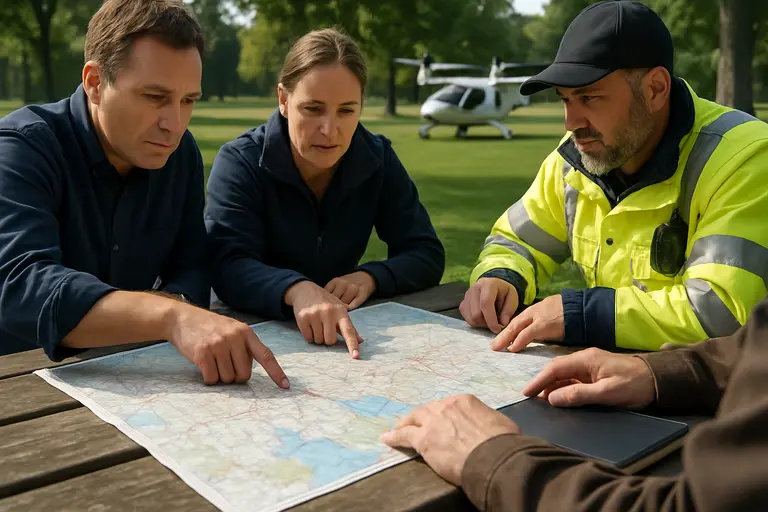
For travelers, eVTOL Emergency Response is best viewed as an emerging capability, not a planning guarantee. Before reserving a remote villa, lodge, cabin, or small-island stay, ask the property manager or host how emergency access works. Useful questions include whether the property has a clearly marked physical address, whether local dispatch systems can locate it without confusion, whether roads are passable in bad weather, and where the nearest urgent care or hospital is located. If a property relies on ferry access, unpaved roads, or seasonal routes, ask how emergency services reach guests when those links are delayed.
This is also where ground planning still matters. Travelers who build road segments around rural airports, coastal counties, or mountain towns should keep fuel, daylight, and cell coverage in mind. For broader drive planning beyond this aviation story, resources such as road-trip planning guides from trusted networks can help frame the practical side of reaching remote areas by car. New aircraft may support responders in some places, but they do not remove the need to understand the roads leading to where you sleep.
Insurance, Communication, And Local Contacts
Travelers heading to remote destinations should review travel insurance and medical evacuation coverage before departure. The point is not that every rural trip requires a special policy. The point is that travelers should know what their policy excludes, whether preauthorization is needed, and which number to call during a medical event. A luxury property may have staff who can coordinate with local responders, while a private rental may leave more of that responsibility to the guest.
Communication is equally practical. Keep the property’s full address saved offline, not only in a booking app. Share arrival details with someone not on the trip. If traveling with a medical condition, carry a concise medication and allergy list. These steps are not specific to electric aircraft, but they become more relevant in the same rural settings where a faster first responder could be useful.