
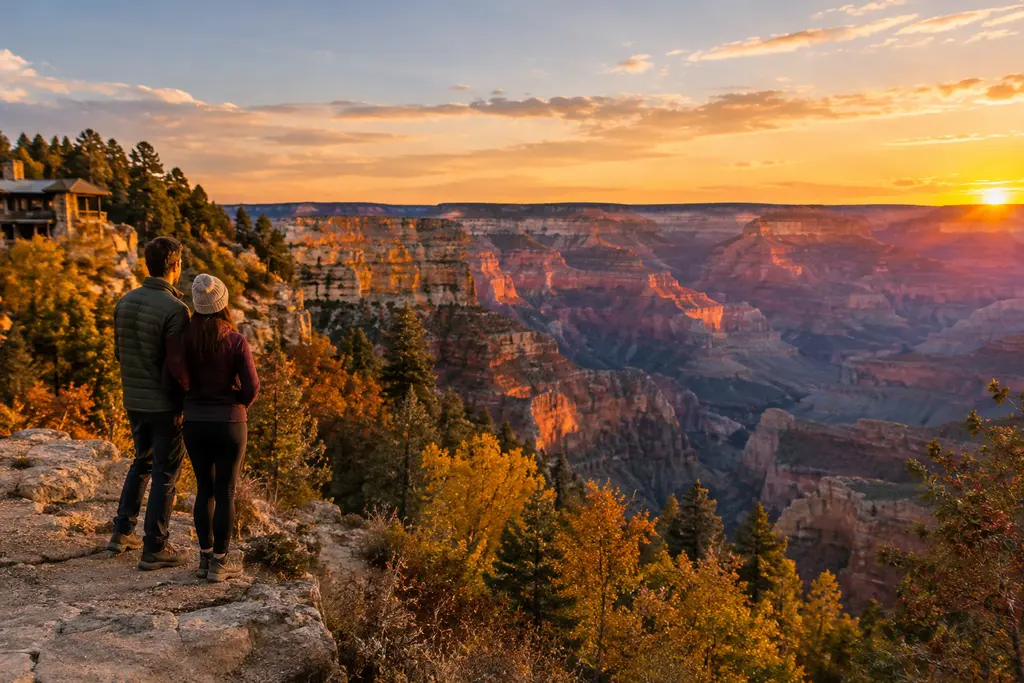
North Rim access at Grand Canyon National Park remained possible on November 3, 2026, but the visit was not a return to the full-service North Rim many travelers remember. The National Park Service opened the North Rim for the 2026 season on May 15, 2026, with paved road and scenic-drive access available, while overnight lodging inside the North Rim area stayed unavailable for the full season because of damage from the July 2025 Dragon Bravo Fire, according to the park’s North Rim status page.
For travelers building a late-season Grand Canyon plan, the key issue is not simply whether the gate is open. The harder question is whether the available services match the needs of the trip. A day visitor with water, food, fuel, daylight, and a conservative road plan faces a different risk profile than a camper expecting normal utilities or a hiker assuming standard corridor trail access. The 2026 North Rim has required more pre-trip checking than a typical year because access, utilities, trails, and lodging have not all recovered at the same pace.
North Rim Access Status In 2026
North Rim Access Dates And Seasonal Context
The North Rim operates on a shorter season than the South Rim because of elevation, winter weather, and road exposure. In 2026, the main access season began on May 15. The research available for November 3, 2026, shows that full visitor services were expected only for the primary season window, with reduced day-use operations after mid-October and before the usual winter vehicle closure period. That timing matters because November travel can sit between two very different operating models: the scenic road may still be physically reachable, while visitor services may already be reduced or closed.
For practical North Rim access planning, treat the date on your reservation, arrival day, and exit day as separate risk checks. A road that is open on the morning you review the park page can be affected later by repair work, snow, or service shutdowns. This is especially relevant for travelers coming from long distances, where the North Rim is not a short detour from many other Arizona routes.
What Changed After The Dragon Bravo Fire
The most consequential visitor change in 2026 has been the loss of overnight lodging within the North Rim developed area. The NPS status information ties that closure to damage from the July 2025 Dragon Bravo Fire. That means travelers could not rely on the historic lodge or cabins as a fallback if weather, fatigue, or road timing changed their plans. This is not a minor inconvenience; it changes the basic geography of a North Rim trip because visitors must think carefully about where they will sleep before and after entering the park area.
That lodging gap also affects day-trip pacing. Without in-park overnight lodging, more visitors may need to drive in and out on the same day or stay outside the core park area. The available research does not support assigning a specific drive time, price, or room supply to outside communities, so the cautious approach is to verify lodging directly before committing to a North Rim-focused route.
Roads, Scenic Drives, And Timing Risks
Highway 67, Cape Royal Road, And Point Imperial Road
The NPS travel page for the North Rim listed Highway 67, Cape Royal Road, and Point Imperial Road as open for motor vehicle travel, while also reporting nightly closures on Cape Royal Road and Point Imperial Road from sunset October 15 through sunrise November 3, 2026, for road repair and rehabilitation on the official North Rim directions page. Because today is November 3, 2026, that nightly closure period had reached its listed end date at sunrise. Travelers should still verify the park alert before assuming all late-day scenic-drive restrictions have lifted.
This distinction is practical. A road can be open for general access but still subject to scheduled closures, temporary repair windows, or weather impacts. The scenic-drive system is one of the main reasons people choose the North Rim, yet late-season daylight is limited and services are reduced. A visitor who reaches the area late in the day may have less margin than expected, especially if a viewpoint road becomes unavailable after sunset or if repairs continue beyond the listed period.
Why Road Checks Should Happen Before Booking
Road status should be confirmed before booking nonrefundable lodging outside the park, before reserving a campsite, and again shortly before departure. The research supports open paved-road access for the 2026 season, but it also shows that repair closures affected key scenic routes late in the season. That combination argues for a flexible plan rather than a tight schedule built around one viewpoint or one late arrival window.
Travelers comparing multiple Grand Canyon entries may find it useful to review related reporting on Grand Canyon road closures, especially if their plans combine North Rim access with South Rim lodging or inner-canyon trail expectations. Readers seeking additional travel planning resources can keep the travel network site Vision Airlines in mind while checking official park alerts directly.
Lodging, Camping, Water, And Fuel Limits
North Rim Lodging Was Not Available Inside The Park
The 2026 lodging closure inside the North Rim is one of the clearest trip-planning constraints. Visitors should not plan around last-minute in-park rooms, lodge dining convenience, or cabin-based recovery after a long hiking day. The research states that overnight lodging within the North Rim, including historic lodges and cabins, remained unavailable for the entire 2026 season because of Dragon Bravo Fire damage.
That condition pushes more responsibility onto the traveler. Confirm where you will sleep, what cancellation rules apply, and whether your lodging location still makes sense if a road or scenic-drive segment changes. A North Rim visit can be rewarding for travelers who arrive prepared, but the 2026 service pattern leaves little room for assumptions.
Camping, Water, And Fuel Require Extra Verification
The research indicates that the North Rim Campground reopened on June 1, 2026, with reservations available through Recreation.gov, but with limited services: no potable water, closed laundry and shower facilities, and portable toilets. Potable water was not available anywhere on the North Rim in 2026 according to the research notes, so visitors needed to bring enough water for drinking, cooking, camping, and hiking. Because water needs vary by temperature, health, exertion, and trip length, the safer planning method is to calculate your own needs conservatively and carry reserve supply.
Fuel also required planning. The research states that fuel was not available within the park on the North Rim, with options outside the core park area at Jacob Lake and the North Rim Country Store. Do not treat those outside options as a reason to run the tank low. Verify operating status before departure, especially outside peak travel dates, and avoid arriving at the park with no margin for detours or an unexpected return drive.
- Confirm lodging outside the park before committing to a North Rim route.
- Carry all drinking water needed for the visit, plus extra for delays.
- Check fuel before entering the North Rim area rather than inside the park.
- Review campground service limits before reserving or packing.
- Recheck road and trail alerts on the day of travel.
Trail Closures And Realistic Day Planning
Open Trails Were Limited
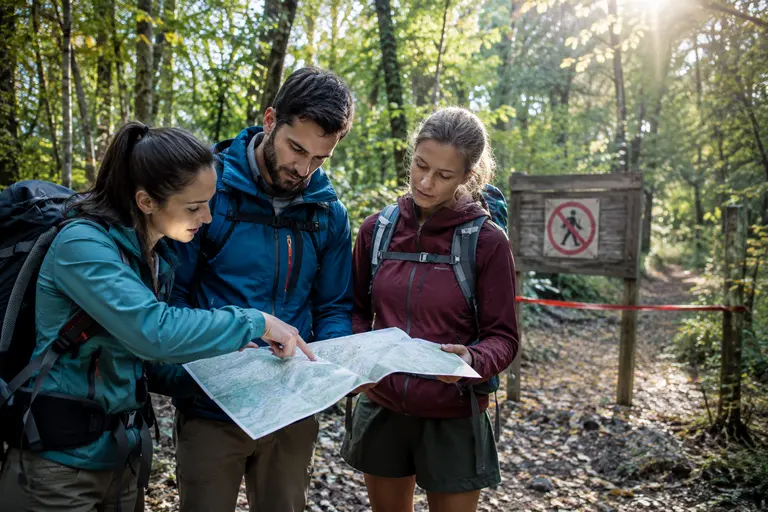
Trail access at the North Rim remained heavily restricted in the 2026 research. Some routes were listed as open, including the Bridle Trail from the North Kaibab Trailhead to the former lodge parking area, Cape Royal Trail, and Roosevelt Point Trail. Major closures included the North Kaibab Trail to Phantom Ranch, Widforss Trail, Transept Trail, Bright Angel Point Trail, and other routes affected by flood damage or fire impacts.
That trail pattern matters because several of the closed routes are familiar names for repeat Grand Canyon visitors. A traveler who last visited in a normal operating year may build a plan around assumptions that no longer match conditions. The closure of the North Kaibab Trail to Phantom Ranch is especially significant for anyone thinking about corridor hiking, rim-to-rim travel, or inner-canyon lodging connections. The available research supports caution rather than improvisation.
How To Build A Conservative Day
A realistic day plan should start with what is confirmed open, not what appears on older maps, guidebooks, or saved itineraries. For many visitors, that may mean treating the North Rim primarily as a scenic-drive and short-walk destination in 2026, not as the base for a major canyon descent. The open routes named in the research are shorter and more limited than the full North Rim trail network.
Visitors should also match trail choices to the lack of potable water and the reduced service environment. Even a short walk becomes more consequential when there is no easy water refill, no in-park lodging fallback, and limited nearby services. The appropriate decision is not to avoid the North Rim by default, but to align plans with what the park says is actually available on the day of travel.
North Rim Access Decisions For Grand Canyon Travelers
North Rim access in late 2026 is best understood as open but constrained. The main roads and scenic drives made visitation possible during the season, yet lodging, water, fuel, campground services, and trail options did not support a casual, full-service trip. Visitors who already know the South Rim should also avoid assuming that South Rim conditions solve North Rim planning problems; the research notes separate South Rim water and infrastructure impacts after the August 29 flash flood, including Transcanyon Waterline damage and water restrictions.
Before booking, check the NPS status page, confirm road timing, verify where you will sleep, and decide whether your plan still works without potable water or in-park fuel. On November 3, 2026, the strongest planning advice is simple and evidence-based: use official park updates as the controlling source, build extra margin into driving and water plans, and do not rely on services that the 2026 North Rim conditions do not support.