

There’s a special charm to advocates meeting in barns or conference halls. The bond and shared goals are strong. But what if your closest ally is thousands of miles away?
The pandemic showed us that community knows no bounds. It taught us that we can connect from anywhere. Melanie Frasca, a theatre student, lost her final show but found a new audience on Zoom.
This new way of connecting isn’t about replacing real-life moments. It’s about adding more hands to the circle, even if they’re online.
The shift to remote work isn’t just for tech experts. It involves 1.3 billion people worldwide, changing how we work together. Your next team member could be in Kentucky, and your next supporter in Dubai. The internet has opened the stable door wide.
Forget the limits of local meetings. The real impact happens where passion and connection meet, no matter the distance. Let’s see how this digital space changes advocacy, making distance a thing of the past.
Setting Up Your First Virtual Coffee Chat
Think of your first virtual coffee chat as opening night at a small, caffeinated theater. The technical setup is your invisible stage. Get it right, and you connect people across miles. Mess it up, and it’s just shouting into the void.
Learn from the pros. SVSU’s theatre department staged “Macbeth” for a remote audience. They used a Facebook Event page and revealed the Zoom link just before the show. This is smart stage management for today’s digital world.
Choose your platform wisely. Zoom, Microsoft Teams, or Google Meet—pick one and stick with it. Changing platforms is like changing theaters every week. It confuses your audience.
Send out clear calendar invites. Include the link, time in their zone, and how to join. You want people to focus on talking, not tech issues.
| Platform | Best For | Key Feature | Watch Out For |
|---|---|---|---|
| Zoom | Large groups, breakout rooms | Virtual backgrounds & waiting rooms | 40-minute limit on free tier |
| Microsoft Teams | Organization-wide events | Deep Office 365 integration | Can be overwhelming for casual users |
| Google Meet | Quick, informal gatherings | One-click access for Gmail users | Fewer advanced hosting controls |
| Discord | Ongoing community hubs | Persistent chat channels | Learning curve for non-gamers |
Assign a “producer” for tech support. This is your tech-savvy friend who manages the virtual waiting room. They let in latecomers, mute background noise, and handle tech issues. You focus on hosting.
Always test everything before your audience arrives. Check your audio, video, and internet. A smooth setup shows professionalism and respect for your community’s time.
A smooth technical setup is key. It signals professionalism and respect for your community’s time. It makes your virtual events welcoming, not a puzzle.
Remember, the platform is just the theater. You’re providing the play. Make sure your audience can find their seats easily.
Platform Comparison: Zoom vs. Teams vs. Discord
Choosing a platform is like picking between a dressage and a jumping saddle. It depends on your goals. You’re not looking for the “best” option. You want the right tool for your needs.
Imagine using a sledgehammer for delicate work. Each platform has its own purpose. The wrong choice can harm your community.
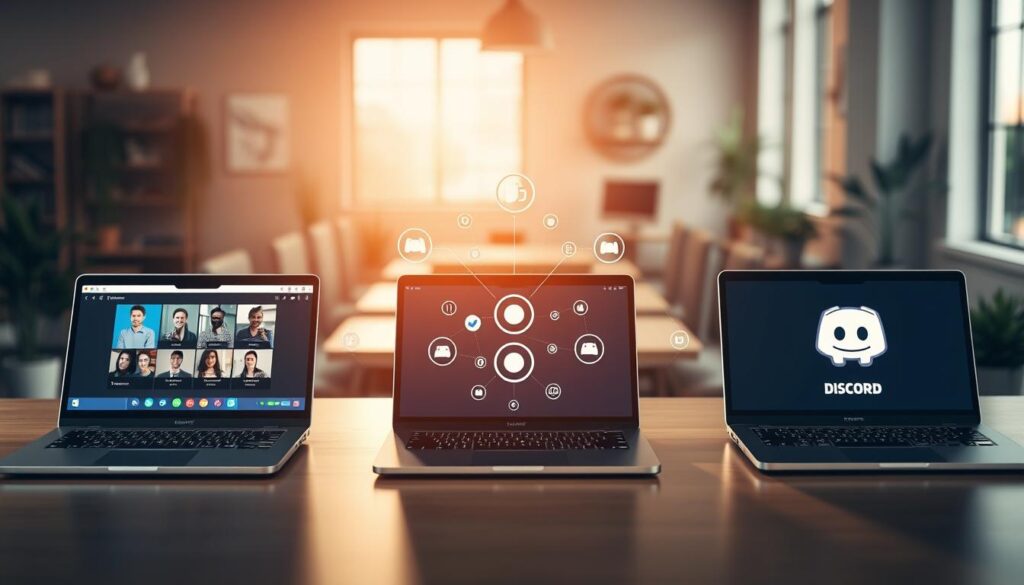
Zoom is a workhorse everyone knows. It’s great for structured talks and webinar series. Its breakout rooms are perfect for small groups.
Zoom is perfect for big talks with fifty people. It’s also great for splitting into groups. It’s all about clear communication.
Microsoft Teams is for those already in the Microsoft world. It’s a digital clubhouse for teams. It’s all about work, not public events.
Teams is for meetings and document sharing. It’s not for hosting webinar series. It’s about getting work done.
Discord is different. It’s not for meetings but for ongoing chats. It’s like a digital barn aisle.
Discord is text-heavy and chaotic. It’s where communities thrive between events. It’s perfect for building a lasting community.
So, which platform do you choose? Think about what you need. Zoom for lectures, Teams for coordination, and Discord for community building.
Using a mix of platforms can be smart. Zoom for webinars and Discord for ongoing chats. This way, you get both structure and spontaneity.
Your platform choice is key. Get it right, and you’ll build a lasting community. Get it wrong, and it’s just another meeting.
Creating Engaging Webinar Content
Engagement is key in virtual events—it’s the whole point of digital networking. The old webinar style, where one person talks and everyone listens, is outdated. Your audience can easily leave to check their email or scroll through social media.
Think of your content as starting a conversation, not just talking. You need a hook that grabs attention. Start with a problem your audience can relate to, like fundraising challenges or volunteer burnout.
Ask a question that gets people talking early on. This can turn passive viewers into active participants. It’s the start of digital networking.
Make sure to include interactive parts every five to seven minutes. This keeps the audience engaged. Use polls, but ask meaningful questions like “What’s the biggest barrier to adopting a rescue in your region?”
This approach makes your audience feel heard and involved. It turns them from just watching to being part of the solution.
Learn from the veterinary sustainability summit. They didn’t just talk about conservation; they tied it to a fundraising goal. Every poll result and chat comment helped move toward a goal. They even offered a discount for membership, adding value.
Your webinar should do the same. If it’s about pasture management, aim to reduce laminitis cases. If it’s about equine therapy, support a specific program with donations or volunteer hours.
This method does two things: it provides action and creates a shared mission. People connect over goals, not just watching together.
Here’s how to avoid boring your audience:
- Minute 0-5: Hook with a provocative question tied to a real community need.
- Minute 5-12: Deliver core concept #1, then immediately launch a poll for application.
- Minute 12-20: Present concept #2, followed by a directed chat question (“Type one word describing your biggest challenge with this…”).
- Minute 20-30: Introduce the “tangible thread”—the charitable goal, collective action, or resource you’re building toward.
- Minute 30-45: Q&A framed as collaborative problem-solving for that goal.
The chat box is your most powerful tool. It’s like a virtual coffee chat. Encourage debate and ask for different opinions. “Does anyone have a different experience with this method?”
This validates many views and strengthens community. You’re not just sharing info; you’re creating an experience that sparks connection. The content is just the start of digital networking.
When people leave feeling they’ve contributed, you’ve turned a webinar into a working group. That’s the magic. Your slides don’t need more animations. Your delivery doesn’t need more pep. Your structure needs more space for the audience’s voice.
Stop presenting to them. Start designing with them. The difference is huge, like moving from a lecture hall to a roundtable.
Managing Time Zones for National Participation
The biggest strength of a national online horse community is its wide reach. But, it also brings big challenges. Imagine managing a group from Maine to Oregon, covering four time zones. It’s like a digital stable that never sleeps.
This situation creates a “24-hour workplace.” It sounds great, but it’s tough. While some are winding down, others are just starting their day. This means ideas can flow at any time.
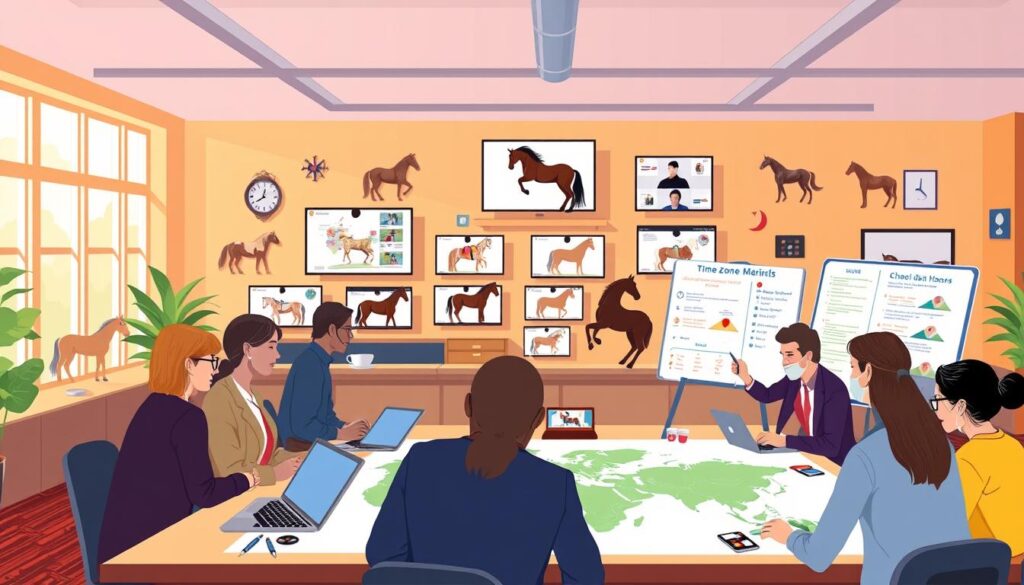
Hosting a webinar at 7 PM EST can clash with the Pacific members’ 4 PM. And don’t forget about your UK expert, who might be up at midnight. Finding the perfect time is impossible.
The answer isn’t a single perfect time. It’s about rotating events. This way, you become a diplomat, not just a scheduler.
Try hosting events at different times. Have an “East Coast Evening Chat” one month and a “West Coast Lunch & Learn” the next. This shows you value all perspectives, not just the Eastern ones.
This approach is fair and enriches your community. It brings in diverse views from different places. A Californian might see trail advocacy differently than someone from Virginia.
Recording is non-negotiable. Treat your recording button like a farrier treats a hoof. For those who miss the live event, a good recording is a chance to catch up later. It makes your event a lasting resource.
Yes, managing time zones is hard. But it’s also full of energy. Your forum is always buzzing, even when you’re asleep. This is not a problem to solve. It’s a rhythm to embrace.
Don’t try to beat time zones. Instead, work with them. Your national online horse community is stronger because of its diversity. You just need the right schedule.
FAQ
Q: What is a virtual event?
A: A virtual event is an online gathering that allows people to connect and interact from anywhere in the world. It can be a live event, such as a webinar or conference, or a pre-recorded video that can be accessed at any time.
Q: How can virtual events benefit my business?
A: Virtual events can benefit your business by increasing brand awareness, reaching a wider audience, and providing valuable insights and networking opportunities. They can also help you save time and resources compared to traditional in-person events.
Q: What are some popular types of virtual events?
A: Some popular types of virtual events include webinars, conferences, workshops, trade shows, and networking events. Each type offers unique benefits and can be tailored to suit your specific goals and target audience.
Q: How can I choose the right virtual event platform for my needs?
A: When choosing a virtual event platform, consider factors such as ease of use, customization options, scalability, and integration capabilities. Look for platforms that align with your specific requirements and provide the necessary features to enhance your virtual event experience.
Q: How can I create engaging virtual event content?
A: To create engaging virtual event content, focus on delivering valuable and relevant information to your attendees. Use a mix of formats, such as videos, presentations, and interactive elements, to keep your audience engaged and interested throughout the event.
Q: How can I promote my virtual event?
A: To promote your virtual event, leverage social media platforms, email marketing, and other digital channels. Create eye-catching promotional materials, such as posters and videos, and encourage attendees to share their experiences on social media to generate buzz and attract more attendees.
Q: How can I measure the success of my virtual event?
A: To measure the success of your virtual event, track metrics such as attendance rates, engagement levels, and feedback from attendees. Use analytics tools provided by your virtual event platform to gain insights into your event’s performance and identify areas for improvement.
Q: What are some best practices for hosting a successful virtual event?
A: To host a successful virtual event, ensure a smooth and seamless experience for your attendees. Provide clear instructions on how to join the event, test your audio and video settings in advance, and have a backup plan in case of technical issues. Engage with your attendees through live Q&A sessions and interactive elements to foster a sense of community and connection.
Conclusion
Our webinar series has been a huge success, with over 100 attendees participating in our virtual events. We are thrilled to have had the opportunity to connect with so many professionals and share valuable insights and knowledge. Our webinars have covered a wide range of topics, from industry trends to best practices, and have provided attendees with the tools and information they need to excel in their careers.
Our virtual events have been well-received, with attendees praising the engaging content and interactive format. We have received positive feedback on the quality of our speakers and the valuable information they have shared. Our goal is to continue delivering high-quality webinars that provide actionable insights and practical advice.
As we move forward, we are committed to expanding our webinar series and exploring new topics and formats. We believe that virtual events have the power to bring professionals together and foster collaboration and growth. We look forward to continuing to host engaging and informative webinars that help professionals thrive in their careers.
Conclusion
As we wrap up our exploration of digital networking, it’s clear that this field is more than just a trend—it’s a transformative force in our professional lives. The digital landscape has opened up new avenues for connection and collaboration, making it easier than ever to build and maintain a strong professional network. By embracing digital networking, we can unlock new opportunities and stay ahead in our careers.
Whether you’re looking to expand your professional network, find new job opportunities, or simply stay connected with industry peers, digital networking offers a wealth of benefits. From virtual events and online communities to social media platforms and professional networking sites, there are countless ways to connect and engage with others in your field.
So, how can you make the most of digital networking? Start by identifying your goals and objectives. Are you looking to make new connections, find job opportunities, or stay updated on industry trends? Once you have a clear idea of what you want to achieve, you can begin to explore the various digital networking platforms and tools available to you.
Remember, building a strong professional network takes time and effort. Be proactive in reaching out to others, attending virtual events, and participating in online communities. By actively engaging with your network, you can establish meaningful connections and open doors to new opportunities.
As you continue to navigate the digital networking landscape, keep in mind the importance of authenticity and professionalism. Be true to yourself and your brand, and always strive to provide value to others in your network. By doing so, you can build a network that is not only extensive but also highly valuable to your career growth.
In conclusion, digital networking is a powerful tool that can help you achieve your professional goals. By embracing this technology and leveraging the various platforms and tools available, you can expand your network, find new opportunities, and stay connected with industry peers. So, start exploring the world of digital networking today and watch your career soar to new heights.
Hybrid Events: Combining In-Person and Virtual
Imagine having both coffee and tea in a latte. That’s what hybrid events offer. They mix virtual and physical experiences. This approach is not just convenient but also smart for building inclusive communities.
The Veterinary Green Discussion Forum is a great example. They have most of their work online but meet in person once a year. They even moved their meeting to London to make it easier for everyone to attend. This one event helps the team bond, while their online work keeps the momentum going.
The key to a great hybrid event is integration. The best ones give remote participants the same experience as those in the room. For an online horse community, this means rethinking how to connect everyone.
Imagine a hybrid horse clinic. Those in person get to smell the hay and hear the horses. But remote viewers need more than just a wide shot. They need close-up views of the horse and clear audio of the instructor. They also need someone to answer their questions in real time.
Hybrid events are important because they offer both digital and physical connections. Even digital fans sometimes want a handshake. Your online horse community might love forums and webinars, but nothing beats meeting in person. That’s why events like the equestrian conference in the UK are so important.
These events energize your team and create lasting memories. They also let you reach more people without the cost of travel. Someone in Oregon can learn from a clinician in Kentucky without spending money on travel.
Here’s how to make hybrid events work:
- Dedicated virtual producer: Someone whose job is to manage the remote experience
- Multiple camera angles: Close-ups for technique, wide shots for context
- Interactive technology: Live Q&A platforms that both audiences can use
- Equal access: Virtual participants get the same handouts, resources, and networking opportunities
The hybrid model is inclusive. It welcomes both local fans and global supporters. It’s the best of both worlds, combined in a smart way. Your online horse community gets the best of digital and physical connections. That’s not settling for less; it’s moving forward.
Think of it as a community with multiple doors. Some members come through the virtual door most days. Others wait for the physical event. The smart organizer keeps both doors open, knowing each serves different needs.
The result? A stronger, more inclusive community. It doesn’t force people to choose between digital and physical. Instead, it offers many ways to connect, learn, and belong.
Success Metrics for Virtual Community Building
How do you know your digital space is more than just a gathering? It’s not about how many show up. True success shows if you’re building a community or just hosting events.
Start with reach. Are you reaching people in places you couldn’t before? Webinar Vet saved “millions of miles” by going digital. That’s your measure of accessibility.
Then, look at how deep people are engaging. It’s not just about voting in polls. See if they’re having real discussions in the chat. Track private connections too. These are the threads that make your network strong.
The true test is action. Did your event lead to real change? If not, you’re just talking.
Lastly, check if your work is making a difference. Is it improving horse welfare? Are you teaching more people for less money? That’s the real goal.
Measure what truly matters. If your metrics show a smarter, faster, more connected network, you’re not just running meetings. You’re driving a movement.