

Paris relies on two massive structures to anchor its tourism economy. The Eiffel Tower and the Louvre dictate the physical movement of millions of international visitors across the French capital every single year. Evaluating their physical footprints, historical construction, and modern operational constraints provides a clear framework for visitors attempting to experience both sites.
Historical Engineering Versus Royal Architecture
The origins of these two monuments sit at opposite ends of the French historical timeline. The Louvre began as a medieval fortress in the late twelfth century under King Philip II. The monarchy expanded the footprint over hundreds of years, converting the defensive structure into a massive Renaissance palace. The royal family abandoned the property for Versailles in the late seventeenth century. The revolutionary government formally converted the building into a public museum in 1793. The architecture represents centuries of shifting aristocratic tastes, featuring heavy stone facades, ornate colonnades, and sprawling interior galleries.
The Eiffel Tower represents the peak of industrial-era engineering. Gustave Eiffel constructed the iron lattice tower for the 1889 Exposition Universelle. The structure was originally intended to stand for just twenty years before facing demolition. The Parisian public heavily criticized the design during construction, calling it a tragic iron smokestack. The military value of the height saved the structure. The army used the peak as a wireless telegraph transmitter. The sheer contrast between the heavy royal stone of the Louvre and the exposed industrial iron of the Eiffel Tower defines the visual duality of the city.
Structural Logistics At The Iron Lady
The Eiffel Tower dominates the Champ de Mars, operating as a vertical transit system. The structure divides into three accessible levels. The base relies on massive hydraulic elevator systems installed inside the angled iron legs. Visitors holding base tickets can use the stairs to climb directly to the first and second floors. The physical exertion required to climb the metal steps deters a large percentage of tourists. This leaves the stairways significantly less crowded than the elevator waiting pens.
The second floor functions as the primary observation deck. The wrap-around viewing platform provides unobstructed sightlines across the entire urban grid. The Jules Verne restaurant operates on this tier, offering a high-end culinary experience engineered by Michelin-starred chefs. Diners utilizing this restaurant bypass the main security lines, accessing the venue through a dedicated private elevator pillar in the south leg.
The third floor sits near the absolute summit, requiring a separate elevator transfer from the second level. This tiny upper platform restricts the number of allowed passengers, creating severe bottlenecks during the peak summer season. The city completely overhauled the ground-level security perimeter in recent years. Bulletproof glass walls now encircle the entire base, forcing all visitors through strict airport-style security screenings before they even reach the ticket kiosks.
Managing The Massive Scale Of The Louvre
The Louvre operates on a completely different spatial scale. The museum contains over seventy-three thousand square meters of exhibition space. The physical building stretches along the right bank of the Seine for nearly a kilometer. The collection holds over thirty-five thousand distinct objects. A visitor spending thirty seconds looking at every single item would need hundreds of hours to see the entire inventory.
The museum divides into three massive wings: Richelieu, Sully, and Denon. The Denon wing holds the heavy concentrations of Italian Renaissance paintings and massive French Romanticism canvases. The Sully wing traces the original medieval fortress foundations deep underground before rising into extensive Egyptian antiquity galleries. The Richelieu wing displays opulent Napoleon III apartments and Near Eastern artifacts.
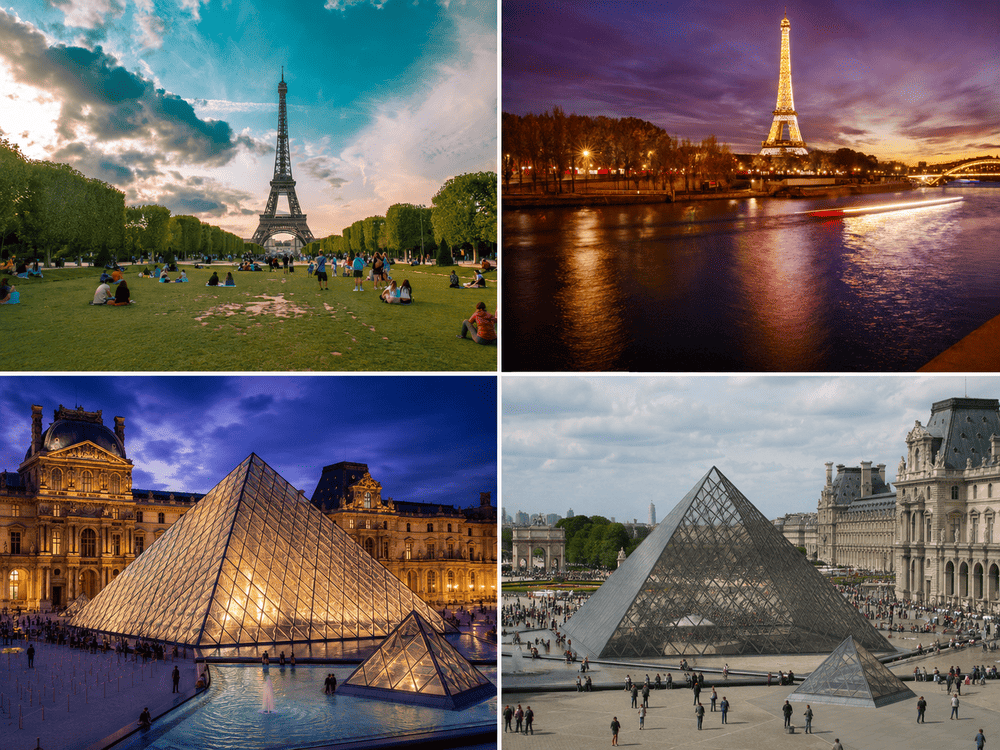
The architect I.M. Pei added the central glass pyramid in 1989 to solve severe pedestrian traffic jams. This modern glass structure acts as the primary subterranean entrance, funneling crowds downward into a massive central concourse before they disperse into the individual wings. The layout frequently disorients new visitors. The corridors span multiple floors, cross over internal courtyards, and frequently hit dead ends at historical staircases.
The Mona Lisa And High-Density Crowd Dynamics
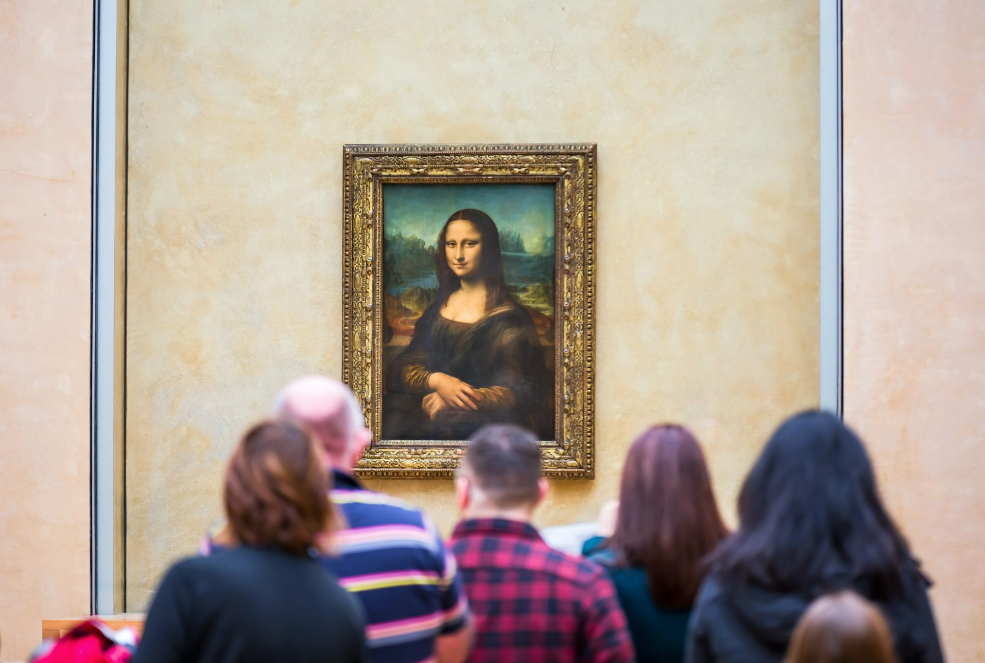
The Salle des États inside the Denon wing hosts the most severe crowd density in Europe. This particular room holds Leonardo da Vinci’s Mona Lisa. The museum administration deploys dedicated security teams solely to manage the flow of humans pushing toward this single piece of wood. The painting sits behind thick, climate-controlled bulletproof glass, flanked by permanent wooden barricades.
The staff forces visitors into a winding queue system just to cross the room. Patrons receive roughly thirty seconds at the front of the barrier to take a photograph before guards physically motion them toward the exit doors. The intense singular focus on this portrait completely blinds most visitors to the massive Paolo Veronese painting, The Wedding at Cana, covering the exact opposite wall. The physical exhaustion generated by moving through this particular room forces many tourists to abandon the rest of the museum entirely.
Geographic Proximity And Transit Operations
A common planning error involves treating these two locations as immediate neighbors. The physical distance between the Louvre and the Eiffel Tower measures roughly three and a half kilometers. Walking along the Seine riverbank takes nearly an hour at a standard pace. The lack of shade along the river paths makes this walk physically punishing during July and August.
The Paris public transit system provides several direct solutions. The Batobus water taxi operates a continuous loop along the river, featuring dedicated stops directly outside both monuments. This boat route completely bypasses surface street traffic. The underground Metro system requires a line transfer to connect the two sites. Visitors riding the yellow Line 1 from the museum must transfer to the Line 6 or Line 9 trains to reach the Trocadéro or Bir-Hakeim stations near the tower. Checking current transit maps on the official Paris Tourism Bureau prevents routing errors during major civic events or sudden transit strikes.
Ticketing Strategies And Access Protocols
The operational reality of modern Paris tourism requires purchasing tickets months in advance. Both institutions completely eliminated the option to simply walk up and buy an entry pass during the busy season. The Louvre enforces strict timed-entry digital ticketing. A patron missing their assigned time slot by more than thirty minutes risks complete denial of entry.
The Eiffel Tower releases its elevator tickets exactly sixty days in advance. These batches sell out within hours. Third-party tour operators buy up massive blocks of inventory, forcing unorganized travelers to pay high markups for guided tours simply to secure physical access to the elevators. Travelers researching our European travel itineraries consistently learn to prioritize ticket acquisition before booking flights or hotel rooms.
Securing access to both the Eiffel Tower and the Louvre on the exact same day creates an aggressive, exhausting schedule. Spreading these two massive structural anchors across different days provides the physical recovery time required to actually absorb the historical significance of the sites.