
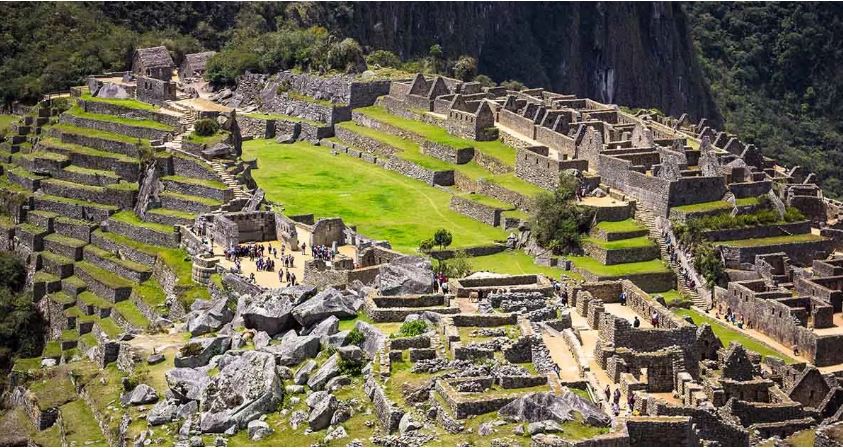
The Historic Sanctuary of Machu Picchu represents the peak architectural achievement of the Inca Empire. Located high in the Peruvian Andes, this fifteenth-century citadel functions as a massive physical record of advanced pre-Columbian engineering. The site sits entirely isolated from the standard colonial road networks that defined later centuries of South American history. Evaluating the unseen hydrological foundations, the seismic resistance of the masonry, and the modern crowd control logistics provides a clear framework for analyzing this high-altitude royal estate.
Geographic Isolation And Topographical Realities
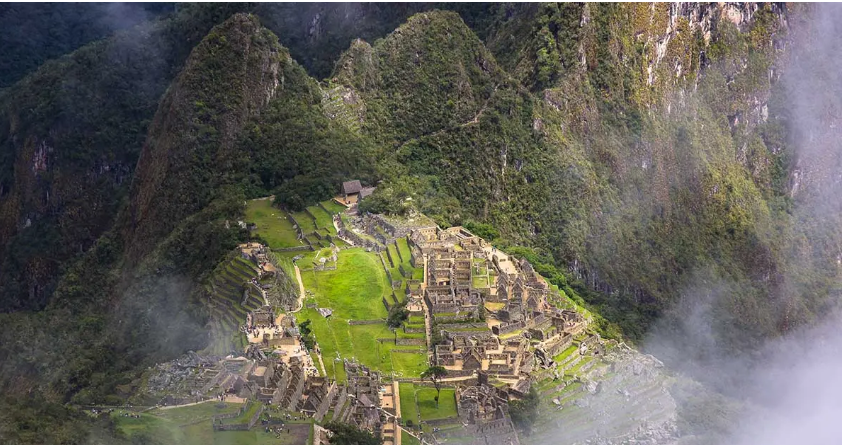
The physical placement of the citadel dictates its entire structural logic. The site occupies a narrow granite saddle between two towering peaks, Machu Picchu and Huayna Picchu. The elevation rests at roughly 7,970 feet above sea level. This specific altitude places the sanctuary right in the transition zone where the high Andes mountain range meets the upper Amazon basin. The surrounding environment features deep, sheer canyons carved by the Urubamba River snaking around the base of the mountain far below.
This exact location offered immense strategic and agricultural advantages. The steep drop-offs provided absolute military security against approaching hostile forces. The lower elevation relative to the imperial capital of Cusco created a much warmer microclimate. This allowed the royal inhabitants to cultivate crops like maize and coca that struggled to grow in the freezing temperatures of the high plateau. The physical separation from the main administrative centers suggests the site functioned primarily as a private retreat for the Inca emperor Pachacuti rather than a standard commercial hub.
Hydrological Engineering And Water Management
The most impressive engineering feats at Machu Picchu remain entirely hidden underground. The region receives nearly eighty inches of rain annually. Placing a massive stone city on a steep granite ridge under those weather conditions invites catastrophic landslides. The Inca builders solved this problem by spending decades manipulating the subterranean hydrology before constructing a single visible building.
Civil engineers analyzing the site confirm that nearly sixty percent of the total construction effort happened below the surface. The workers built a vast network of subsurface drainage channels. They layered coarse rocks, gravel, and sand deep into the foundations to filter massive volumes of rainwater safely away from the structural walls and down the mountainside.
A natural freshwater spring sits on the steep slopes above the city. The engineers carved a perfectly graded stone canal to tap this resource, feeding the water directly into the urban sector. This canal drops water into a series of sixteen sequential stone fountains. The first fountain sits directly outside the residence of the emperor, guaranteeing the highest quality water for the royal household before the flow continues down the mountain for general use.
Structural Architecture And Seismic Resistance
The visible architecture relies on classic Inca ashlar masonry. The builders extracted granite blocks from an active quarry located right on the ridge. Stonemasons cut these massive blocks to fit together perfectly without the use of mortar. The precision of the joints leaves zero space between the stones.
Peru sits on a highly active fault line. The decision to abandon rigid mortar represents a calculated structural defense against earthquakes. When seismic tremors hit the mountain, the dry-stone walls simply dance. The blocks bounce and shift, then settle right back into their original positions once the shaking stops.
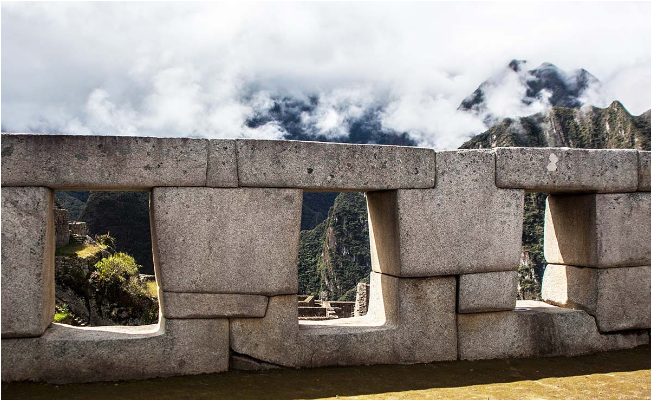
The architects incorporated several other distinct anti-seismic features across the sanctuary. The doors and windows feature a distinct trapezoidal shape, leaning inward at the top to distribute weight evenly. The corners of the major buildings interlock like puzzle pieces. The retaining walls lean slightly into the mountain, utilizing gravity to anchor the terraces against the shifting soil. These physical adaptations allowed the heavy granite structures to survive centuries of massive earthquakes that flattened modern colonial cities just a few hundred miles away.
Agricultural Terracing And Soil Composition
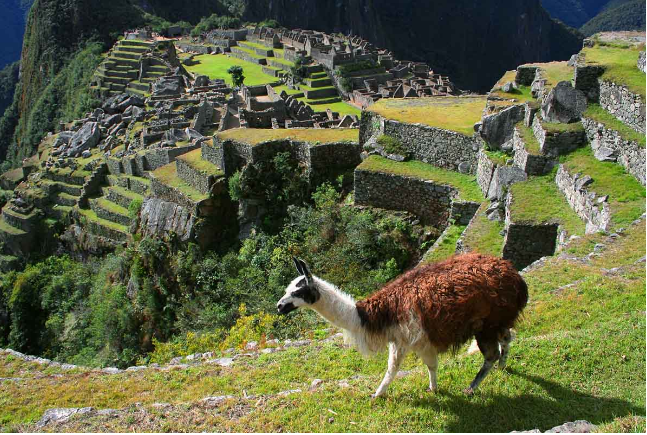
The sheer verticality of the mountain required a massive modification of the landscape to support human habitation. The Inca constructed hundreds of stepped terraces, known as andenes, cascading down the sides of the ridge. These structures served a dual purpose. They created flat, usable agricultural land, and they acted as giant retaining walls stabilizing the mountain against soil erosion.
The construction of these terraces mirrors the drainage systems beneath the city. The workers built heavy stone retaining walls, then backfilled the spaces with distinct layers of material. Large stones formed the base, followed by a layer of gravel, a layer of sand, and finally rich topsoil transported directly from the valley floor. The stone walls absorb heavy solar radiation during the day and release that heat slowly throughout the cold nights. This thermal regulation protects delicate crops from frost damage, maximizing the agricultural output of the estate.
Modern Transit Logistics And Access Control
Reaching the sanctuary today requires coordinating a highly specific sequence of transit modes. No direct roads connect the site to the major population centers. The journey begins in Cusco or the Sacred Valley town of Ollantaytambo. Passengers board a narrow-gauge railway that follows the Urubamba River deep into the canyon. The train terminates in Aguas Calientes, a dense transit hub sitting at the base of the mountain.
From Aguas Calientes, visitors face a final vertical ascent. A fleet of shuttle buses runs continuous loops up a steep, unpaved switchback road known as the Hiram Bingham Highway. The bus ride takes roughly thirty minutes to reach the main entrance gates. Travelers organizing broad South America travel itineraries frequently dedicate at least two full days to complete this round-trip transit from Cusco. Attempting to force the entire sequence into a single day creates extreme logistical friction and leaves very little time to actually study the architectural sectors of the site.
Evaluating The Circuit System
The Peruvian Ministry of Culture implemented strict crowd control measures to protect the fragile stonework from rapid degradation. Visitors can no longer wander freely across the sanctuary. The ticketing system forces guests to select a specific, one-way circuit upon purchase. Security personnel monitor the trails, preventing anyone from backtracking or crossing into unauthorized sectors.
| Circuit Designation | Primary Access Zone | Physical Demand | Ticket Availability |
| Circuit 1 | Upper terraces, classic panoramic viewpoint | Moderate | High demand, sells out months early |
| Circuit 2 | Comprehensive lower city, major temples | High | Standard entry route |
| Circuit 3 | Agricultural sector, limited urban access | Low | Often available closer to arrival dates |
Selecting the correct circuit dictates the entire physical experience. Circuit 1 provides the iconic high-angle view over the entire citadel. Circuit 2 offers the most direct contact with the primary stonework of the Temple of the Sun and the Intihuatana stone. Visitors holding tickets for the grueling Huayna Picchu mountain climb face additional timed entry restrictions and mandatory physical checkpoints.
Preservation Mandates And The Threat Of Mass Tourism
The sheer volume of daily visitors presents the greatest continuous threat to the structural integrity of the site. Thousands of heavy boots crossing the ancient stonework every day cause rapid physical erosion. The humidity introduced by the massive crowds accelerates the growth of damaging lichens on the granite surfaces.
The UNESCO World Heritage Centre constantly monitors the condition of the sanctuary, frequently pressuring the Peruvian government to lower the daily entry caps. Local economic demands rely heavily on maximizing tourist volume, creating a continuous political battle over the correct carrying capacity of the mountain.
Park administrators introduced new regulations requiring all foreign visitors to hire official licensed guides before entering the gates. This mandate serves to educate the crowds and prevents tourists from climbing on the restricted walls or wandering off the reinforced paths. The long-term survival of the citadel depends entirely on strict logistical management. The site stands as a physical artifact of an empire that mastered its harsh environment. Preserving that artifact requires treating the mountain as a fragile, finite resource.