
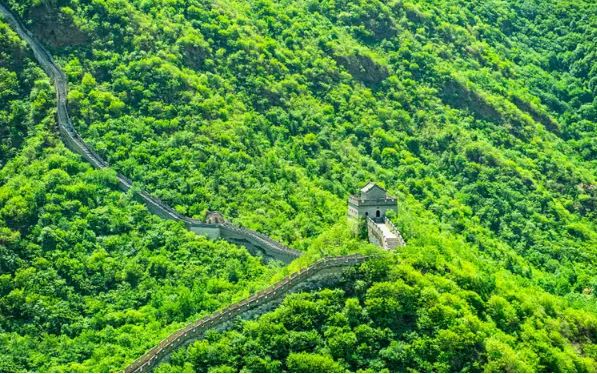
The Great Wall of China represents the most massive military engineering project in human history. The structure is not a single, continuous line of masonry. The defense network consists of overlapping trenches, natural geographical barriers, and isolated watchtowers constructed over two millennia. Most visitors visualizing the structure picture the stone and brick fortifications built during the Ming dynasty. Evaluating the original construction logic, the distinct characteristics of the accessible sections, and the transit logistics from Beijing provides a clear framework for planning a visit to this massive architectural installation.
Historical Engineering And The Ming Dynasty Strategy
Early Chinese states built regional defense walls using rammed earth and wood. These initial barriers degraded quickly under severe weather conditions. The Ming dynasty changed the engineering approach entirely after suffering heavy military defeats from northern nomadic cavalry. The state directed massive resources into building an impenetrable northern border.
Laborers hauled millions of tons of granite, brick, and limestone into the high mountains. They bound the masonry using a highly effective mortar mixed from sticky rice flour and slaked lime. This specific chemical compound created a bond strong enough to survive centuries of extreme temperature shifts and heavy seismic activity. The watchtowers functioned as a fast communication network. Soldiers lit smoke signals during the day and fires at night to transmit military intelligence across hundreds of miles of rugged terrain in a matter of hours. The structure acted less as a fixed defensive line and more as an elevated highway, allowing the imperial army to deploy troops quickly across the mountainous frontier.

Evaluating Badaling And The High-Volume Tourist Experience
Badaling operates as the most commercially developed section of the entire network. Located roughly forty miles northwest of central Beijing, this segment receives the highest concentration of domestic and international tourists. The state restored this specific stretch heavily during the 1950s to serve as the official diplomatic showcase.
The infrastructure at Badaling resembles a modern transit hub. Massive parking lots accommodate hundreds of commercial tour buses daily. A high-speed rail station sits directly beneath the site, delivering passengers from Beijing in less than thirty minutes. Visitors utilize cable cars and funiculars to bypass the steep initial climb. The walking surface is entirely paved and features modern steel handrails. This extreme commercialization removes the raw historical atmosphere. The crowds reach maximum capacity during national holidays, creating severe pedestrian bottlenecks along the narrow parapets.
Mutianyu: Balancing Accessibility With Structural Integrity
Travelers seeking a functional compromise between heavy infrastructure and historical atmosphere target the Mutianyu section. This segment sits slightly further from the capital. The extra driving distance acts as a natural filter, significantly reducing the volume of casual day-trippers.

Mutianyu features twenty-two restored watchtowers spaced closely together along a densely forested mountain ridge. The architecture here showcases a distinct defensive feature: parapets line both the outer and inner edges of the wall. This dual-sided defense indicates the strategic vulnerability of the valley, requiring soldiers to repel attacks from both directions. The site provides a closed-cabin cable car and an open-air chairlift to reach the upper battlements. Visitors often descend the mountain using a metal toboggan slide built directly into the hillside. The environment remains highly managed, but the physical scale of the structure feels much more imposing without the extreme crowd density found at Badaling.
The Wild Wall: Jinshanling And Jiankou
True architectural purists look beyond the heavily restored tourist zones. The sections known collectively as the Wild Wall offer direct contact with original, decaying Ming dynasty masonry. Jinshanling serves as the primary entry point for this type of demanding exploration.
Jinshanling features complex defensive architecture, including obstacle walls, multi-tiered watchtowers, and hidden shooting holes. Portions of the stone path remain original. Hikers walk over uneven bricks bearing the stamped identifying marks of the military garrisons that manufactured them centuries ago. The physical exertion required to cross this section is severe. The stairs are completely irregular, and certain stretches require scrambling over loose rubble.

Jiankou represents the absolute extreme end of the accessibility spectrum. The structure here grips a highly jagged, dolomitic ridge. The white rock base creates a striking visual contrast against the green vegetation. No cable cars or paved ramps exist. The wall has collapsed completely in several locations, forcing hikers to detour through dense scrub brush. Only visitors with high physical fitness and reliable wilderness survival skills attempt this segment.
| Section Name | Distance From Beijing | Infrastructure Level | Physical Demand |
| Badaling | 40 Miles | Extreme (High-speed rail, cable cars) | Low |
| Mutianyu | 45 Miles | High (Chairlifts, toboggan, paved paths) | Moderate |
| Jinshanling | 80 Miles | Low (Basic trailheads, minimal restoration) | High |
| Jiankou | 45 Miles | Zero (Completely wild, structural decay) | Extreme |
Logistical Planning From Beijing
Executing a successful visit requires precise logistical scheduling. Visitors coordinating broad Asia travel itineraries must treat the wall excursion as a full-day commitment. Attempting to combine the wall with the Forbidden City or the Summer Palace in a single day creates impossible transit friction.
Public transportation options exist for the major restored sections. The bullet train to Badaling requires booking tickets days in advance to secure a seat. Reaching Mutianyu or Jinshanling via public buses involves multiple transfers in busy suburban transit hubs where English signage is minimal. Hiring a private driver for the day remains the most efficient operational strategy. A dedicated vehicle allows visitors to depart Beijing before dawn, beating the massive commercial tour buses to the ticket gates. The driver waits at the base of the mountain and handles the return drive through the dense urban traffic of the capital.

Modern Preservation And Environmental Friction
The sheer scale of the structure makes absolute preservation impossible. The UNESCO World Heritage Centre monitors the site, but natural erosion and human interference constantly degrade the masonry. The Chinese government enacted strict laws prohibiting the removal of bricks. Local villagers historically dismantled sections of the wall to harvest building materials for their own homes.
Wind and rain pose the greatest continuous threat to the unrestored sections. Plant roots wedge deep into the mortar joints, slowly splitting the heavy stone blocks apart. Heavy summer thunderstorms frequently cause localized landslides that wipe out entire segments of the foundation. The state targets its preservation funding into the major tourist hubs, leaving hundreds of miles of remote wall to slowly collapse back into the mountain ridges. The structure stands as a decaying military artifact, offering visitors a direct physical link to the isolation and scale of historical Chinese border defense.