

The Topkapi Palace and Harem stand as the historical administrative center of the Ottoman Empire. Located on the Seraglio Point in Istanbul, the sprawling complex overlooks the Golden Horn, the Bosphorus Strait, and the Sea of Marmara. Sultan Mehmed II ordered its construction in 1459, mere years after conquering the city. For nearly four centuries, this site functioned as the primary residence of the sultans and the political headquarters of a transcontinental empire. Modern visitors encounter a sprawling museum complex reflecting centuries of architectural additions, fires, and successions. Analyzing the physical layout, the recently restored Harem quarters, and the ticketing logistics provides a clear operational blueprint for visiting this major Turkish landmark.
The Strategic Layout Of The Imperial Courtyards
The architecture of Topkapi rejects the single-monolith design seen in European palaces like Versailles. The Ottoman builders favored a decentralized layout, organizing the grounds into four distinct courtyards enclosed by high walls. The First Courtyard, known as the Court of the Janissaries, remains open to the general public. This outer zone historically housed the mint, the hospital, and the bakeries. Today, it serves as the main approach to the ticket gates and contains the Byzantine church of Hagia Irene.
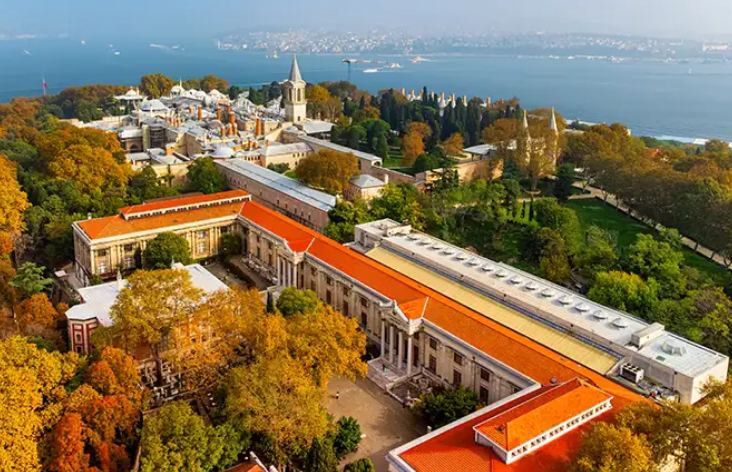
Entering the Second Courtyard requires a ticket and passing through the Gate of Salutation. This area held the administrative apparatus of the empire. The Imperial Council convened here inside the Divan, a domed chamber where viziers debated state policy. Right next to the Divan, the palace kitchens occupy a large section of the courtyard. These kitchens once prepared meals for over four thousand residents daily. The culinary staff consisted of hundreds of specialized chefs, divided into teams responsible for baking, dessert making, and meat roasting. They now house an extensive collection of Chinese celadon porcelain, highly valued by the sultans for the belief that the material would change color if touched by poisoned food. The sheer size of the towering chimneys dominates the courtyard skyline, illustrating the sheer logistical effort required to feed the imperial household. For broad historical context regarding the district, the UNESCO World Heritage Centre details the exact preservation protocols governing these specific structures within the historic areas of Istanbul.
Restoring The Harem And Imperial Domestic Architecture
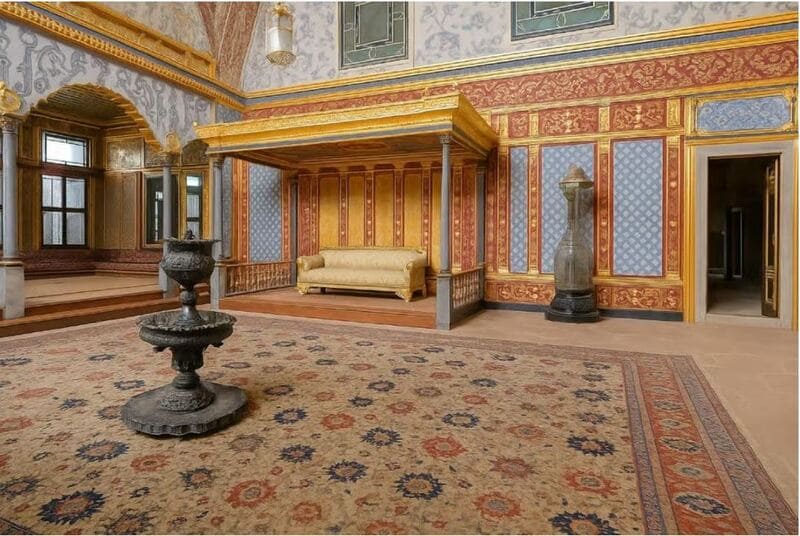
The Harem represents the private domestic space of the Ottoman court, separated from the public administrative zones. The name translates to “forbidden,” reflecting the strict rules governing entry. Only the sultan, his mother, his wives, his concubines, and the eunuch guards possessed access to these quarters. This section consists of over four hundred rooms, though the museum only permits access to a specific route through the complex.
An extensive six-year restoration project recently concluded, opening previously inaccessible sections of the Harem to the public. The Directorate of National Palaces revealed the restored Valide Sultan Chamber, the Concubines Courtyard, and multiple consort apartments. The physical layout of these newly opened spaces corrects common historical misconceptions. Visitors see a highly organized educational and administrative structure rather than just a leisure complex. The corridors are narrow. The living quarters feature intricate Iznik tiles, stained glass windows, and mother-of-pearl inlaid doors. The restoration teams repaired over 750 historical objects and textiles to furnish the rooms according to original palace inventories. This updated viewing route adds roughly thirty minutes to a standard visit, giving tourists a highly accurate view of late 17th-century domestic Ottoman architecture.
Evaluating The Treasury And Holy Relics
The Third Courtyard served as the private domain of the sultan. The Gate of Felicity guards the entrance. Inside, the Imperial Treasury holds the accumulated wealth of the empire. The exhibition spaces display solid gold thrones, large uncut emeralds, and the famous Topkapi Dagger, which features three large emeralds set into the hilt. The Spoonmaker’s Diamond, an 86-carat teardrop jewel surrounded by a double row of smaller diamonds, acts as the centerpiece of the collection. The sheer volume of precious stones and metals provides a physical metric for the economic reach of the empire at its peak. The displays include armor encrusted with diamonds, heavy gold candleholders, and jade bowls gifted by foreign dignitaries. The treasury rooms themselves feature heavy iron doors and thick stone walls, reflecting the high security required to protect the imperial assets.
Across the courtyard, the Chamber of the Holy Relics holds artifacts of immense religious significance to the Islamic world. Ottoman forces brought these items to Istanbul after conquering Egypt in 1517. The collection includes the mantle, swords, and footprint of the Prophet Muhammad. A designated cleric recites the Quran continuously inside the chamber, a tradition maintained for centuries without interruption. The museum enforces strict dress codes for this specific room, requiring all visitors to cover their shoulders and knees. Photography remains strictly banned inside the relics chamber to protect the light-sensitive fabrics and maintain a respectful atmosphere. The adjacent Library of Ahmed III provides a look at the intellectual center of the court. The marble building contains intricate reading couches and mother-of-pearl book cabinets that once held thousands of rare manuscripts.
Ticketing Structures And Operational Logistics
The Turkish government frequently updates the pricing and access rules for the complex. As of 2026, foreign visitors must purchase a combined ticket priced at 2,750 Turkish Lira (approximately €55). This single ticket grants access to the main palace courtyards, the Harem, and Hagia Irene. The administration eliminated the option to buy separate, cheaper tickets for just the main courtyards. Visitors should budget three to four hours to view the entire property at a normal walking pace.
Travelers building out their Middle East travel itineraries must factor the operating schedule into their plans. The complex closes entirely every Tuesday for maintenance and cleaning. The ticket windows open at 9:00 AM and close at 5:00 PM. Arriving right at the opening time allows visitors to head straight to the Harem or the Treasury before the large tour bus groups arrive by mid-morning.
| Ticket Category | Coverage | 2026 Price (Foreign Visitors) |
| Combined Ticket | Main Palace, Harem, Hagia Irene | 2,750 TL |
| Student Discount | Valid ISIC card holders (Ages 12-25) | Approx. 400 TL |
| Children | Ages 0-6 (Passport required) | Free |
Geopolitical Context And Structural Legacy
The Fourth Courtyard features a series of open pavilions and terraced gardens facing the water. The sultans built these kiosks to commemorate military victories. The Baghdad Kiosk features intricate blue and white tiles celebrating the capture of the city in 1638. The Iftar Kiosk offers a gilded canopy where the sultan would break his fast during Ramadan and watch the ships sail through the Bosphorus.
The layout of these pavilions reflects the shifting mindset of the Ottoman leadership over time. Early sultans lived in the highly fortified, central structures. Later rulers preferred the open, light-filled pavilions on the outer edges of the property. The empire eventually outgrew the medieval confines of Topkapi. In 1856, Sultan Abdulmejid I moved the imperial court to the newly constructed Dolmabahce Palace, a sprawling European-style monolith further up the strait. Topkapi transitioned into a repository for the imperial treasury and a home for the remaining members of previous harems. The modern museum preserves the original administrative footprint, offering a physical record of the six centuries the Ottomans ruled from the peninsula.