

Istanbul functions as a massive urban grid stretching across two continents. The European side holds the modern administrative and cultural core of the city. Taksim Square occupies the highest elevation point in the Beyoğlu district. This large open space acts as the primary transit hub and social gathering point for millions of Turkish citizens and international visitors every single year. Evaluating the historical monuments, the recent architectural additions, and the logistical layout provides a clear assessment of how this exact location dictates the flow of the entire city.
The Topography And Historical Foundation
The physical geography of the area dictated its original purpose. The word “taksim” translates to division or distribution in Arabic. During the Ottoman period, engineers utilized this elevated terrain to collect water arriving from the Belgrade Forest. Workers built a stone reservoir, known as the Taksim Maksemi, in the eighteenth century. This structure distributed fresh water to various neighborhoods descending to the Bosphorus Strait. The original stone water distribution center still stands today at the edge of the square, preserving the literal meaning of the location’s name.
The surrounding land remained largely undeveloped during early Ottoman rule. The slopes descending from the plateau functioned as a massive cemetery. Urban expansion pushed the city limits outward in the nineteenth century. The Ottoman military constructed the Artillery Barracks on the northern edge of the plateau. This massive rectangular courtyard structure formalized the boundaries of the area. The military presence shifted the zone away from its rural origins, setting the stage for modern development. The early days of the Turkish Republic saw the demolition of the barracks to create Gezi Park, a green space providing shade and walking paths for residents in a highly congested district.
The Monument Of The Republic
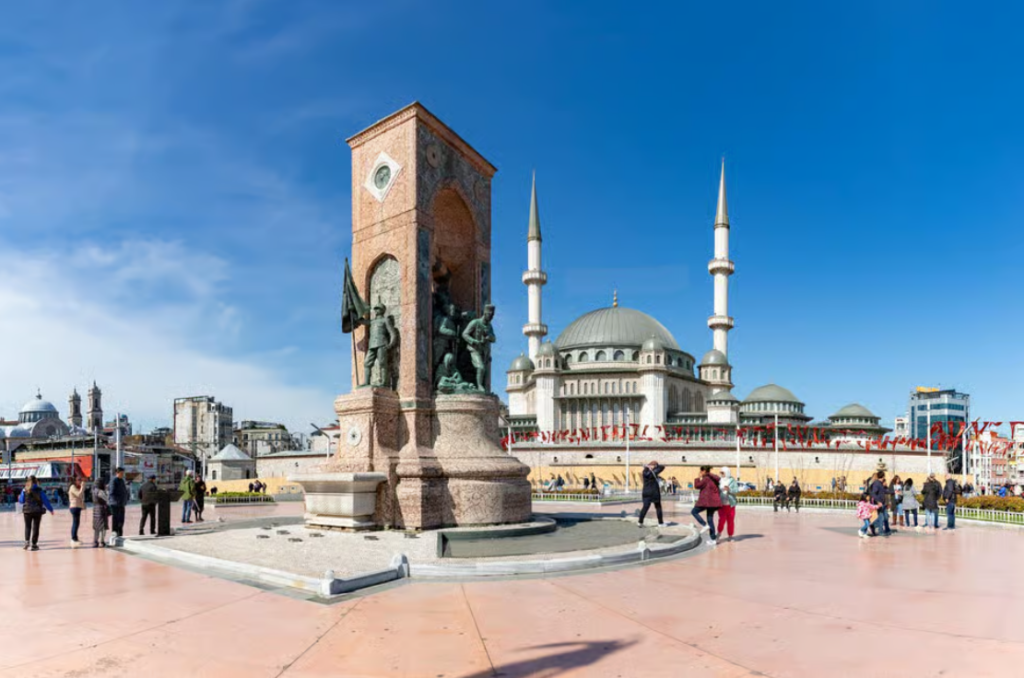
The visual focal point of the modern square is the Republic Monument, known locally as Cumhuriyet Anıtı. The Turkish government commissioned Italian sculptor Pietro Canonica to design this massive stone and bronze structure. Workers erected the monument in 1928, five years after the establishment of the modern Turkish state following the War of Independence.
The physical layout of the monument conveys a deliberate political message. One side faces north in the direction of the district of Harbiye. This face depicts Mustafa Kemal Atatürk in military uniform leading his troops, representing the physical struggle of the independence war. The opposite side looks south facing Istiklal Avenue. This face shows Atatürk in modern civilian clothing standing alongside his political allies, including Ismet Inönü. Soviet generals Mikhail Frunze and Kliment Voroshilov appear behind the Turkish leaders, acknowledging the military aid provided by the Soviet Union during the conflict.
The monument sits inside a circular traffic island. The original urban planners intended for the structure to anchor a much larger pedestrian zone. The sheer volume of vehicle traffic surrounding the monument creates friction for pedestrians trying to approach the stone base. Visitors frequently gather around the lower steps to take photographs, requiring them to cross multiple lanes of active taxi and bus traffic. The structure remains the designated starting point for official state ceremonies and national holiday celebrations.
Architectural Shifts And The Atatürk Cultural Center
The eastern edge of Taksim Square features the Atatürk Cultural Center, a massive glass and steel structure. The original building opened in 1969 as a state opera house. A severe fire destroyed the interior shortly after opening. The government rebuilt the facility, but decades of deferred maintenance forced a complete closure in 2008.
The Turkish Ministry of Culture initiated a total demolition and reconstruction of the site. The brand-new Atatürk Cultural Center reopened to the public in 2021. The updated design features a massive spherical red dome sitting inside a transparent glass cube. This red dome holds the primary opera auditorium, seating over two thousand patrons. The surrounding complex includes smaller theaters, recording studios, art galleries, and an extensive public library.
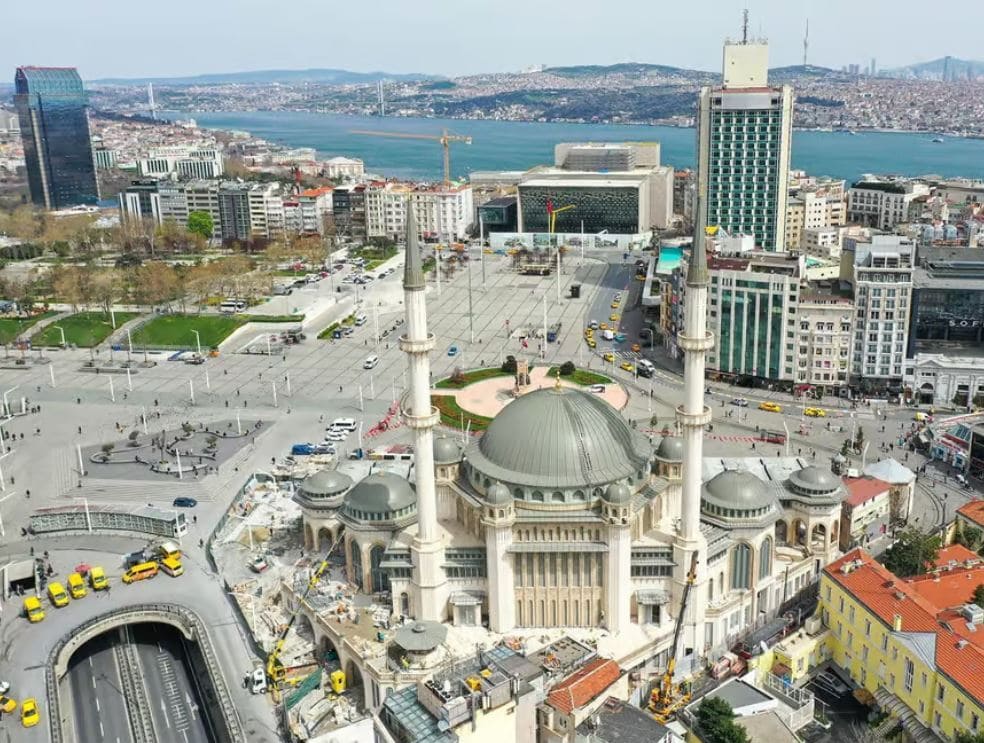
This architectural reboot completely altered the visual dynamics of the square. The transparent facade allows pedestrians standing outside to see the interior activity, breaking down the imposing, closed-off feeling of the original concrete building. Travelers researching our European travel guides consistently search for locations blending deep history with modern cultural infrastructure. The new cultural center fulfills that demand, providing a state-of-the-art venue for international ballet, theater, and symphony performances right at the city center.
Istiklal Avenue And Urban Connectivity
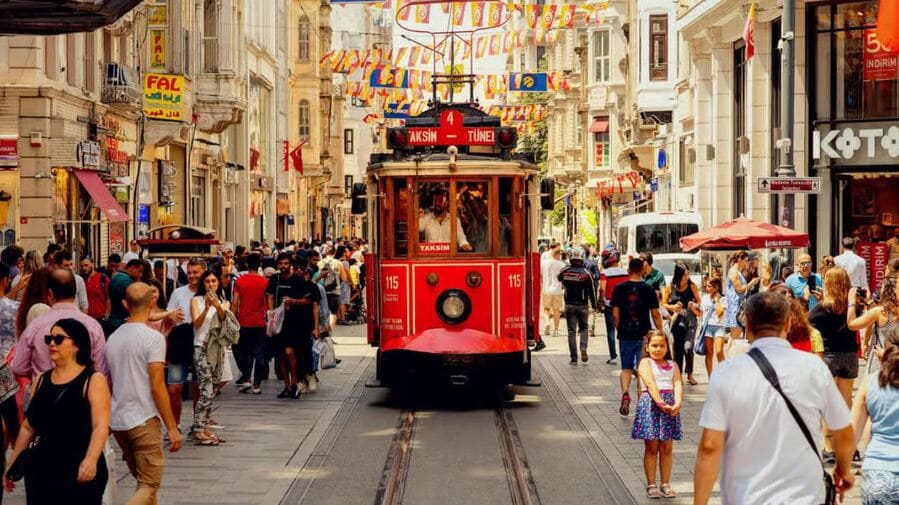
The southern edge of the square connects directly to Istiklal Avenue. This pedestrian-only street stretches for over a kilometer down to the Galata Tower. The avenue functions as the busiest commercial artery in Turkey. Hundreds of thousands of people walk this route every day. The architecture along the street reflects heavy European influence, featuring ornate nineteenth-century consulates, Catholic churches, and stone apartment blocks built by the local Levantine community.
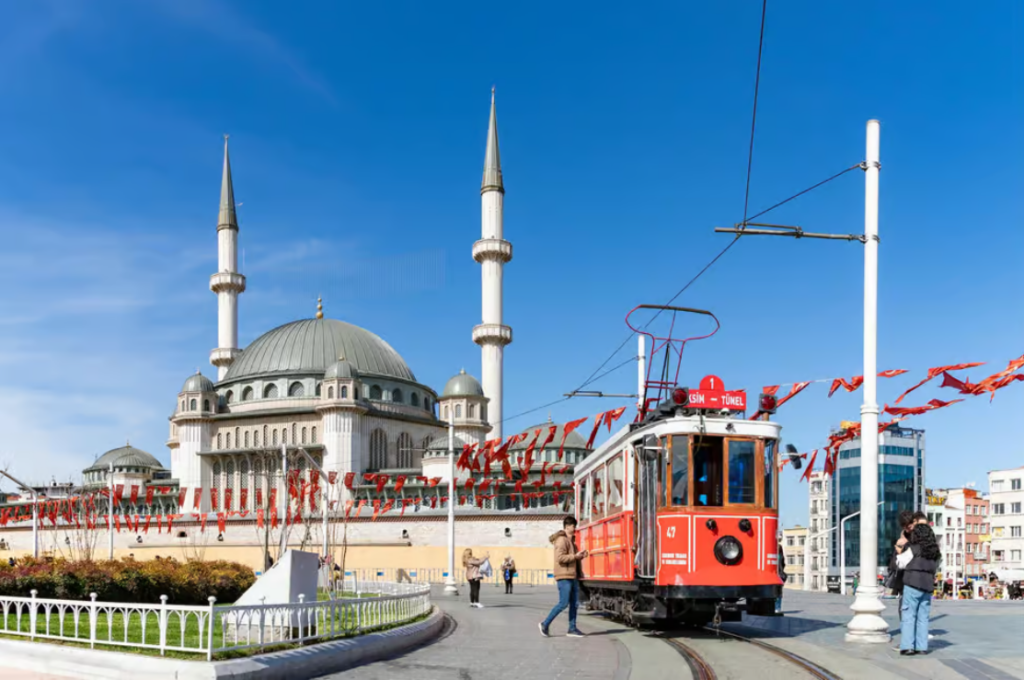
A historic red tram runs the entire length of the avenue. This narrow-gauge rail line starts exactly at Taksim Square. The slow-moving tram provides a highly visible mechanical link between the modern square and the historic neighborhood of Pera. The tram operates more as a visual attraction than a high-capacity transit solution. The actual speed of the tram matches a standard walking pace, allowing pedestrians to easily photograph the vintage cars as they move past the storefronts.
The side streets branching off Istiklal Avenue hold a massive concentration of dining and entertainment venues. The Çiçek Pasajı offers a covered arcade filled with traditional Turkish taverns. Nevizade Street features rows of outdoor tables where locals consume fresh seafood and raki late into the night. The square itself acts as the funnel feeding this massive entertainment district. All foot traffic heading to these venues originates at the central metro station or the surrounding bus terminals.
Taksim Mosque And The Changing Skyline
The newest major addition to the square sits on the western edge. The Taksim Mosque opened in 2021, dramatically changing the architectural balance of the area. The debate over building a mosque in this exact location lasted for decades. Proponents argued the thousands of daily visitors lacked a sufficient prayer space in the immediate vicinity. The resulting structure features classic Ottoman architectural elements, including a massive central dome and two towering minarets rising high above the surrounding buildings.
The architects utilized light-colored stone and expansive windows to integrate the massive structure into the existing urban fabric. The complex extends far below ground level, housing a massive parking garage, a digital library, and public exhibition spaces. The physical presence of the mosque directly faces the modern Atatürk Cultural Center across the open concrete of the square. This positioning creates a distinct visual dialogue between the two most prominent buildings in the area, reflecting the dual identities of modern Turkish society.
Gezi Park And The Green Space Deficit
The northern boundary of the square belongs to Gezi Park. This rectangular green space features mature sycamore trees, concrete benches, and paved walking paths. The park remains one of the few designated green zones in the heavily built-up Beyoğlu district. Residents rely on this park for simple shade during the intense heat of the Istanbul summer.
The Turkish government previously proposed demolishing the park to reconstruct the historic Artillery Barracks as a shopping mall. This plan triggered massive civil demonstrations in 2013. The ensuing political friction halted the construction project entirely. The park remains intact today, serving as a quiet buffer zone between the loud traffic of the square and the luxury hotels lining the roads to the north. City workers maintain manicured flower beds along the main pathways, providing a soft natural contrast to the vast expanses of grey concrete dominating the rest of the area.
Planning A Visit And Transit Logistics
Reaching Taksim Square requires interacting with the massive Istanbul public transit network. The location functions as the central node for the M2 Yenikapı-Hacıosman metro line. The underground station sits directly beneath the monument. Escalators bring thousands of commuters up to the surface every hour.
A unique funicular railway connects the square to the Kabataş ferry terminals down at sea level. This underground train covers the steep vertical drop in under three minutes, allowing travelers to easily transfer between the elevated plateau and the boats crossing the Bosphorus Strait to the Asian side of the city. The official Go Türkiye tourism portal provides extensive mapping data detailing these exact transit connections for international visitors planning their daily routes.
The surface streets surrounding the square operate at maximum capacity. Yellow taxis line up along the western edge, waiting for fares heading to the historic peninsula of Sultanahmet. Several major bus lines terminate right at the northern corner near Gezi Park. Visitors should anticipate heavy crowds regardless of the hour. The sheer density of people makes situational awareness critical. Pickpockets occasionally target distracted tourists near the monument and the tram station.
Evaluating the local hotel market reveals a heavy concentration of international luxury brands. High-rise properties flank the park, offering direct views over the square and down to the water. Staying in this immediate area guarantees frictionless access to the cultural events at the Atatürk Cultural Center and the nightlife along Istiklal Avenue. The constant noise and bright lights of the square continue long after midnight. Travelers seeking a completely silent, isolated retreat should look at neighborhoods further north. Visitors wanting to experience the massive, loud, and relentless energy of modern Istanbul will find exactly that right at the center of Taksim Square.