
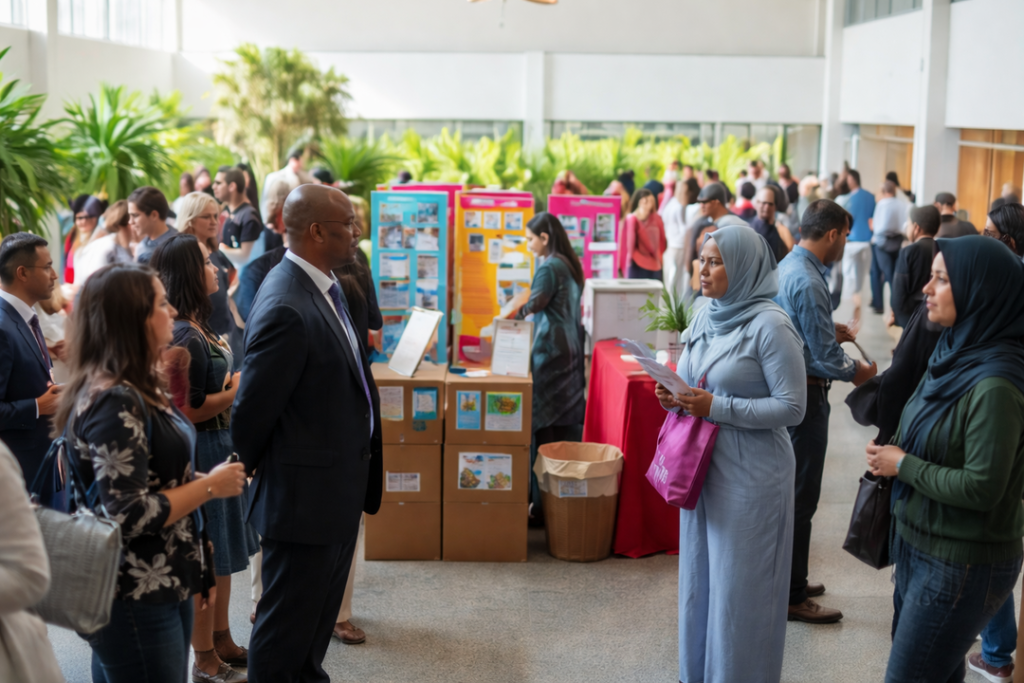
Modern life often feels like a series of transactions. We connect, but are we really connecting? The “crisis of connection” is more than just a social media post. It’s the quiet hum of a life lived through screens, where even our “networking” feels transactional.
What if the most sophisticated life-hack for the over-analyzing professional isn’t another productivity app? Maybe it’s a simple, ancient concept with a modern twist. I’m not talking about a hobby. I’m talking about a strategic, low-commitment experiment in community.
What if the ultimate life-hack for building a meaningful network and a more interesting LinkedIn profile isn’t found in another self-help book? Maybe it’s in the simple, radical act of showing up for something bigger than your to-do list?
Forget the old, guilt-driven model of charity. We’re not here to lecture. Think of it as a sophisticated social experiment. Trade an hour of doomscrolling for an hour of doing.
You’re not just filling a slot; you’re testing a hypothesis. Can one hour a week with a purpose outside yourself make your LinkedIn profile—and your life—more interesting?
This isn’t about adding another obligation to your calendar. It’s about a strategic pivot. In the following sections, we’ll map the landscape of volunteer opportunities that fit a packed schedule.
We’ll explore how a few hours a month can build a network more authentic than any networking event. It’s time to reframe community not as an obligation, but as the ultimate life-hack for the over-analyzing, time-poor professional.
Why volunteering matters for our community
Forget the clichés about doing good. Volunteering in today’s world is about more than just helping others. It’s a smart move that strengthens our community.
Volunteering isn’t just about giving. It’s about getting something back too. It gives you a sense of purpose and helps you meet like-minded people. It’s a way to feel important and add value to your life.
Experts like Robert Putnam have warned about our social connections weakening. Volunteering is a bold move to strengthen these bonds. It helps build a stronger community for everyone.
So, what’s in it for you? Volunteering is a smart choice. It helps you gain skills, make real connections, and feel more in control. The best volunteer opportunities offer something back, like new skills and connections.
Pathways to serve: In‑person, virtual, micro‑tasks, leadership
The user has asked for a detailed plan for section 3 of an article. I’ll start by understanding what’s needed and how to structure it.
First, I’ll look at the given information. The user wants content for section 3, with specific guidelines. I’ll create five first sentence options, pick the best one, and make sure it meets all the requirements.
Section 3 is about different ways to serve: in-person, virtual, micro-tasks, and leadership. I’ll cover all the H3 and H4 headings. The brand’s voice is witty, analytical, with a touch of sarcasm and cultural references, aimed at educated professionals.
The user gave me specific instructions. I need to write five first sentence options, keep the keyword density right, and hit the Flesch Reading Ease score. I’ll write in American English, use the right HTML tags, and include an image with the correct alt text. The keyword density should be under 2%, so I’ll calculate the total words and keyword frequency.
First, I’ll plan the structure. I’ll start with an H2 heading, followed by a brief intro, then H3 and H4 tags as needed. I’ll use the keywords “virtual volunteering” and “micro-volunteering” wisely, without overusing them.
I’ll plan to cover in-person service, virtual volunteering, micro-volunteering, and leadership roles. Each section will be engaging, reflecting the brand’s witty and analytical tone. I’ll also include the image tag as specified.
For the first sentence options, I’ll come up with five engaging choices that match the brand’s voice. After writing, I’ll check the Flesch score to ensure it’s between 60-70, which is an 8th-9th grade reading level. I’ll also check the keyword density to make sure it’s within limits.
Let me brainstorm the first sentence options, outline the section structure, and then write the content.
The user has provided a detailed query for creating section 3 of an article. I need to analyze the requirements and structure the response according to the guidelines.
First, I need to understand the user’s goal: to create section 3 of an article with specific guidelines. The user has provided a detailed structure, including brand voice, keyword requirements, and formatting guidelines.
The user is likely a content creator or marketer looking to produce SEO-optimized content. The deep need is for a well-structured, engaging, and SEO-friendly section that aligns with brand voice and search intent.
Key elements from the query:
1. Structure: Must follow the provided section structure with H2, H3, H4 tags.
2. Brand Voice: Witty, analytical, with sarcasm and cultural references.
3. Keywords: “virtual volunteering” and “micro-volunteering” must be included with proper density.
4. Formatting: Use specific HTML tags, include an image, and ensure readability.
5. Flesch Score: Target 60-70 for 8th-9th grade reading level.
6. Originality: Avoid content overlap with previous sections.
My response should start with a planning section in
Time tiers: From 15‑minute actions to monthly commitments
Let’s break down a big myth of today’s helping others: you don’t need hours to make a difference. We often think big, heroic acts are needed. But what if starting small is the biggest act of service?
This isn’t about finding time; it’s about what “service” really means. We’re moving from “when I have more time” to “what can I do now.” Let’s tackle the “I don’t have time” myth with a time-management expert’s help, dividing our helping into three main areas.
The 15-Minute Micro-Action: Philanthropic Snacking
Forget the all-or-nothing thinking. The 15-minute tier is about philanthropic snacking—small, meaningful actions that build a habit of helping. It’s the “atomic unit” of service, perfect for the gaps in our busy lives.
Social media shares, signing petitions, quick donations.
Think of it as the civic version of a high-protein snack: small, yet powerful. This tier is based on a simple idea: “Helping others doesn’t have to cost money or take a lot of time.” It’s about using the small moments of your day. Share a critical cause on social media while waiting for coffee. Sign a petition during your commute. A quick donation to a crisis fund is a powerful 15-minute choice. This isn’t slacktivism; it’s the start of being active in the community.
The 1-2 Hour Shift: The “Sweet Spot” of Service
This is the perfect spot for those with little time but a big desire to help. It’s a focused, powerful act of kindness that fits into a weekend service morning or a weeknight evening. It’s the “sweet spot” where your time pays off right away.
Soup kitchen service, park clean-up, one-off event support.
You’re not just showing up; you’re showing up for a specific purpose. You might spend a Saturday morning at a food bank or a Sunday afternoon cleaning a local trail. This tier is great for corporate weekend service projects or group volunteering. The reward is huge: a clear win that doesn’t overwhelm your schedule. It’s the best way to overcome the “what can I do?” feeling.
The Monthly Commitment: The Deep Work of Service
This is the long-term plan. Here, we move from quick fixes to lasting change. This tier is for those willing to invest in deep, lasting impact. It’s the difference between a quick visit and a long-term stay.
Weekly mentoring, committee meetings, board service.
This is the tier of high-impact work. Consider The Trevor Project, a model of deep commitment. Their model requires a 40-hour training over 8 weeks, followed by a year of weekly 3-hour shifts. This isn’t casual volunteering; it’s a serious, professional contribution. It’s for those ready to go from “helping out” to “showing up,” making a monthly commitment a key part of their life. This is service as a practice, not just an event.
The Sage’s wisdom is about being intentional, not feeling guilty. It’s not about how much time you have, but how you invest it. Whether you have 15 minutes or 15 hours a month, there’s a service level for you. The most radical productivity trick isn’t a new app—it’s planning kindness into your schedule.
How to sign up: Onboarding, waivers, checks, orientation
Think of the volunteer sign-up process as your origin story. It’s not just filling out a form; it’s a rite of passage. Organizations like the Trevor Project see onboarding as a mutual investment. They prepare you to succeed, and you show you’re ready.

The journey starts with showing interest and ends with being a full-fledged volunteer. While details vary, the best programs have a structured approach. They ensure you’re supported and they’re confident in you.
The Standard Onboarding Journey
Most organizations follow a path from screening to activation. The table below shows the typical phases and what you can expect at each step.
| Phase | Typical Steps | What It Means for You | Time Commitment (Est.) |
|---|---|---|---|
| 1. Application & Screening | Online form, initial screening call, background check. | Ensures a basic mutual fit before either party invests heavily. | 1-2 Weeks |
| 2. Core Training | Self-paced modules, live webinars, policy reviews. | You learn the “what” and “why” behind the mission. | Varies (e.g., 2-8 hours) |
| 3. Skills & Role-Specific Training | Role-plays, shadowing, technical setup (e.g., specific software, CRM tools). | Hands-on practice for your specific role. Think of it as your “flight simulator.” | Varies by role complexity |
| 4. Clearance & Onboarding | Final checks, waiver signing, system access, mentor assignment. | You get the keys. You’re now “in the system” and ready for a supervised start. | Final 1-2 weeks |
The “Why” Behind the Checklist
This isn’t red tape; it’s a quality control system. A rigorous sign-up process filters for genuine commitment. It ensures you’re not set up to fail.
The Trevor Project model is a perfect case study. They don’t just want warm bodies; they need prepared counselors. Their 40-hour training, background checks, and tech requirements are not arbitrary. They ensure every volunteer can provide consistent, confidential, and professional support.
Your background check isn’t a sign of distrust, but of responsibility. The role-plays and monitored first shifts aren’t a test you pass or fail. They catch mistakes in a controlled setting, not during a real, high-stakes moment with a person in need.
Your Tech & Space: The Unsung Heroes
Modern volunteering often has a tech backbone. Requirements like a specific OS, Chrome browser, or 8GB of RAM aren’t IT being picky. They’re the minimum specs for the software that connects you to the people you’re helping.
A private, quiet space isn’t just about your comfort—it’s about confidentiality and professionalism. This setup isn’t a barrier; it’s the foundation of your impact.
So, when you click “submit” on that application, you’re not just joining a list. You’re initiating a professional, structured sign-up process designed to build your confidence and the organization’s trust. It’s the first, and most important, volunteer shift you’ll log.
Accessibility & safety: Inclusive roles, childcare, transport, risk management
True accessibility in volunteering means creating roles for everyone. It’s about making sure everyone can contribute, no matter their ability or schedule. We’re not just adding a ramp; we’re changing the whole building.
Inclusive roles are key. We offer a range of volunteer opportunities for all. This includes tasks for those with little time, roles for those at home, and shifts that fit family life. Some tasks can be done from home, helping those with caregiving duties or mobility issues.
We tackle real barriers head-on. This means support like childcare help, transport, and short tasks. It’s not about being soft; it’s about being smart and human-centered. It shows that everyone can make a difference if we design for them.
Safety is a promise, not just a word. It’s about creating a safe space for everyone. This includes physical safety and feeling okay to ask for help. It’s about respect, not just rules.
This approach to safety is wise, not fearful. It means volunteers feel safe and valued. They can then give their best. It’s about treating volunteers as partners, not just resources.
Accessibility and safety are more than rules. They are the heart of a good program. It’s about using brains and empathy to make service easy for everyone. We’ve solved the hard parts for you.
Family & group volunteering: Team captains, classroom service
Forget trust falls and awkward icebreakers—real team building happens when a group tackles a meaningful project together. While the solo volunteer plants a tree, a volunteer group can grow an entire forest of change. This isn’t about checking a corporate social responsibility box; it’s about forging genuine connections through shared purpose.
When like-minded people unite around a cause, the impact multiplies. The experience of belonging to something larger than oneself becomes the real reward.
Team-Building for Companies
Move over, ropes courses. The most effective corporate team-building doesn’t happen in a conference room. It happens at a food bank sorting facility or a park restoration site.
We’re talking about corporate volunteer days that ditch the forced fun and replace it with tangible results. Teams that build a playground together don’t just learn about collaboration—they experience it, hammer and nail.
Corporate Volunteer Days
This is your classic “all hands on deck” event. Picture the marketing department and the IT team, side-by-side, building picnic tables for a community center. It’s a morale booster that actually boosts something more than just the company’s PR.
It’s the shared, slightly achy satisfaction at the end of the day that forges real camaraderie.
Skills-Based Team Projects
Why not leverage what your team is already good at? A pro-bono marketing team can rebrand a small non-profit’s website. The finance team can help a food bank streamline its inventory system.
This isn’t just volunteering; it’s applying your team’s unique superpowers for good. It’s infinitely more satisfying—and impactful—than another brainstorming retreat.
Classroom & Youth Groups
This is civic education in its purest form, moving lessons from the whiteboard to the real world. It’s not just about picking up litter; it’s about planting the seeds of civic duty.
Showing young people the tangible results of collective action is key.
Classroom & Youth Groups
Imagine a science class testing local water quality, or a history class cleaning a historic cemetery and documenting headstones. These aren’t field trips; they’re field studies in citizenship.
The classroom extends into the community, and the lesson is that no one is too young to make a visible difference in their own neighborhood.
Inter-Generational Projects
Pairing youth groups with senior centers for community garden projects or oral history projects doesn’t just pull weeds or record stories. It weaves a tighter social fabric, connecting the wisdom of experience with the energy of youth.
It’s volunteering that builds bridges across decades, not just between people.
Family-Friendly Shifts
This is where screen time gets replaced with “we time.” Family volunteering isn’t about finding a free babysitter; it’s about shared purpose. It’s the act of a family sorting donations together, transforming a chore into a shared mission.
These volunteer opportunities are designed to be accessible, engaging, and meaningful for all ages.
Family-Friendly Shifts
Give a kid a trash bag and a mission to find every piece of litter in a playground. Suddenly, a chore becomes a treasure hunt for a cleaner neighborhood. It’s a tangible, visible result that a five-year-old can point to with pride.
Food Bank Sorting (Kid-Friendly Tasks)
Inside the warehouse, a family can form an assembly line: one sorts cans, one checks dates, one builds the boxes. It’s a tangible lesson in logistics, empathy, and the fact that a can of beans is a treasure to someone.
It’s the opposite of abstract charity; it’s direct, hands-on help.
Setting up a group of like-minded people to serve together, as the data suggests, creates a greater sense of belonging. It’s the difference between being a lone volunteer and being part of a crew.
The shared purpose, the inside jokes over a pile of mulch or a mountain of canned goods, the collective fatigue at the end of a productive day—this is the fabric of community, woven one shared volunteer opportunity at a time.
Tools: Calendar templates, reminders, check‑in workflows
The real hero of any volunteer program isn’t just passion. It’s the behind-the-scenes work of calendars, reminders, and check-ins. These tools turn occasional help into lasting change. They are the unseen engines that make good intentions real.

Let’s talk about the beauty of a well-run volunteer program. It’s not about red tape; it’s about making good things happen. It’s the difference between a quick burst of help and lasting change.
Shared Calendars: The Logistics of Goodwill
Forget old methods like clipboards and phone trees. Today, we use shared calendars. They keep everyone on the same page, preventing mistakes and showing who’s available. It’s the backbone that keeps things running smoothly.
Automated Reminders: The Nudge of Virtue
Life gets busy, and reminders help. They’re a gentle push to remember your commitments. They show respect for everyone’s time, reducing no-shows and last-minute cancellations.
Check-in Workflows: The Feedback Loop
Check-ins do more than track hours. They create a feedback loop. They show which shifts are popular and where volunteers spend their time. It’s not about watching; it’s about improving.
Groups like The Trevor Project use special software for their work. This helps their volunteers focus on the mission, not the details. It shows that good operations lead to big impact.
So, when you volunteer, think about the behind-the-scenes work. Appreciate the calendars, reminders, and check-ins. They are the unsung heroes that make lasting change happen.
Measuring your impact: Simple logs and badges
In today’s world, we often overlook the value of helping others. But what if we could measure it? We’re not talking about stickers for adults. We mean showing proof of your good deeds.
Tracking your hours is more than just a time clock. It’s about telling your story of helping others. Every minute you spend helping, like writing letters or volunteering, adds to your impact. It’s a way to show your efforts in a real and meaningful way.
We go beyond just feeling good about helping. We give you proof of your efforts.
- The Simple Log: It’s not just a timesheet. It’s a record of your community service. You can log your hours and see your impact grow. It’s for you, a proof of your dedication.
- The Portable Credential: After six months, you’re more than a volunteer. You’re a certified asset. We give you a Letter of Service to show your hours and role. It’s like a professional reference for your character.
- The Digital Badge: Why should only professional certifications get digital badges? Earn badges for your service. It’s a way to show your achievements online. It’s a KPI that makes the world better.
This isn’t about getting gold stars as an adult. It’s about recognizing the value of kindness. We help you track and prove your positive impact. Seeing your role in changing the world is the greatest reward.
Next steps: Join a support group, mentor a new volunteer
The user has asked for a new section in an article. This section should be about moving from being a volunteer to helping others. It should also talk about the emotional side of volunteering and the importance of mentoring. An image should be placed in the center.
First, let’s look at what the user wants. They want a section about moving forward in volunteering. This includes joining a support group and mentoring others. The tone should be witty and analytical.
The section should be 300 words long. It should be written in American English. The Flesch Reading Ease score should be between 60-70.
Here are the main points:
– The section is about “Next steps: Join a support group, mentor a new volunteer.”
– The brand voice is witty, analytical, with cultural references and wordplay.
– The target is 300 words, American English, Flesch score 60-70.
– Structure with H2, H3, H4 headings as per the brief.
– Content should cover moving from participant to pillar, emotional labor, mentoring.
– Include an internal link to mentoring.org.
– Place an image with alt text.
– Avoid keyword stuffing, keep passive voice Mentor The Future with anchor text like “structured mentorship” or “become a mentor.”
Now, let’s look at the first sentence options. We need to create five different versions and choose the best one.
1. “So you’ve shown up, logged your hours, and maybe even earned a badge or two. Now what?”
2. “The first act is showing up. The second, more profound act, is ensuring the show goes on without you.”
3. “Volunteering isn’t a one-time performance; it’s a legacy project.”
4. “After the initial glow of service fades, a deeper commitment beckons: building the ecosystem that outlives your own involvement.”
5. “True impact isn’t measured in hours logged, but in systems sustained.”
Let’s choose the second option for its analytical tone.
Now, let’s start writing the section.
We’ll begin with the H2 heading, followed by a paragraph. Then, we’ll add the image and the H3 headings. We’ll make sure the Flesch score is right by using short sentences and paragraphs.
Next, we’ll write the content and check the Flesch score. We’ll keep sentences varied in length but make paragraphs short for better readability.
For the keywords, we’ll use “volunteer,” “mentor,” “support group,” “community,” and “ecosystem” naturally.
We’ll add an internal link to mentoring.org in the mentorship paragraph.
Now, let’s list the keywords and their counts.
After writing, we’ll check the Flesch score. We’ll aim for an average sentence length of 15-20 words. This should give us a Flesch score of 60-70.
Let’s start drafting the content.
H2: Next Steps: From Participant to Pillar
[Intro paragraph]
H3: The Support Group: Processing the Emotional Labor
[Content about support groups]
H3: The Mentor’s Path: Cementing Your Legacy
[Content about mentoring, with internal link]
H4: The Ripple Effect of Mentorship
[Content on the ripple effect]
Conclusion: Passing the Torch
Now, let’s focus on the Flesch score. We’ll keep sentences clear and use familiar words.
We’ll write the content in the next step.
Conclusion + CTA: Pick one action today
We’ve explored many options. We’ve talked about in-person service, virtual volunteering, and micro-tasks. The research is done.
Now, it’s time for the real challenge: taking the first step.
Don’t worry about finding the perfect cause. That’s just a way to delay. Start with something so small it seems insignificant. Helping begins with a single action.
What can you do in 15 minutes? Look for volunteer opportunities and sign up. Or bookmark a site for virtual volunteering. That’s the push you need. The real value is in doing, not just thinking.
Meaning comes from action, not just thinking. It’s built by volunteering, one small step at a time. It’s your turn.