
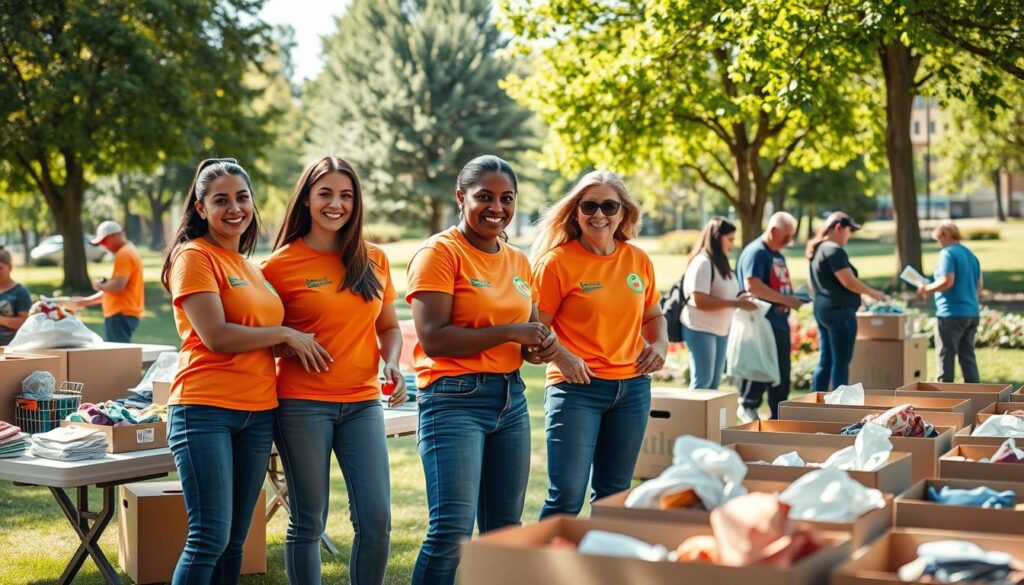
The world of giving can sometimes feel mysterious. You donate, hoping your help reaches those who need it. But what if we could make giving smarter and more effective?
Welcome to the engine room of modern altruism. It’s not just about writing a check. It’s about building a smarter, more effective framework for good.
At the heart of effective charity programs is a simple idea: meet people where they are. It’s not a one-size-fits-all approach. It’s tailored and strategic, aiming to create lasting change.
Our method is based on a simple framework: People, Animals, Environment, and Disaster Response. We analyze data, build partnerships, and measure results. It’s about turning empathy into action and goodwill into lasting impact.
Let’s move beyond simple donations. Let’s talk about the architecture of impact. Let’s get analytical about empathy and discover how strategic giving builds relationships and drives real change.
Program map: education, health, hunger relief, environment
Most charity efforts are like throwing confetti at a parade. They look good but don’t really help. We take a different route. Our giving is like a map, carefully planned to make a real difference. We focus on four key areas: Education, Health, Hunger Relief, and Environment.
In Education, we don’t just build schools. We also teach digital skills in poor areas. This way, a laptop becomes a tool, not just a paperweight. We support training for jobs of the future, not the past.
In Health, we go beyond clinics. We fund mobile clinics and vaccination efforts. But we also tackle health’s social roots. This is a preventative way to help, focusing on community health and nutrition.
Our Hunger Relief efforts are strategic. We don’t just give out food. We support sustainable agriculture and food sovereignty. This is about empowering communities, not just giving charity.
Our Environmental work is about more than saving trees. It’s about protecting pollinators and restoring habitats. We see conservation as key to healthy people and stable societies.
Here’s how these pillars work together:
- Education & Health: A healthy, educated person can break the cycle of poverty.
- Hunger Relief & Environment: Sustainable agriculture projects feed communities and heal the land.
- Disaster Response: Our People and Disaster Response sectors provide quick, targeted aid.
This isn’t a random approach. It’s a symphony, with each program area playing its part. Our strategy is the conductor, making sure they work together for lasting change.
Partner spotlight: how we vet and support nonprofits
Our partnership philosophy is simple. We vet nonprofit partners like detectives and chess grandmasters. We don’t just give money; we form alliances. “Partnering with a charity isn’t just about giving—it’s about building relationships that drive real impact,” we believe.
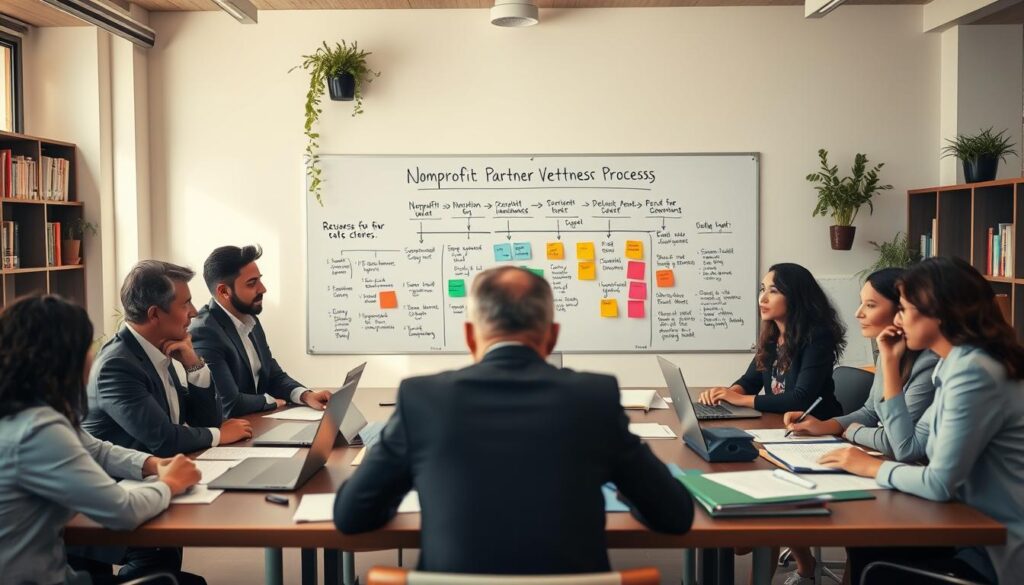
Our vetting process is thorough. We look at more than just a nonprofit’s finances. We examine their theory of change and impact metrics. We seek nonprofits that don’t just solve problems, but change the game.
Our process is detailed. We analyze:
- Transparency & Governance: Are their financials clear? Is their board independent?
- Impact Metrics: Do they measure outcomes, not just outputs? We value data over stories.
- Leadership & Vision: Does the team have big ideas and the skills to execute?
This approach attracts corporate allies who share our standards. We’re proud to work with forward-thinking partners like 3M and Bank of America. They know that real change requires more than a signature.
Our support goes beyond just funding. For our partner nonprofits, we offer strategic support. Here’s how our partnership model works:
| Nonprofit Partner | Focus Area | Our Support Beyond Funding | Key Impact Metric |
|---|---|---|---|
| Code for Good | Digital Literacy & Tech Access | Pro-bono tech consulting, volunteer developer teams | Taught coding skills to 5,000+ underserved youth |
| Green Canopy Initiative | Urban Reforestation | Grant-writing assistance, corporate volunteer days | 10,000+ trees planted in urban food deserts |
| HealthBridge Clinics | Rural Healthcare Access | Medical equipment grants, pro bono legal for licensure | Provided 15,000+ patient consultations |
This table shows our impact. Supporting our nonprofit partners means getting involved. We might connect a food bank with logistics experts or help with legal issues. We become their advocate and advisor.
We’re not just funding programs; we’re investing in a shared vision. We look for nonprofits that want to build something lasting. That’s the difference between charity and change.
Ways to help: donate, fundraise, volunteer skills, advocate, share resources
Writing a check is easy, but it’s not the same as making a real difference. It’s like a one-night stand, forgotten soon after. But, what if your help could be like a chess master’s move, changing everything? Let’s explore how to make a real impact, not just a quick donation.
1. The Strategic Donation: More Than Just a Transaction
Modern donating is a strategic investment, not just about the money. In-kind giving is key. That old graphic design software or unused airline miles can help a lot. It’s using what you have to make a big difference.
2. The Art of the Fundraiser: From Lemonade Stands to Galas
Hosting a fundraiser is easy, but telling a good story is hard. The best fundraisers sell a story, not just ask for money. It’s about making a difference, not just collecting funds.
3. Volunteering Skills: Your Brain is a Donation
Your most valuable asset might be your knowledge. Pro bono work and skills-based volunteering are powerful. A lawyer can help a nonprofit, and a coder can build a database. It’s about giving knowledge, not just time.
4. The Power of the Pulpit: Advocacy and Awareness
Using your voice is a powerful donation. Advocacy changes the system, not just helps one person. It’s about making a difference on a bigger scale.
5. The Ripple Effect: Sharing is the New Giving
Your network is your net worth. Sharing a cause can attract more help. It’s not just a retweet; it’s a way to make a bigger impact.
| Method | Best For People Who… | Time Commitment | Potential Impact Quotient |
|---|---|---|---|
| In-Kind Donations | Have tangible goods or services to give (e.g., software, office supplies, professional services). | Low (One-time) | High (Solves immediate, specific needs) |
| Financial Donation | Want maximum flexibility for the organization; value efficiency. | Low (One-time or recurring) | High (Provides operational fuel) |
| Skill-Based Volunteering | Possess specific professional skills (legal, marketing, web dev). | Medium-High (Project-based) | Very High (Builds long-term capacity) |
| Advocacy & Awareness | Are persuasive, well-connected, or have a platform. | Low-High (Varies by effort) | Systemic (Changes the game, not just the score) |
| Fundraising | Are natural networkers, storytellers, and event-planners. | High (Event/Project-based) | High (Multiplies your own contribution) |
The goal isn’t to do everything. Find what you’re good at and use it. Your skills, network, or storytelling ability is your strongest asset. So, think about how you can use these to make a real difference, not just give money.
In‑kind drives: what’s needed, drop‑off rules, shipping tips
Forget the dusty, decade-old blender in your basement. Effective in-kind giving isn’t about dumping old stuff. It’s about moving resources from your excess to someone’s real need. We’re not collecting junk. We’re moving goods to those who need them.
An in-kind drive is like a supply chain, not a spring cleaning. We aim to give the right goods to the right people. A well-run drive is efficient. A bad one is a mess of broken items.
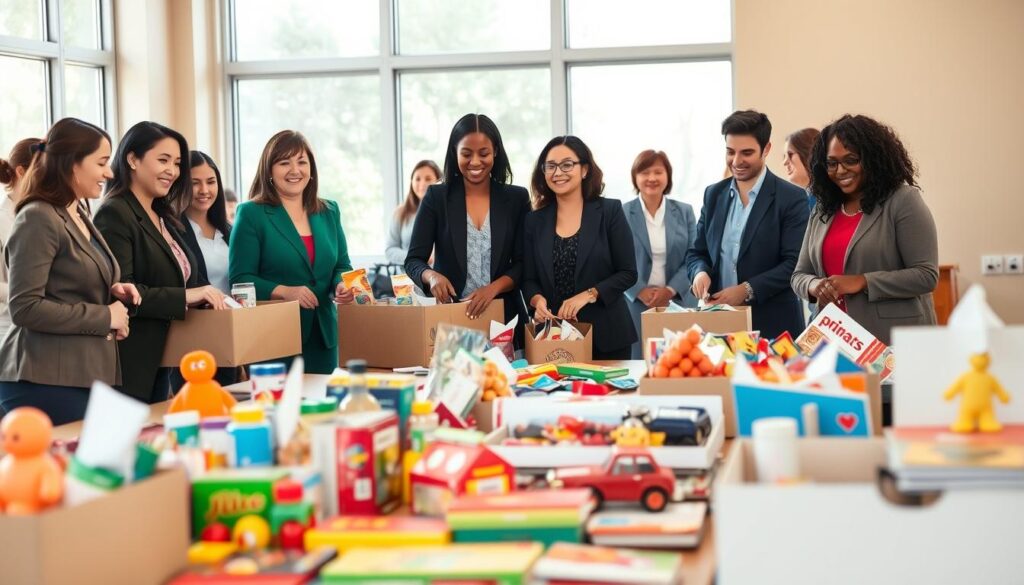
Our needs are specific. We work with shelters, schools, and centers that have limited space and real needs. Giving a 60-inch TV to a homeless shelter is impractical.
To make things clear, here’s what we need and what we can’t use.
| What We Urgently Need (The A-Team) | What We Can’t Use (The “Good Intentions” Pile) |
|---|---|
| New, unopened non-perishable food (canned proteins, peanut butter, whole grain pasta) | Expired food, home-canned goods, or opened packages |
| New, unused hygiene items (toothpaste, soap, period products) | Used or partially used toiletries (half-empty shampoo, used toothbrushes) |
| New, in-package socks & underwear (our most requested items) | Used undergarments or clothing with stains/tears |
| New school supplies (backpacks, notebooks, new packs of crayons) | Broken, incomplete, or heavily used stationery |
| New, in-box baby supplies (diapers, wipes, unopened formula) | Used baby gear that doesn’t meet current safety standards |
Drop-Off Rules: The Logistics of Generosity
We run a tight ship, not a flea market. Stick to our drop-off times. Our staff isn’t sorting through 20 boxes of assorted “treasures.” All items must be clean, functional, and meet our criteria. If it’s not good enough for a friend, it’s not good enough for us.
Shipping Tips for Remote Donors
Can’t drop off? Shipping is your friend, but be smart. Use the smallest, sturdiest box you can. Use flat-rate shipping for heavy items. Pro-tip: Use our warehouse as the delivery address, but include your name and “ATTN: In-Kind Donation” so we can thank you properly. For large-scale in-kind giving, a heads-up email lets our warehouse squad prepare.
The most powerful in-kind giving combines your generosity with our knowledge. It’s not about getting rid of your stuff. It’s about giving to those who need it. So, before you load up, ask: “Is this a gift they can use, or just my clutter in disguise?” The right item, given the right way, is a tool for change.
Recurring giving: monthly impact, fees, receipts, privacy
Think of recurring giving as a subscription for your social conscience. It’s like Netflix, but for funding futures. Unlike a one-time donation, recurring gifts are a long-term commitment to a cause. It turns your monthly budget into a steady stream of change.
A one-time gift is like a splash; a recurring gift is a steady rise. It gives non-profits a priceless gift: predictable income. This lets them plan for the future, fund long-term projects, and hire staff without constant worry.
Now, let’s talk fees. Because, as the sage philosophers of The Clash once asked, “Should I stay or should I go?” Some platforms charge a small fee, usually 2-3% per transaction. This fee is for the convenience of automation, secure data, and the receipt magic that keeps your accountant happy. The alternative is a volunteer with a lockbox and a spreadsheet, and nobody wants that.
Your data’s privacy is a sacred pact. Reputable platforms use bank-level encryption. Your information isn’t sold to third parties; it’s the Fort Knox of your personal data. The receipts you get are more than just tax forms; they’re a story. Each one is a chapter in the narrative of your impact, detailing exactly how your sustained giving is being put to work.
Lastly, those receipts. They’re not just for your accountant come tax season. They are your impact report card. A recurring gift receipt is a chronicle of sustained commitment, a tangible log of your ongoing contribution. It’s the proof that your Netflix-for-philanthropy subscription is actively building a better world, one automated payment at a time.
Impact metrics we track: outputs vs outcomes, dashboards, stories
In today’s world, we’re all about data. But at our charity, we focus on the real impact. We don’t just count meals; we look at how they improve nutrition. We measure volunteer hours by the skills they bring, not just the time.
Let’s dive into the details. Outputs are the things we can easily count. They show us what we did and how many. These are the visible results of our charity programs.
Outcomes are where the magic happens. They show us the real change we’ve made. Building a new school is an output. But the real outcome is the higher graduation rate in that community years later.
| Metric Type | Output (The “What”) | Outcome (The “So What?”) |
|---|---|---|
| Education | 200 students enrolled in after-school program | 15% average increase in standardized test scores |
| Hunger Relief | 50,000 meals served | Measurable reduction in local food insecurity rates |
| Environmental | 500 trees planted | Measurable improvement in local air quality index |
Our dashboards are more than charts. They’re the control panel for our charity programs. We track everything from meals served to how our clients feel about food security. This shows us how we’re doing in real-time.
Data needs a story to be meaningful. The numbers show us a literacy rate went up by 20%. But the story tells us it’s because of Maria, who now reads to her siblings. The data shows 10,000 meals served. But the story tells us about a single parent who could pay a bill because of us.
We track these metrics for a reason. We want to show that compassion is powerful. We’re not just counting; we’re growing something big. We do this to make sure every effort we make has a huge impact.
Start a local chapter: toolkit, bylaws, compliance, support
Ready to do more than just write a check? You want to create something lasting. Starting a local chapter is a big step. It needs bylaws, local law compliance, and a solid plan.
Think of it as a franchise for doing good. It’s about finding the right recipe for social impact.
We don’t just give you a manual. You get a real toolkit. It includes templated bylaws, compliance checklists, and a 90-day playbook. You’re not alone in this.
You’ll join a network of chapters and our support team. We help you find and check local partner nonprofits. This way, your efforts create a ripple effect, not just a one-time project.
Starting a chapter turns your local issue into a bigger movement. It’s where smart thinking meets caring hearts. You’ll build a team, connect with nonprofits, and make our mission real in your area.
The toolkit guides you, but the community you build is the true foundation. It shows how one act of kindness can grow into something big.