

The Walt Disney World Resort in Florida centers its entire operation around Magic Kingdom Park. The facility consistently ranks as the most visited theme park globally, drawing tens of millions of guests annually. The property succeeds by combining heavy psychological design with massive operational infrastructure. Visitors enter expecting simple entertainment, yet they immediately interact with a highly controlled environment built to manage human behavior and maximize spending.
The Architecture Of Nostalgia And Spatial Planning
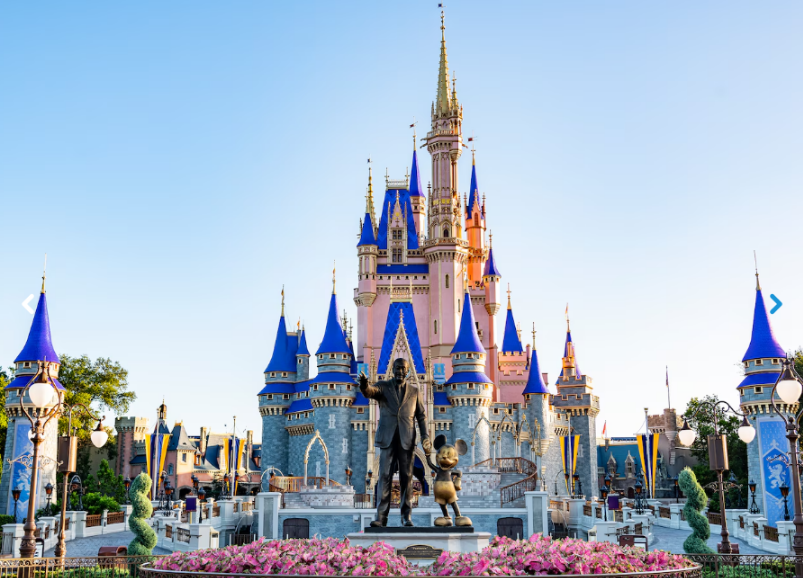
Walt Disney utilized a hub and spoke layout for the original Disneyland and refined it for the Florida project. Cinderella Castle sits exactly in the center, acting as a visual magnet from almost any point inside the gates. Main Street, U.S.A. serves as the single entry corridor. The buildings here employ forced perspective. The upper floors scale down in physical size, making the structures appear taller than their actual blueprints dictate. This optical trickery pulls pedestrians naturally into the central hub, where the pathways branch off into six distinct themed lands. The layout prevents dead ends and keeps traffic moving in continuous loops.
Integrating Modern Attractions With Classic Dark Rides
The attraction roster requires a delicate balance. Management must preserve legacy dark rides like Peter Pan’s Flight and the Haunted Mansion. These slower, omnimover-style attractions process thousands of guests per hour and satisfy generational expectations. The park introduces newer, high-speed thrill rides to maintain market dominance against competing regional operators. The recent additions of TRON Lightcycle / Run in Tomorrowland and Tiana’s Bayou Adventure in Frontierland inject necessary physical velocity into the ride lineup. Incorporating massive steel roller coasters into existing, heavily themed sightlines requires careful visual masking. Imagineers use artificial rockwork and strategic tree planting to hide structural supports from pedestrian walkways.
Operational Logistics And Crowd Distribution
Moving eighty thousand people through a confined space in a single day demands serious logistical engineering. The public sees only the top layer of the operation. A massive network of utility corridors, known as Utilidors, sits directly beneath the pavement. Cast members use this hidden tunnel system to move merchandise, remove trash, and travel between lands without disrupting the themed environments above ground. Families planning their itineraries often study resources like Visit Orlando to grasp the sheer scale of the required daily planning.
Digital queue management now dictates the daily rhythm of the property. The Lightning Lane Multi Pass system forces guests to schedule their attraction return times through a mobile application. This software effectively pulls thousands of people out of physical lines and pushes them back into the retail stores and dining locations. It acts as a massive crowd distribution tool disguised as a consumer convenience. Readers exploring our Florida travel itineraries frequently look for strategies to optimize their time using these digital scheduling systems.
Retail And Dining As Themed Experiences
The food and beverage program at the facility extends far beyond basic concession stands. Dining venues act as direct extensions of the surrounding rides. Be Our Guest Restaurant in Fantasyland places patrons directly inside the ballroom from Beauty and the Beast. Cinderella’s Royal Table puts diners directly inside the park’s central icon. The reservation system for these locations often books out months in advance. The food itself becomes secondary to the physical environment.
Retail spaces follow the exact same methodology. Exiting a major attraction forces guests directly through a specialized gift shop. The merchandise strictly matches the ride they just experienced. A ride on Pirates of the Caribbean deposits visitors into a marketplace selling replica doubloons and nautical apparel. This seamless transition from entertainment to commerce proves incredibly effective. The park layout guarantees guests pass dozens of these retail chokepoints before they ever reach the exit gates at the end of the night.
Nighttime Entertainment And Crowd Dispersal
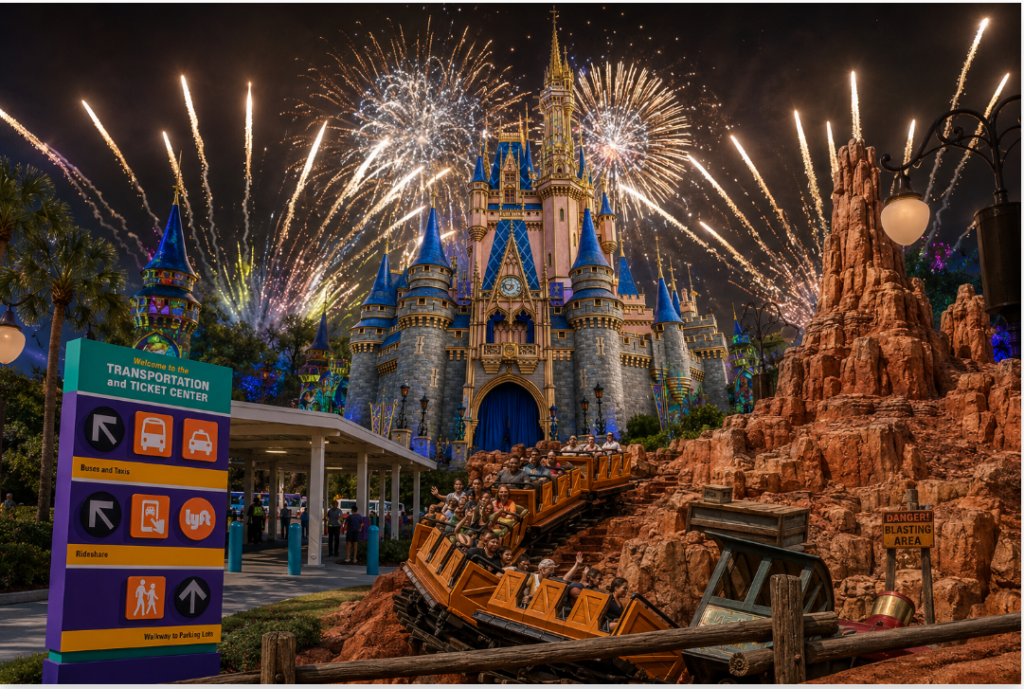
The daily operations culminate in a massive pyrotechnic display. Happily Ever After utilizes projection mapping technology directly onto the facade of Cinderella Castle, synchronized with a high-altitude fireworks launch. This event draws nearly the entire park population to a single viewing area at the end of the night. Managing the exit of tens of thousands of tired guests immediately following the show requires intense security and transportation coordination. The monorail system, ferry boats, and massive bus fleets work simultaneously to drain the park efficiently. The entire process resembles a highly choreographed evacuation disguised as a magical send-off.
| Themed Land | Primary Design Focus | Signature Attraction |
| Tomorrowland | Futuristic aesthetic, metallic structures | TRON Lightcycle / Run |
| Fantasyland | European folklore, castle courtyards | Peter Pan’s Flight |
| Frontierland | American Old West, rustic timber | Tiana’s Bayou Adventure |
| Adventureland | Tropical jungles, colonial outposts | Pirates of the Caribbean |
The physical footprint of the park continues to adapt to modern tourist demands. The infrastructure supports a frictionless vacation focused entirely on the illusion of spontaneous fun, backed by decades of data-driven municipal planning.