
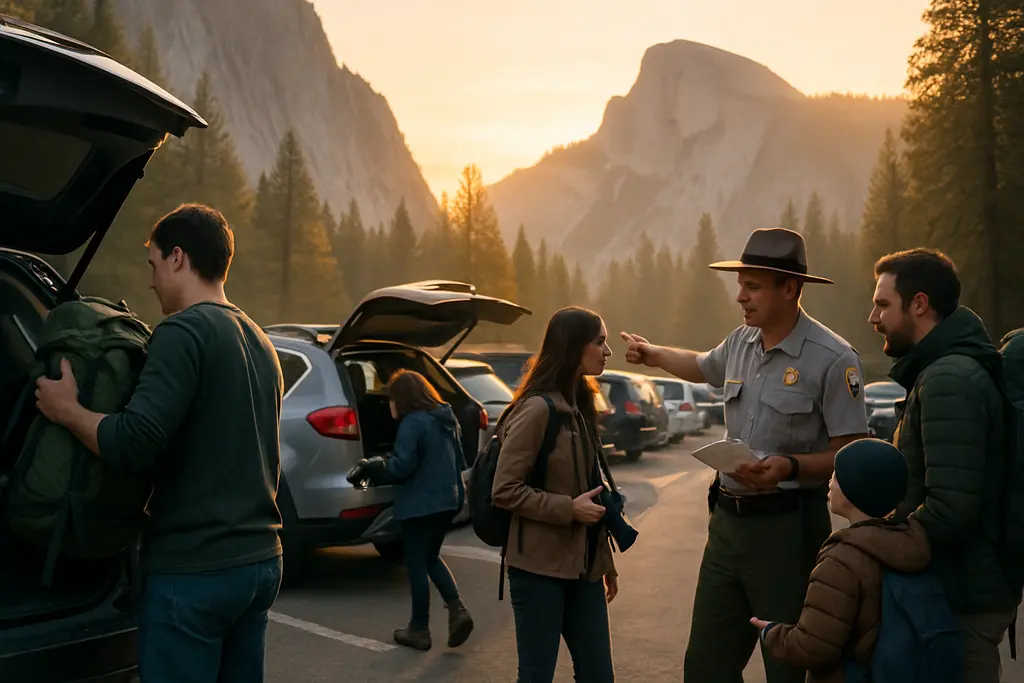
Yosemite and Arches are useful case studies for visitor pressures 2026 because both parks removed major reservation requirements while continuing to manage crowding through traffic control, parking limits, and staff-directed access decisions. For travelers planning adventure trips on October 6, 2026, the practical issue is not simply whether a reservation is required. The more useful question is how each park is controlling peak demand once vehicles reach the gate, the valley floor, or the first full trailhead lot.
How Visitor Pressures 2026 Changed Park Entry
Yosemite: Reservation Removal And Measured Waits
Yosemite moved through the 2026 peak season without requiring advance reservations for summer entry or for the February-March firefall viewing period. According to the research notes, that shift followed a National Park Service announcement on February 18, 2026, and Yosemite relied instead on real-time traffic management, temporary traffic diversions when parking filled, and added seasonal staff. That policy change mattered because Yosemite had previously seen more than 120 gridlock traffic days per year. In 2026, the park reported only two days of significant traffic delays, both during Memorial Day weekend.
The strongest data point came from a peak-season survey conducted August 7-16, 2026, which collected 1,203 visitor responses. Yosemite reported that 96% of respondents rated their visit good or excellent, while 91% said entrance waits were under 15 minutes or did not occur. In Yosemite Valley, 56% said they spent less time finding parking than expected, and about 11% said parking took somewhat or much too long, according to the Yosemite survey release. The Yosemite data made visitor pressures 2026 look more manageable than many travelers might assume from older congestion reports, but it did not eliminate the need for flexible timing.
Arches: No Timed Entry, But Capacity Still Bites
Arches National Park also lifted its advance timed-entry reservation requirement for the 2026 season. Visitors could enter during operating hours without booking a timed slot, although entrance passes were still required. That change did not mean the road system inside the park had unlimited capacity. During the March through October peak season, the National Park Service warned that entrance wait times could exceed one hour, parking lots could fill early, often by 8 a.m., and some access could be temporarily restricted when lots filled for safety, according to the park’s Arches traffic guidance.
That distinction is central for anyone comparing these two parks. Yosemite’s 2026 reporting showed shorter-than-expected waits for many summer visitors, while Arches continued to warn about early parking saturation during its long peak period. Arches had about 1,511,740 recreation visits in 2025, according to the research notes, with about 49,120 overnight stays. The notes also show that visitation averaged about 1.62 million annually from 2017 through 2019, before the timed-entry pilot, and about 1.47 million during the 2022-2024 pilot period. Removing timed entry did not automatically turn the park into a low-friction stop.
Seasonal Timing And Parking Pressure
Yosemite Valley Travel Window
Yosemite’s crowding remains highly seasonal. The research notes show that, using 2010-2024 monthly averages, about 75% of all visits occurred between May and October. July and August were the busiest months in that period, each averaging more than 600,000 visitors. January through March and November through December were relatively quiet by comparison. That seasonality should shape lodging decisions, trail expectations, and how much time travelers leave between park entry and a fixed activity such as a guided climb, dinner booking, or long drive out of the valley.
For practical planning, the lesson is not that Yosemite became easy in 2026. The better reading is that active traffic management reduced the worst gridlock pattern on many peak days. A traveler arriving with no buffer still takes on risk: parking can fill, diversions can occur, and the difference between a smooth morning and a strained afternoon may depend on where demand concentrates. If Yosemite is one stop within a wider western parks route, the related notes on Yosemite access control are worth checking before locking nonrefundable plans.
Moab Access And Early Starts
Arches requires a different reading of visitor pressures 2026. The main risk is not an advance reservation screen; it is the possibility of arriving after the practical capacity of popular lots has already been reached. The park’s own traffic advice points to early congestion during peak months. For travelers staying in Moab or passing through on a road trip, that means the first decision is not which arch to photograph. It is whether the day plan can absorb a long entrance line, a full trailhead lot, or a temporary access limit.
Driving logistics also extend beyond the park gate. For those planning routes through Utah canyon country into Colorado, a comprehensive road-planning map such as from Drive Sat Mile High can aid in planning mountain and desert travel efficiently. This is critical since delays at Arches might impact scheduled activities beyond the park, such as fuel stops or hotel check-ins.
What The Numbers Suggest For Trip Planning

Do Not Treat Removed Reservations As Unlimited Access
The 2026 policy shift at both parks reduced one layer of advance trip friction, but it did not remove the physical limits of roads, parking areas, shuttle operations, or staffed traffic points. Yosemite’s 2026 survey results were encouraging, especially the 91% figure for waits under 15 minutes or no delay. Arches, by contrast, continued to publish cautions about one-hour entrance waits during peak season and lots filling early. Both facts can be true because the parks have different road layouts, visitor dispersal patterns, and congestion points.
| Planning Factor | Yosemite In 2026 | Arches In 2026 |
|---|---|---|
| Advance entry reservation | Not required for summer peak months or firefall period | Timed-entry requirement lifted for the season |
| Main pressure point | Valley parking and traffic diversions when areas filled | Entrance waits and early-filled parking lots |
| Peak timing signal | May through October concentrated most visitation in long-term averages | March through October identified as peak season |
Build A Parking Contingency Before Booking
Trip planning should start with the assumption that park access can change during the day. For Yosemite, that means allowing extra time even when recent survey results look favorable. For Arches, it means treating early-morning capacity as a serious constraint rather than a suggestion. Travelers should avoid stacking time-sensitive activities immediately after planned entry, especially on holiday periods or warm-weather weekends. They should also verify official park alerts close to departure because the research available here does not provide day-by-day closure records, smoke conditions, construction timing, or staffing levels for every date.
Cost planning should also remain conservative. The research confirms that entrance passes still applied at Arches after timed entry was lifted, but it does not supply a complete fee table for either park. Travelers should use official park pages before purchase rather than relying on older saved screenshots or third-party summaries. For adventure travelers carrying climbing gear, camera equipment, or hiking packs, the practical issue is time control: a full lot can force route changes even when a park is technically open.
Yosemite And Arches Visitor Pressures 2026
Practical Reading Of The 2026 Shift
The clearest reading of visitor pressures 2026 is that reservation removal did not create the same result at every park. Yosemite’s August survey showed strong visitor satisfaction and shorter reported waits during a managed summer season. Arches remained more exposed to early parking fill-ups and entrance delays during its March-October peak period. The traveler response should be precise rather than dramatic: confirm current official alerts, avoid late starts at Arches during peak months, give Yosemite Valley plans a time buffer, and do not treat the absence of a reservation requirement as a promise of immediate access.
For visitor pressures 2026, the most useful habit is to separate entry policy from on-the-ground capacity. A park can be open, pass-based, and reservation-free while still limiting movement after parking fills. That is the practical reality at high-demand national parks, and it is the planning detail most likely to protect a trip from preventable delays.