

The city of Hot Springs, Arkansas presents a highly unusual urban layout. A federally protected national park operates directly alongside a commercial downtown district. This geographic anomaly stems from early government efforts to protect the natural geothermal waters flowing out of the Ouachita Mountains. Today, visitors encounter a destination defined by Gilded Age architecture, unique geological features, and a complex political history involving organized crime. Examining the physical and economic structure of the city reveals exactly how thermal water shaped a permanent settlement in the American South.
The Geology And Flow Of Thermal Waters
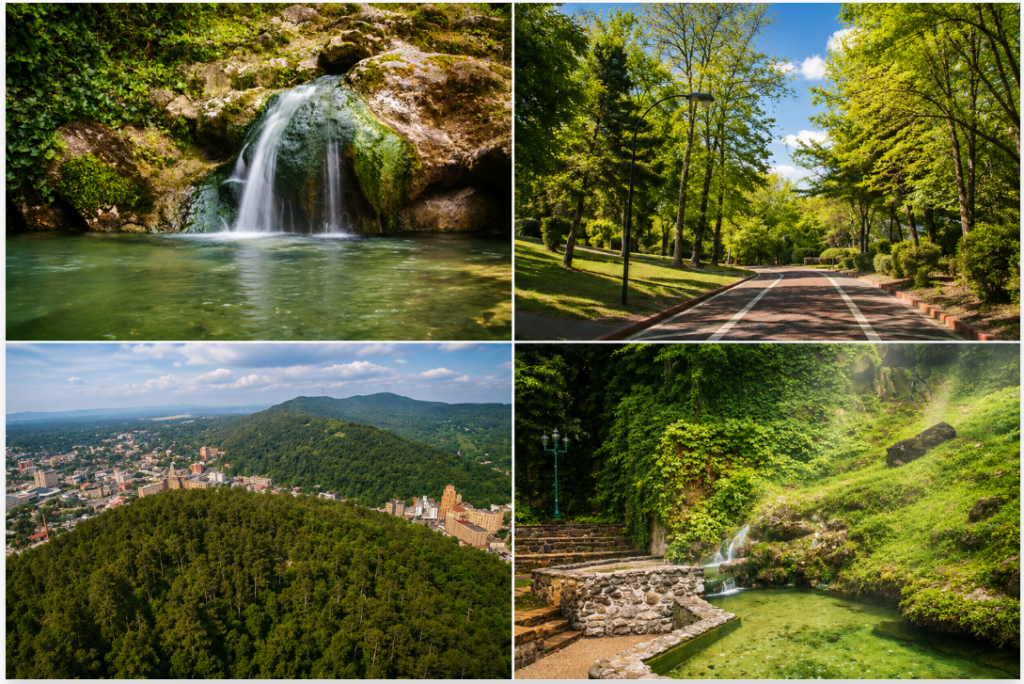
The thermal springs dictate the existence of the town. Unlike the geysers of Yellowstone, the heat source here involves deep fault lines rather than volcanic magma chambers. Rainwater slowly percolates deep into the earth’s crust over a period of four thousand years. The natural geothermal gradient heats the liquid before pressure forces it back to the surface at a consistent 143 degrees Fahrenheit. Municipal authorities maintain several public jug fountains throughout the downtown corridor where residents and tourists collect the mineral-rich water for daily consumption. The water arrives at the surface entirely sterile and free of sulfur, removing the strong odors commonly associated with other natural hot springs.
Preserving Bathhouse Row And National Park Infrastructure
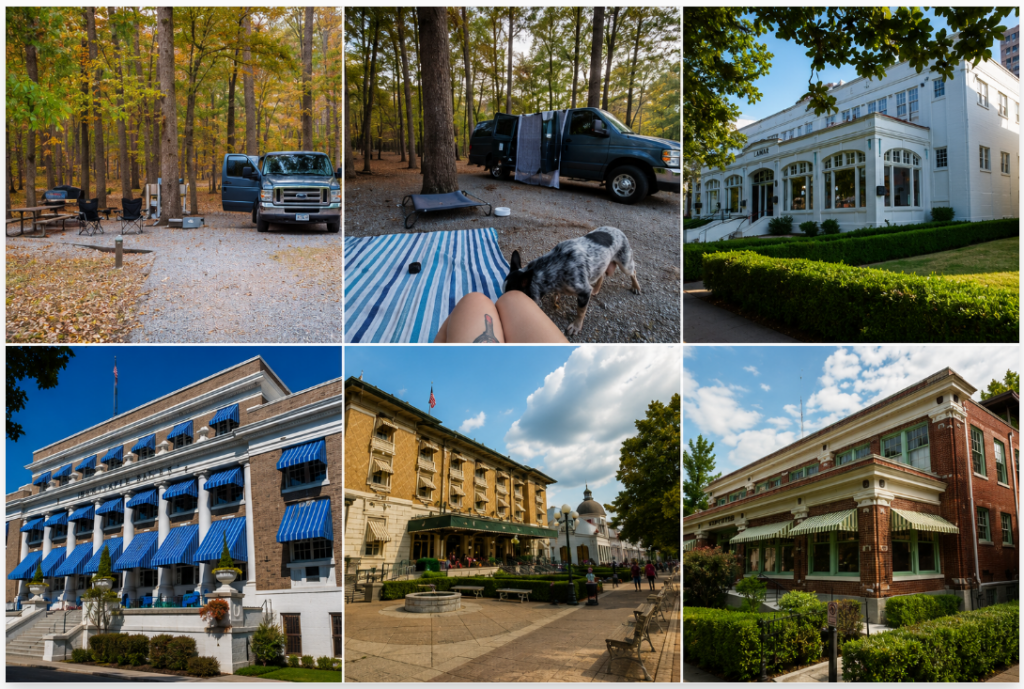
Bathhouse Row stands as the physical centerpiece of the downtown district. Eight distinct buildings constructed between 1892 and 1923 showcase the high architectural standards of the era. The federal government mandated elegant designs to attract wealthy travelers seeking medical treatments. The Fordyce Bathhouse currently functions as the main visitor center for the National Park Service, displaying preserved stained glass ceilings and original hydrotherapy equipment. Two facilities, the Buckstaff and the Quapaw, continue to offer traditional thermal baths to the public. The layout of these massive brick and stucco structures completely dominates Central Avenue, forcing modern traffic to route around the historical footprint.
Adaptive Reuse And Urban Preservation
The adaptive reuse of the historic structures provides a clear blueprint for urban preservation. The Superior Bathhouse sat vacant for decades before an independent operator leased the building from the federal government. The facility now operates as a commercial brewery, holding the unique distinction of being the only brewery situated inside a United States National Park. The brewing process utilizes the 143-degree thermal water directly from the source, drastically reducing the energy required to boil the mash. This practical application of the natural resources demonstrates a viable path forward for maintaining expensive historical real estate.
Mountain Trails And Immediate Wilderness Access
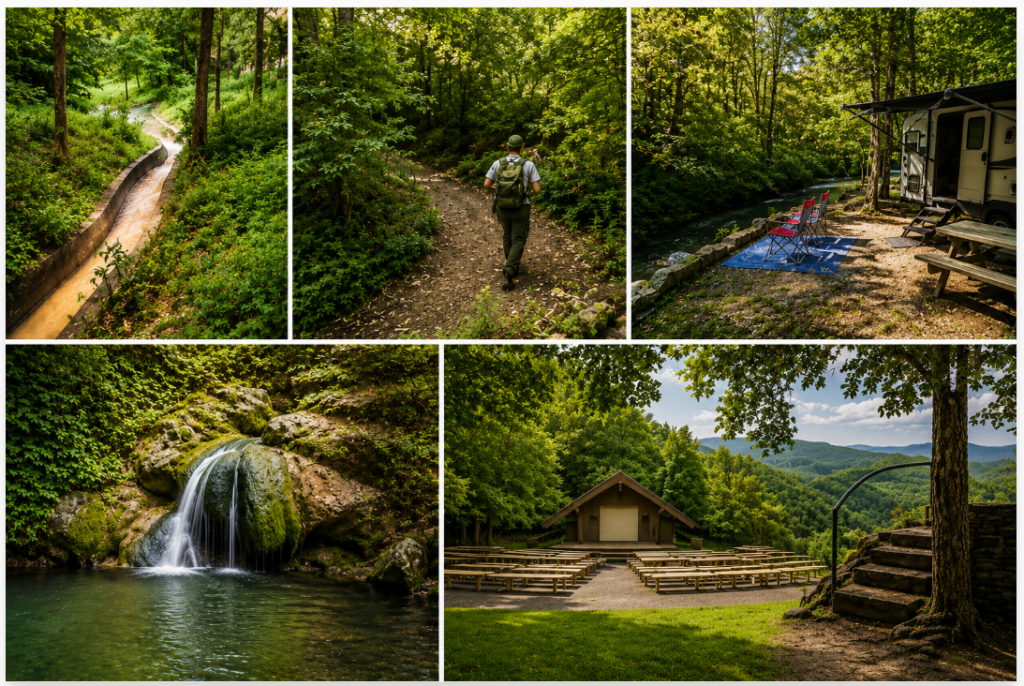
Directly behind Bathhouse Row, the terrain rises sharply into Hot Springs Mountain. A dense network of hiking trails crisscrosses the slopes, providing immediate access to the dense pine forests of the Ouachita Mountains. The Grand Promenade, a wide brick pathway, runs directly behind the historic buildings, offering a flat, elevated view of the downtown traffic below. Walkers on these trails routinely encounter the exposed thermal springs where the hot water steams visibly in the cool morning air. The physical transition from a paved urban street to a rugged mountain trail happens in a matter of footsteps.
The Era Of Organized Crime And Illegal Gambling
The influx of wealthy tourists during the early twentieth century attracted significant criminal enterprise. Hot Springs operated as an open gambling town for decades, completely ignoring state and federal laws. Major figures from organized crime syndicates, including Al Capone and Owney Madden, treated the city as a neutral territory. Rival factions agreed to suspend hostilities during their vacations to take the waters. Illegal casinos and speakeasies flourished openly along the main street right across from the federal bathhouses. Local law enforcement and politicians routinely accepted bribes to maintain the status quo. This period of unchecked corruption ended in the late 1960s, leaving behind a deep historical record that modern museums now actively monetize.
Beyond The Springs: Lakes And Oaklawn Racing
Contemporary tourism extends far past the historic downtown. The creation of massive hydroelectric dams on the Ouachita River formed several large reservoirs right outside the city limits. Lake Hamilton and Lake Ouachita provide extensive infrastructure for recreational boating, sport fishing, and shoreline camping. These bodies of water draw a completely different demographic than the historical park district. Oaklawn Racing Casino Resort anchors the southern end of the city, offering live thoroughbred racing and legal casino gaming. This combination of natural water features and high-stakes entertainment keeps the local economy highly active throughout the year. Readers exploring our U.S. travel itineraries consistently seek locations offering distinct historical narratives alongside modern recreational infrastructure. Hot Springs meets these exact criteria by preserving its highly unique origins.
| Historic Bathhouse | Current Primary Function | Public Bathing Available |
| Fordyce | National Park Visitor Center | No |
| Buckstaff | Traditional Thermal Baths | Yes |
| Quapaw | Modern Spa and Pools | Yes |
| Superior | Brewery and Restaurant | No |