

New Bedford, Massachusetts, functioned as the energy capital of the world during the middle of the nineteenth century. Before petroleum extraction dominated global markets, whale oil lit the homes and lubricated the machinery of the industrial revolution. The primary institution archiving this history sits right in the center of the historic downtown district. The Whaling Museum occupies a massive footprint along the cobblestone streets, documenting the rise and fall of this specific maritime economy. Evaluating the historical artifacts, the massive skeletal displays, and the archived ship logbooks provides a clear assessment of how this localized industry shaped global trade and severely impacted marine ecosystems.
The Economic Engine Of The Nineteenth Century
The sheer volume of wealth generated by the fleet remains difficult to contextualize today. Whaling ships departed New Bedford for voyages lasting up to five years, crossing the Pacific and Arctic oceans. The crews hunted primarily for sperm whales. The massive head of a sperm whale contains a waxy substance called spermaceti. This material produced the cleanest, brightest-burning candles available during the era, commanding premium prices in London, Paris, and New York.
Beyond the spermaceti, the fleets harvested baleen. Manufacturers utilized this flexible material to construct umbrella ribs, buggy whips, and corset stays. The industrial demand for these raw materials created immense profit margins. The entire regional economy of southeastern Massachusetts depended entirely on the extraction of this blubber from the open ocean. Shipyards, sail lofts, cooperages, and banking institutions all synchronized their operations to support the outbound fleet. The museum details this vast supply chain, demonstrating how the financial risk of outfitting a single wooden ship across a multi-year voyage required complex insurance and investment models that mirrored modern venture capitalism.
The Lagoda And The Physical Scale Of The Hunt
The physical scale of the hunting apparatus becomes immediately apparent upon entering the Bourne Building. This massive hall houses the Lagoda, a half-scale wooden model of a whaling bark. The model measures eighty-nine feet in length, ranking as the largest ship model in the world. Jonathan Bourne Jr., a highly successful whaling merchant, originally owned the actual Lagoda. His daughter donated the funds to construct the Bourne Building and the half-scale replica in 1916. The craftsmanship of the model includes fully rigged masts, authentic deck plating, and precise navigational instruments.
Visitors walk directly onto the main deck, observing the exact spatial constraints the crews experienced. The deck features a functioning tryworks. These brick ovens allowed the crew to boil raw blubber into liquid oil right on the open ocean. Operating open brick furnaces on a highly flammable wooden deck during heavy ocean swells presented an extreme physical risk to the crew. The exhibit surrounds the ship with authentic wooden whaleboats. These tiny, fragile rowboats served as the actual hunting platforms. Six men rowed these small craft directly up to a massive, thrashing mammal, striking it with hand-thrown iron harpoons. The visual contrast between the massive prey and the fragile wooden boats clearly illustrates the inherent violence and high mortality rate of the profession.
Analyzing The Skeletal Exhibits
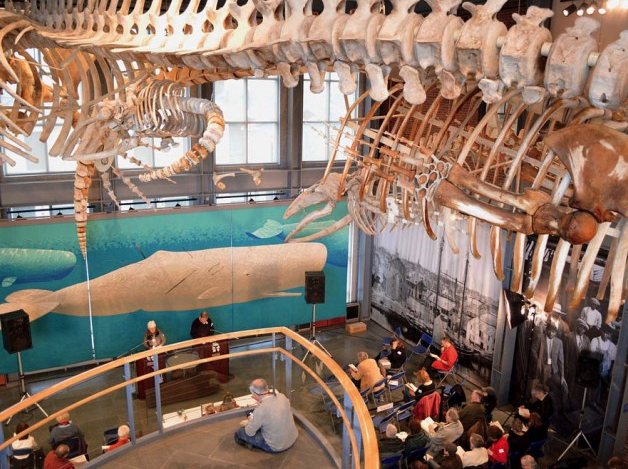
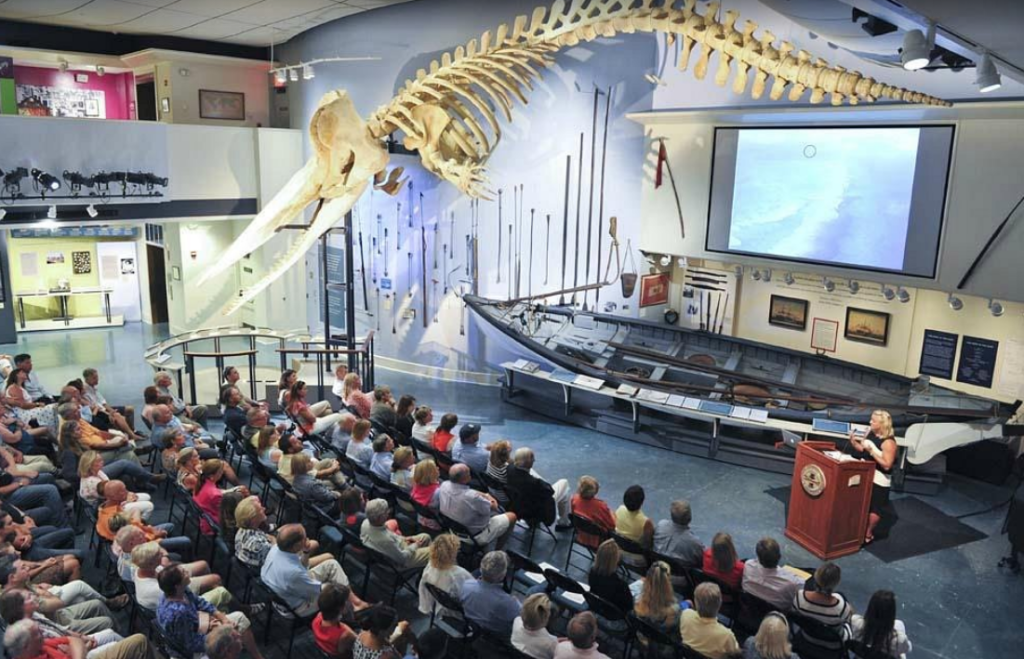
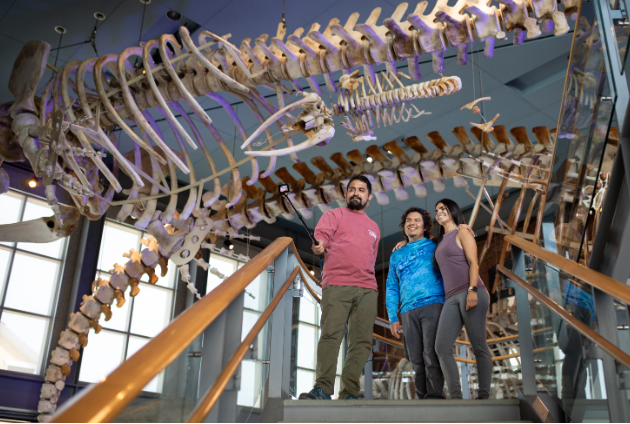
The institution balances the economic history of the hunt with strict biological realism. The Jacobs Family Gallery suspends five massive, fully articulated whale skeletons directly from the ceiling. Standing beneath these bones provides a necessary sense of proportion. The visual focal point is KOBO, the King of the Blue Ocean. This rare blue whale skeleton measures sixty-six feet long.
The bones still leak raw oil today. The museum staff places a collection apparatus directly beneath the ribcage to protect the floor from the continuous dripping. This physical reality serves as a visceral reminder of the exact resource the nineteenth-century fleets chased across the globe. The staff regularly cleans the bones, preserving the massive skulls and extended spinal columns. The sheer size of the ribcages forces visitors to look straight up, providing a stark architectural contrast against the modern steel and glass of the atrium.
| Species Displayed | Skeletal Length | Primary Historical Value | Current Status |
| Blue Whale | 66 feet | Highest oil yield, rarely caught | Endangered |
| Sperm Whale | 37 feet | Spermaceti wax, high market price | Vulnerable |
| North Atlantic Right Whale | 49 feet | Surface floating carcass, easy target | Critically Endangered |
| Humpback Whale | 37 feet | Baleen plates, moderate oil yield | Least Concern |
Scrimshaw And The Isolation Of The Deep Ocean
Long voyages across the Pacific required immense patience from the crew. Months frequently passed without a single whale sighting. The sailors faced extreme boredom punctuated by absolute terror during the actual hunts. Scrimshaw served as the primary creative outlet during these long, empty stretches. The sailors carved intricate designs into whale teeth and jawbones using basic pocket knives and sail needles, rubbing soot or tobacco juice into the lines to create contrast.
The museum holds the largest collection of scrimshaw globally. Analyzing these carvings reveals the deep psychological isolation of the deep ocean. The artifacts function as primary source historical documents. The men carved highly detailed maps, portraits of distant wives, and exact profiles of their ships. The sheer volume of these pieces demonstrates a desperate need for creative output in a highly restricted, heavily disciplined maritime environment.
Archival Logbooks And Historical Climatology
The research library attached to the main exhibition halls holds thousands of original handwritten logbooks. The captains maintained strict daily records of their coordinates, the weather conditions, and the exact locations of their catches. Modern climatologists now utilize this exact data to track historical sea ice margins.
The whaling fleets pushed deep into the Arctic, recording the exact positions of the ice pack over a century ago. Scientists cross-reference these historical coordinates with modern satellite imagery to measure the precise rate of polar ice melt. This creates a direct, highly functional link between nineteenth-century commercial hunting and modern environmental science. The archived paper logs transitioned from simple financial ledgers into critical data points for modern climate research.
The Transition To Modern Marine Conservation
The narrative structure of the museum shifts deliberately in the newer wings. The exhibits do not glorify the slaughter. They present the harsh reality of an industrial machine pushing several marine species to the brink of extinction. The focus turns entirely to modern marine biology, acoustic research, and habitat protection.
The museum works in direct partnership with local scientific organizations to track the remaining North Atlantic Right Whales. Less than four hundred of these specific mammals remain alive today. The galleries detail the modern threats of heavy shipping traffic and commercial fishing gear entanglement. Visitors can access current conservation data and tracking maps through the New Bedford Whaling Museum official site. The institution successfully bridges the gap between preserving the history of a brutal industry and advocating for the survival of the animals that built the city.
Logistical Planning For Your Visit
Executing a visit requires proper time management. The entire complex spans multiple interconnected buildings across a steep cobblestone hill. Thoroughly examining the ship model, the skeletal gallery, and the historic artwork requires at least three to four hours. The surrounding neighborhood operates as the New Bedford Whaling National Historical Park, maintained by the federal government. Visitors simply walk across the street to see the Seamen’s Bethel, the exact chapel where Herman Melville gathered the inspiration for Moby-Dick.
Travelers mapping out their regional U.S. travel itineraries frequently slot this destination between visits to Boston and the coastal resorts of Rhode Island. The National Park Service operates a dedicated visitor center just down the street, offering guided walking tours of the surrounding commercial district. Exploring the original counting houses and cobblestone alleys reinforces the massive scale of the historical operations documented inside the museum halls. The interior volume of the museum provides an excellent, climate-controlled environment to study the harsh realities of the maritime energy empire that once dominated the global economy.