
The Final Boarding Call: The Financial Anatomy Behind the Spirit Airlines Shutdown
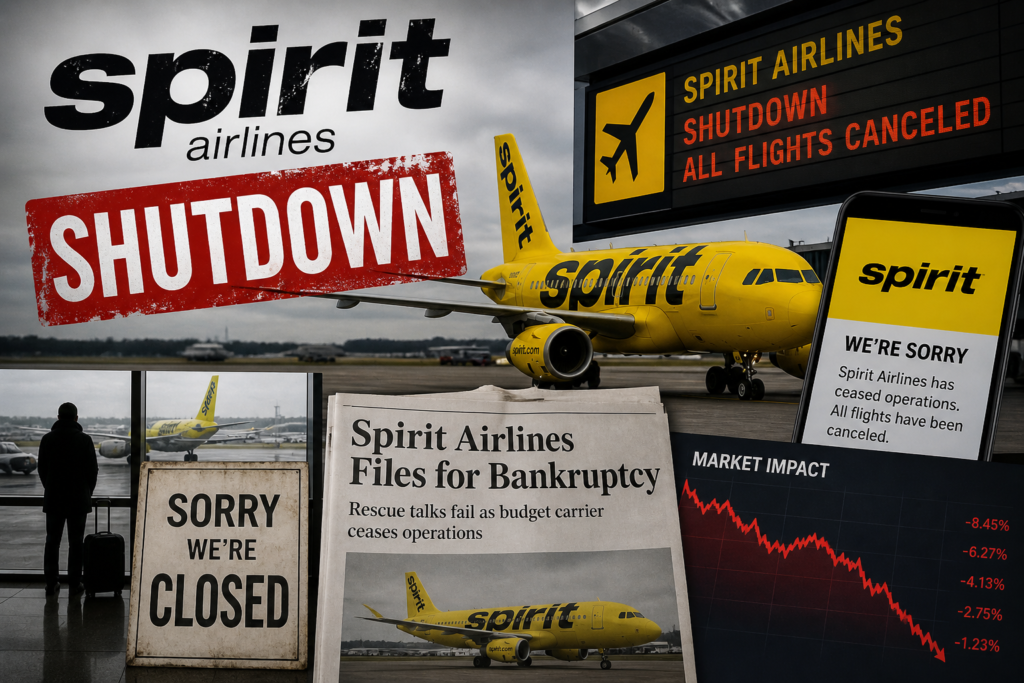
The ultra-low-cost aviation sector experienced a seismic shock on May 2, 2026, when Spirit Airlines permanently grounded its fleet. After 34 years of operations, the carrier ceased all flights and initiated an orderly liquidation process. Management spent the final weeks attempting to negotiate a financial lifeline, but those efforts yielded no results. A proposed $500 million federal rescue package collapsed, forcing the immediate closure of all customer service channels and leaving thousands of travelers stranded at airports across the country.
The Rejection Of Federal Intervention
A critical turning point occurred when the Trump administration evaluated the proposed government loan. Bondholders and major creditors failed to reach a consensus on the restructuring terms, prompting federal officials to walk away from the negotiation table. Transportation Secretary Sean Duffy explicitly characterized the potential rescue as throwing “good money after bad” in statements to Reuters. The government concluded that injecting half a billion dollars into a business with structural operational deficits offered no guarantee of long-term viability. Without that final cash infusion, executives had no option but to lock the doors.
Accumulating Pressures And Market Realities
Spirit’s demise stems from a combination of massive liabilities and hostile market conditions. The carrier carried a debt load exceeding $8 billion. Repayment became mathematically impossible as global events applied extreme pressure to operating costs. Rising jet fuel prices, heavily influenced by recent conflict involving Iran, battered the airline’s already thin profit margins.
The company previously viewed a merger with JetBlue Airways as its primary survival strategy. Regulatory hurdles blocked that acquisition last year, stripping Spirit of its most realistic exit plan. Forced to stand alone, the airline simply lacked the capital reserves to weather sustained high interest rates and volatile energy markets.
| Key Factor | Impact on Spirit Airlines |
| Federal Bailout Rejection | Loss of the final $500 million cash lifeline needed to maintain daily flight operations. |
| Blocked JetBlue Merger | Elimination of the strategic exit plan, forcing the airline to handle an $8 billion debt load alone. |
| Fuel Price Surges | Severe erosion of ultra-low-cost profit margins driven by global energy market volatility. |
Immediate Fallout For Stranded Passengers
The sudden halt left ticketed customers scrambling for alternatives. Rival carriers quickly introduced relief fares to absorb the displaced travelers, but capacity remains tight. People who purchased tickets using credit or debit cards will receive automatic refunds from their banking institutions. Those holding company vouchers or loyalty points face a much harder road, as those assets are now tied up in bankruptcy court proceedings. Consumers facing these disruptions can check our resources on passenger compensation rights to review their legal options during airline liquidations.
The Future Of The Low-Cost Model
The disappearance of such a major player forces a reevaluation of the discount carrier strategy. Airlines operating on similar models must now prove their resilience against fuel spikes and high capital costs. Legacy carriers will likely absorb Spirit’s abandoned routes, which reduces overall market competition and signals higher base fares for consumers across North America.