

When Portuguese sailors first navigated the waters of the western Pacific Ocean in the sixteenth century, they were so captivated by the verdant, mountainous island rising from the sea that they famously christened it “Ilha Formosa,” or the Beautiful Island. Today, Taiwan remains a vital geographic and ecological bridge situated between Japan, the Philippines, and the vast Asian continent. Far beyond its modern reputation as a technological powerhouse, Taiwan boasts a profoundly diverse topography. Covering roughly 36,000 square kilometers, the island represents a spectacular collision of tectonic plates, resulting in an environment where alpine peaks gracefully yield to tropical coastlines.
The Geographic Crown Jewels: Taiwan’s Mountain Ranges
Taiwan’s geologic youth is evident in its dramatically elevated terrain. Foregoing flat expanses for vertical majesty, nearly two-thirds of the island is dominated by dense, forested mountains. The Central Mountain Range serves as the island’s geological spine, running seamlessly from north to south and acting as a natural watershed that dictates the flow of eastern and western river systems.
To the west of this central divide lies the formidable Yushan Range. Its namesake, Yushan—also known as Jade Mountain—reaches a staggering elevation of 3,952 meters, securing its title as the highest peak in Northeast Asia. Because the island boasts more than two hundred peaks exceeding 3,000 meters in elevation, high-altitude trekking is woven deeply into the local culture. Explorers routinely challenge themselves by tracing ancient river sources, navigating deep valleys, and ascending sheer cliff faces, drawn by the undeniable allure of Taiwan’s alpine majesty.
A Tapestry of National Parks
To protect its invaluable natural heritage, Taiwan has established a robust system of national parks, each safeguarding a distinct topographical and ecological zone. The varied microclimates across these protected lands ensure that visitors can experience everything from volcanic craters to tropical beaches within a single day’s journey.
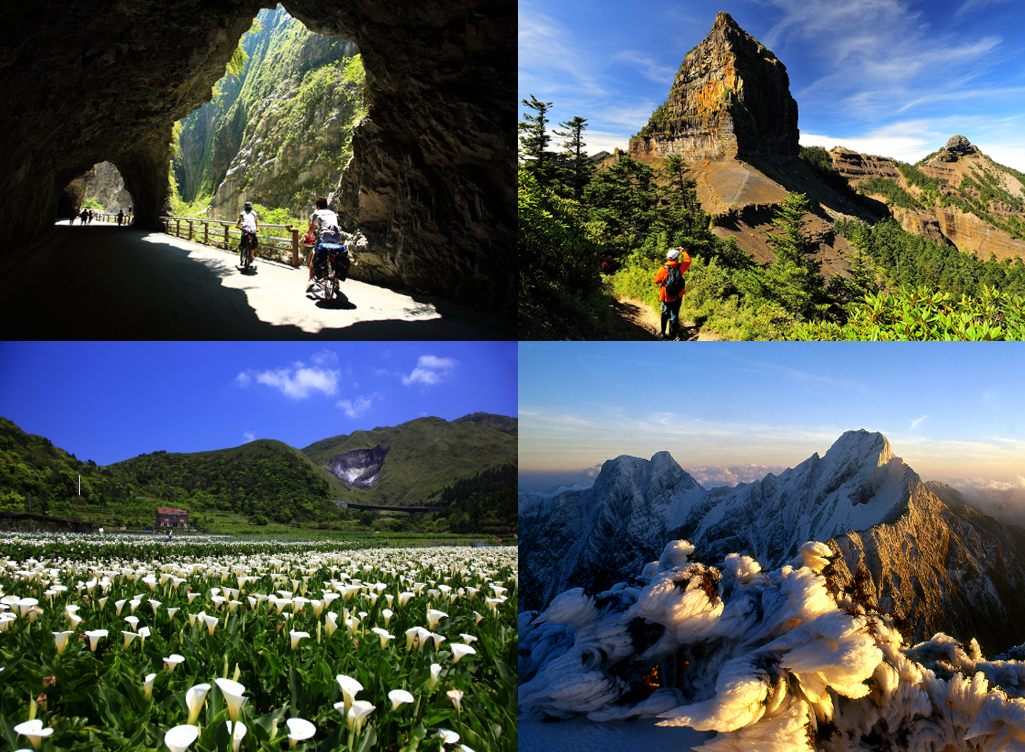
| National Park | Primary Geographical Feature | Regional Location |
| Taroko | Deep marble gorges carved by the Liwu River | Eastern Taiwan |
| Yushan | Alpine peaks and Northeast Asia’s highest summit | Central Taiwan |
| Yangmingshan | Dormant volcanoes, fumaroles, and hot springs | Northern Taiwan |
| Kenting | Tropical coastlines and rich coral reefs | Southern Taiwan |
| Shei-Pa | Rugged, precipitous mountains and deep valleys | Central-North Taiwan |
| Kinmen | Historic battlefield terrain and traditional architecture | Offshore Islands |
These sanctuaries provide an analytical lens into the island’s geological evolution. While Taroko National Park showcases the sheer erosive power of water cutting through solid marble, Yangmingshan serves as a reminder of the volcanic activity that helped shape the region’s northern basin.
Rich Marine Ecology and Coastal Dynamics
Surrounded by the Pacific Ocean to the east and the Taiwan Strait to the west, the island is profoundly influenced by oceanic currents, most notably the warm Kuroshio Current. This continuous flow of tropical water fosters an incredibly rich marine ecosystem along the coasts. Traveling down to the southern tip of the island at Kenting, or venturing to offshore locations like Green Island and the Penghu Archipelago, reveals azure waters teeming with life.
It is common for marine biologists and enthusiasts alike to observe vast pods of cetaceans, including spinner, bottlenose, and Risso’s dolphins, breaching the ocean’s surface. Beneath the waves, magnificent coral reefs create vital nurseries for aquatic life. For readers eager to learn more about how shifting currents impact global biodiversity, consulting resources on diverse marine ecosystems provides excellent context on why coastal preservation in the Asia-Pacific is so crucial.
An Avian Paradise: Taiwan as a Global Eco-Park
Taiwan’s varied terrain—ranging from coastal mudflats and mangroves to high-altitude plateaus—functions as an enormous, natural eco-park. Because of its strategic location along the East Asian-Australasian Flyway, the island is a critical refuge for migratory birds.
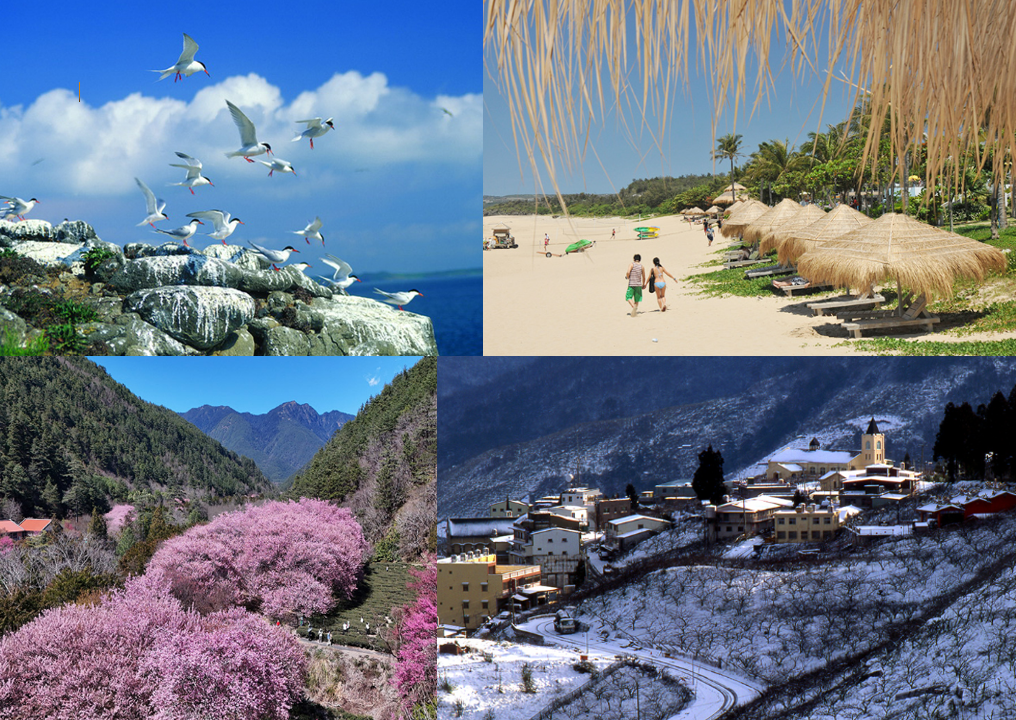
The changing of the seasons brings waves of diverse avian populations. Spring and summer welcome tropical visitors like the vividly colored fairy pitta, celebrated locally as the “eight-color bird.” As autumn takes hold, species fleeing the harsh northern winters arrive in droves. Notably, the endangered black-faced spoonbill makes its winter home in the wetlands of southwestern Taiwan. Additionally, the gray-faced buzzard’s migratory arrival famously coincides with Taiwan’s Double Ten National Day every October. For travelers looking to expand their horizons with ethically sound journeys, exploring sustainable eco-tourism destinations like Taiwan’s bird-watching wetlands is a remarkably rewarding endeavor.
Understanding the Island’s Subtropical Climate
A significant part of Taiwan’s ecological success stems from its forgiving, albeit dynamic, climate. With an annual average temperature hovering around a pleasant 22 degrees Celsius (71 degrees Fahrenheit), the island accommodates year-round exploration. However, the climate experiences distinct behavioral shifts shaped by its topography and the surrounding oceans.
The “plum rain” season descends from March to May, bringing consistent drizzles that nourish the island’s dense forests. Summer, stretching from June to August, introduces the formidable typhoon season, which requires careful meteorological monitoring due to sudden atmospheric volatility and roaring coastal swells. Autumn delivers cool, stable conditions perfect for high-altitude ascents, while the brief winter months are celebrated for vibrant maple foliage and soothing hot spring retreats rather than snow—which is strictly reserved for the highest mountainous elevations.
Ultimately, Taiwan’s sophisticated interplay of towering geology, dynamic oceanic currents, and a rich, protective climate creates a landscape of perpetual spring. It remains an endlessly fascinating destination for geographers, biologists, and intrepid travelers alike.